Two Oceans

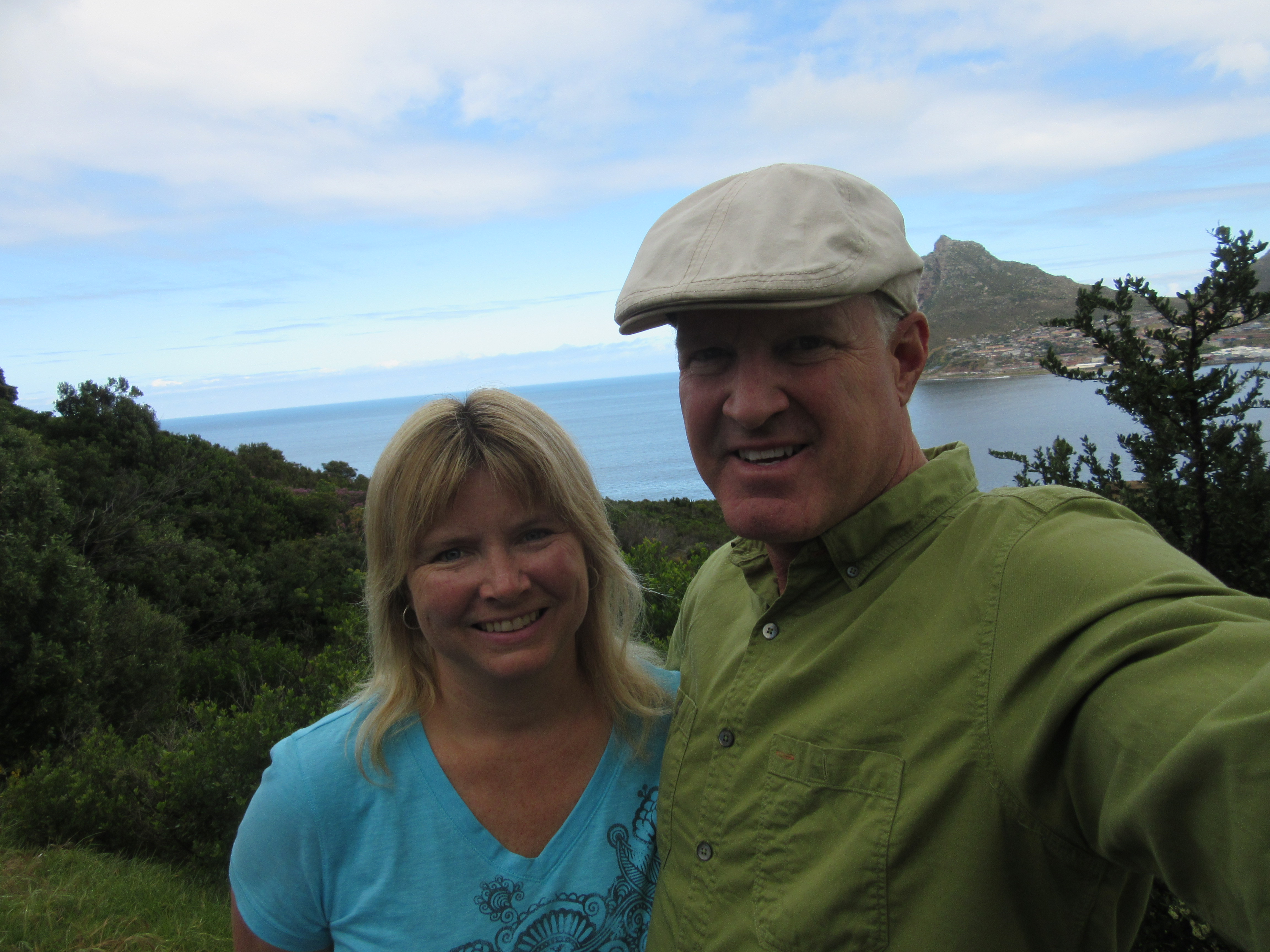
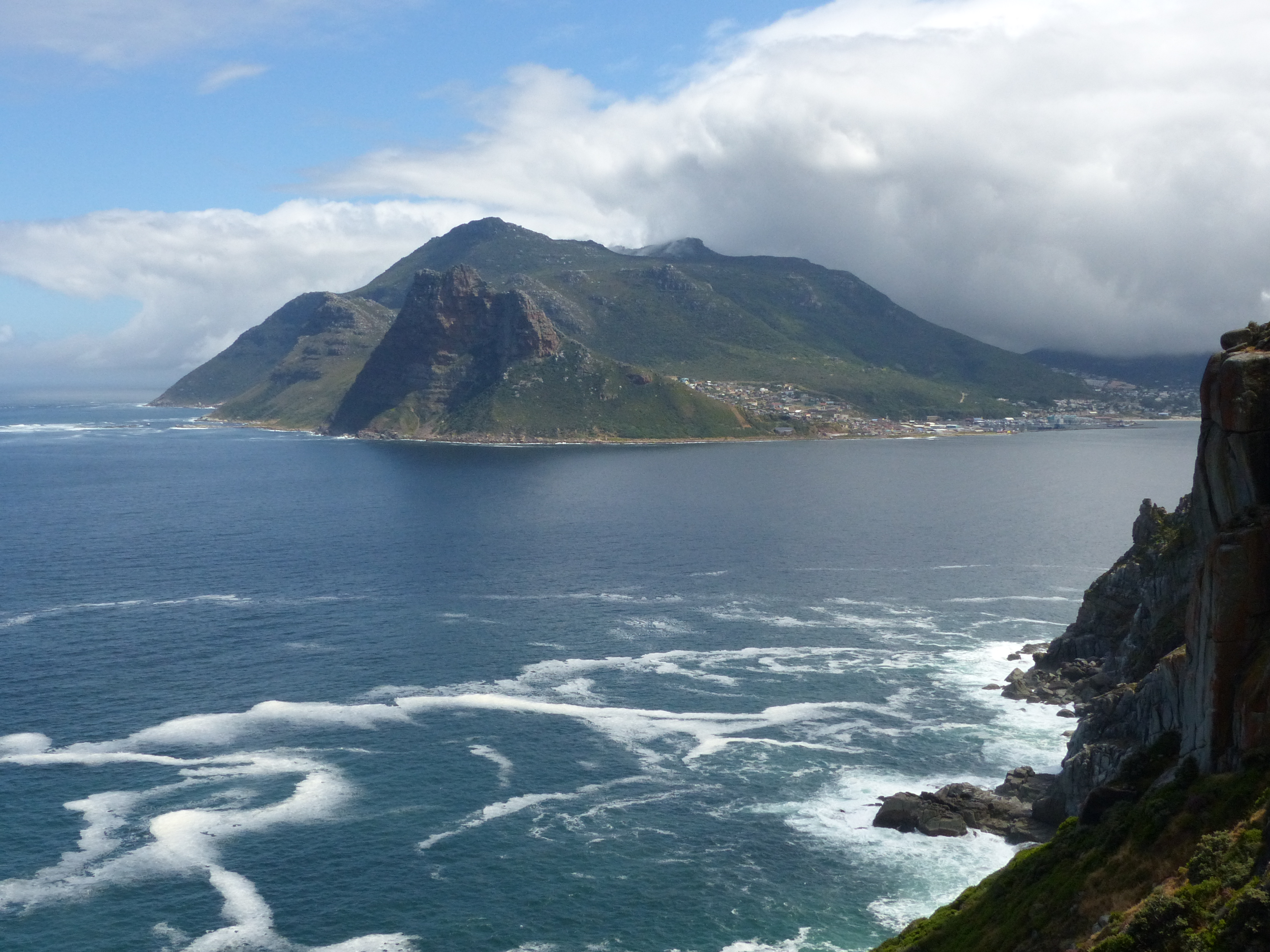
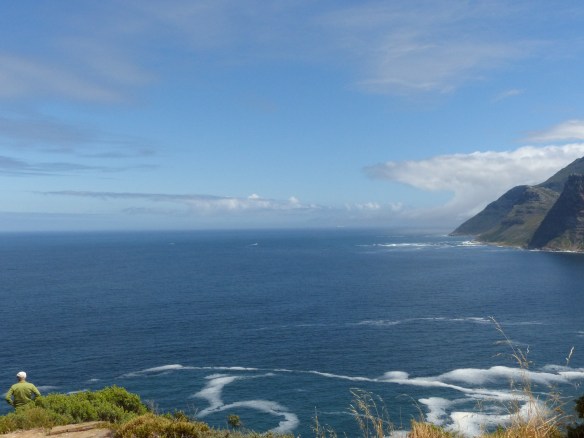
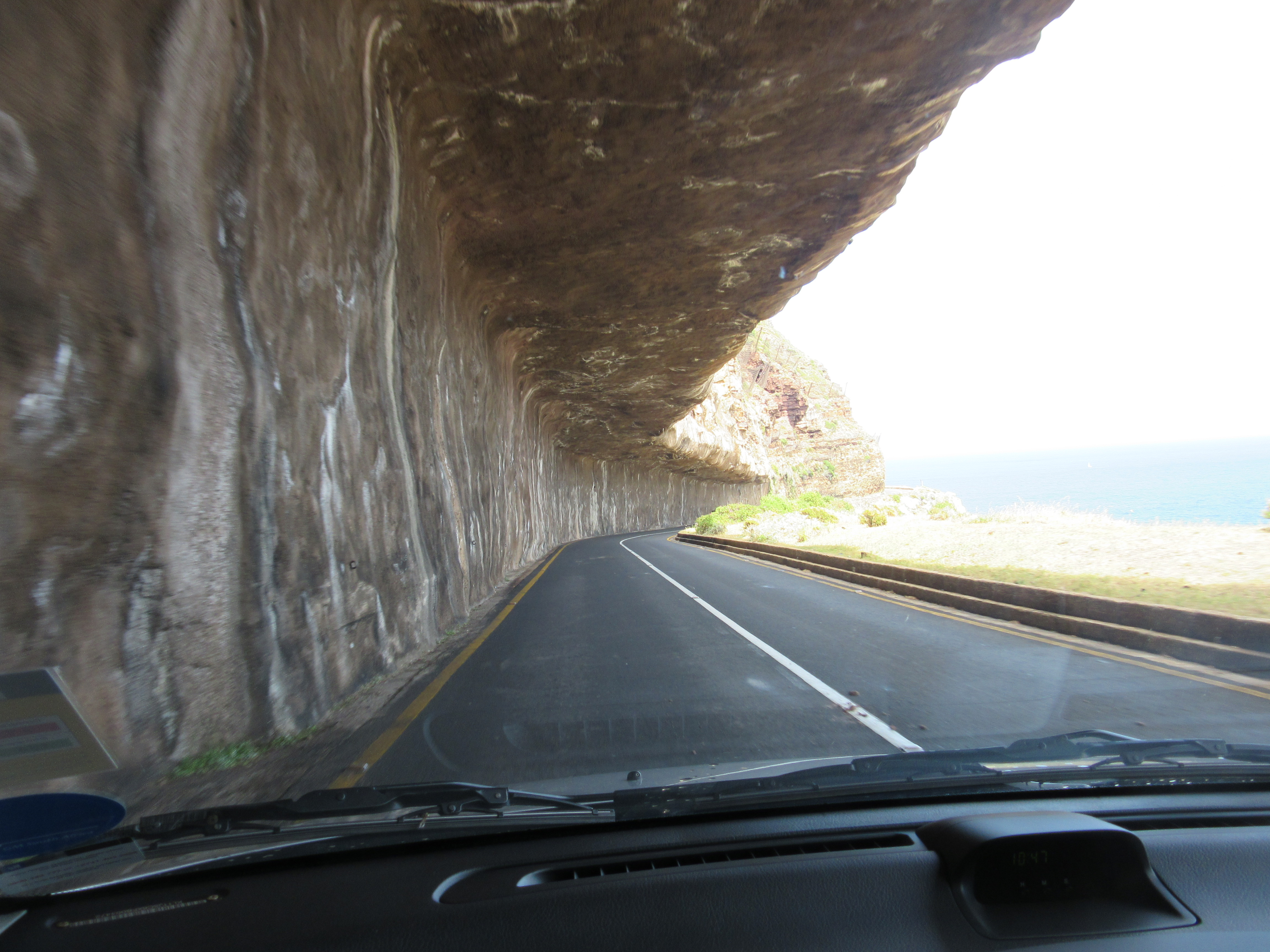
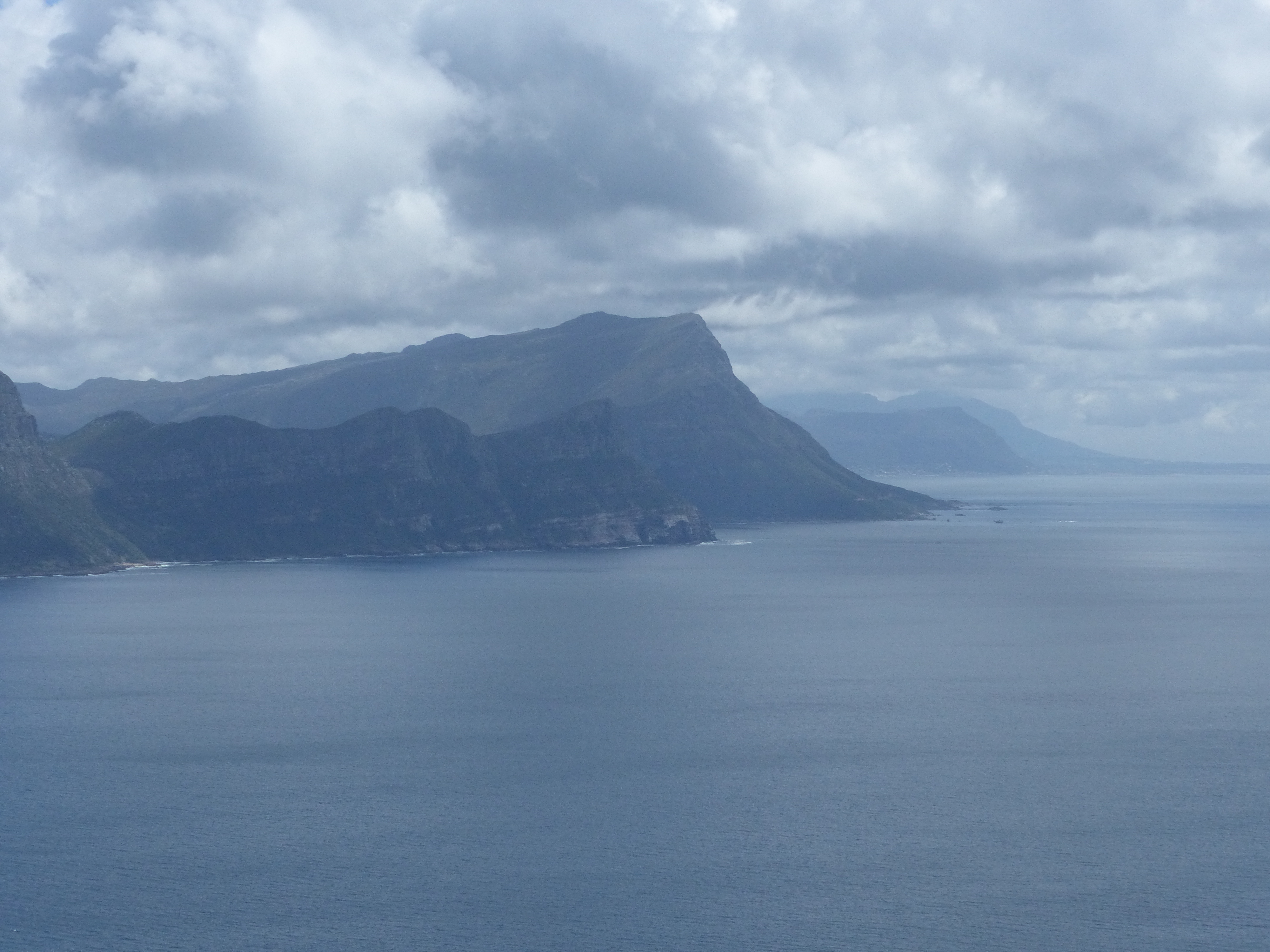
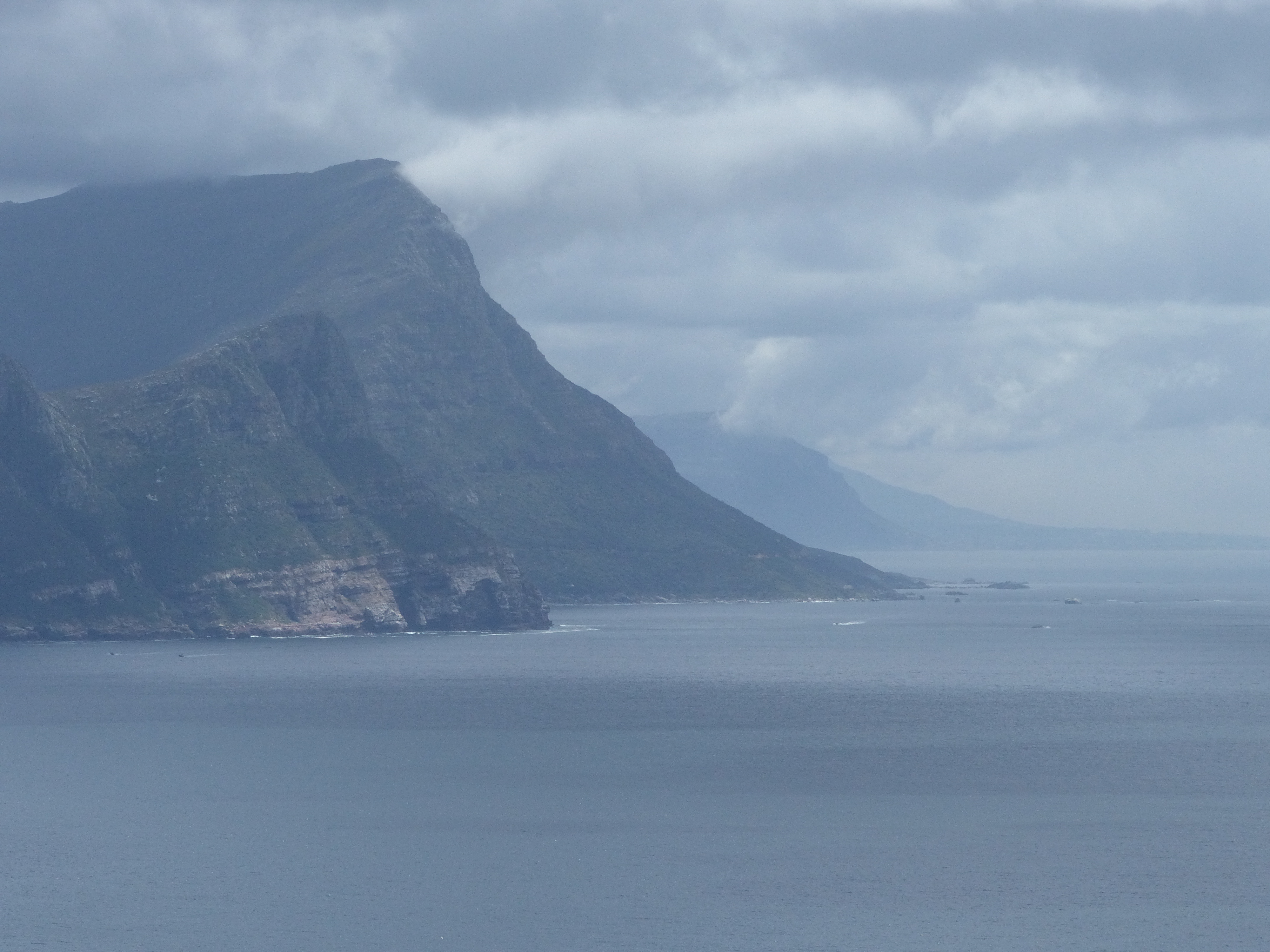
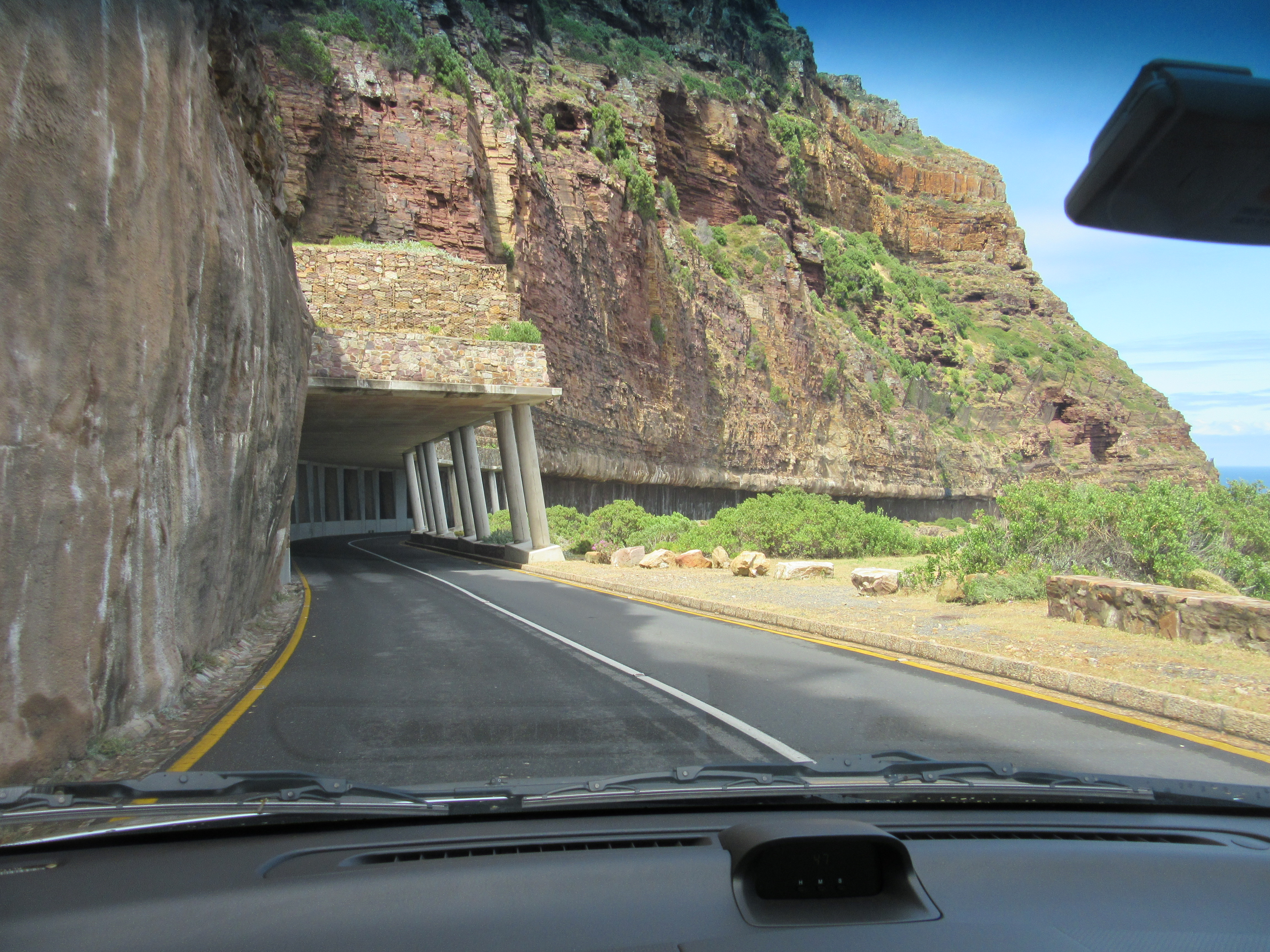
I was a little disappointed when we woke on our second day in Cape Town to find it still drizzling and cloudy. Nevertheless we decided to press on with our Peninsula tour anyway. Boy am I glad we did! Our intention was to drive around the Cape Peninsula taking in the views, possibly going all the way to the end to the Cape of Good Hope, and maybe even stopping at the Kirstenbosch Botanical Gardens too. It seemed an ambitious itinerary to fit in one day, but Michael was confident that the distances weren’t really that far. We had been given an overview of the best stops and sights by Louis at An African Villa. Because of the weather we decided to go around the Peninsula first instead of starting with the Botanical Gardens in hopes that the weather would improve. We gathered some things for a day of sightseeing in the car and set off in the drizzle over the hill and down into Camps Bay. From there we drove along the coast south toward Hout Bay. Almost immediately the weather started to improve. The drizzle stopped and the clouds began to break up. It seemed the clouds and rain were mostly hanging around City Bowl! In Hout Bay we started on Chapman’s Peak Drive which is a wildly scenic, windy road that hugs the cliffside and follows the coast to Noordhoek. You pay a small fee to use it and sometimes they have to close it when the conditions are unsafe. I had read about it being a bit “white knuckle”, but really compared to some of the roads in Colorado where we live, it was a piece of cake. The road was well maintained and had low walls in many places between you and the drop off. Plus, there were quite a few places to safely pull off and take pictures or admire the view. We did just that.
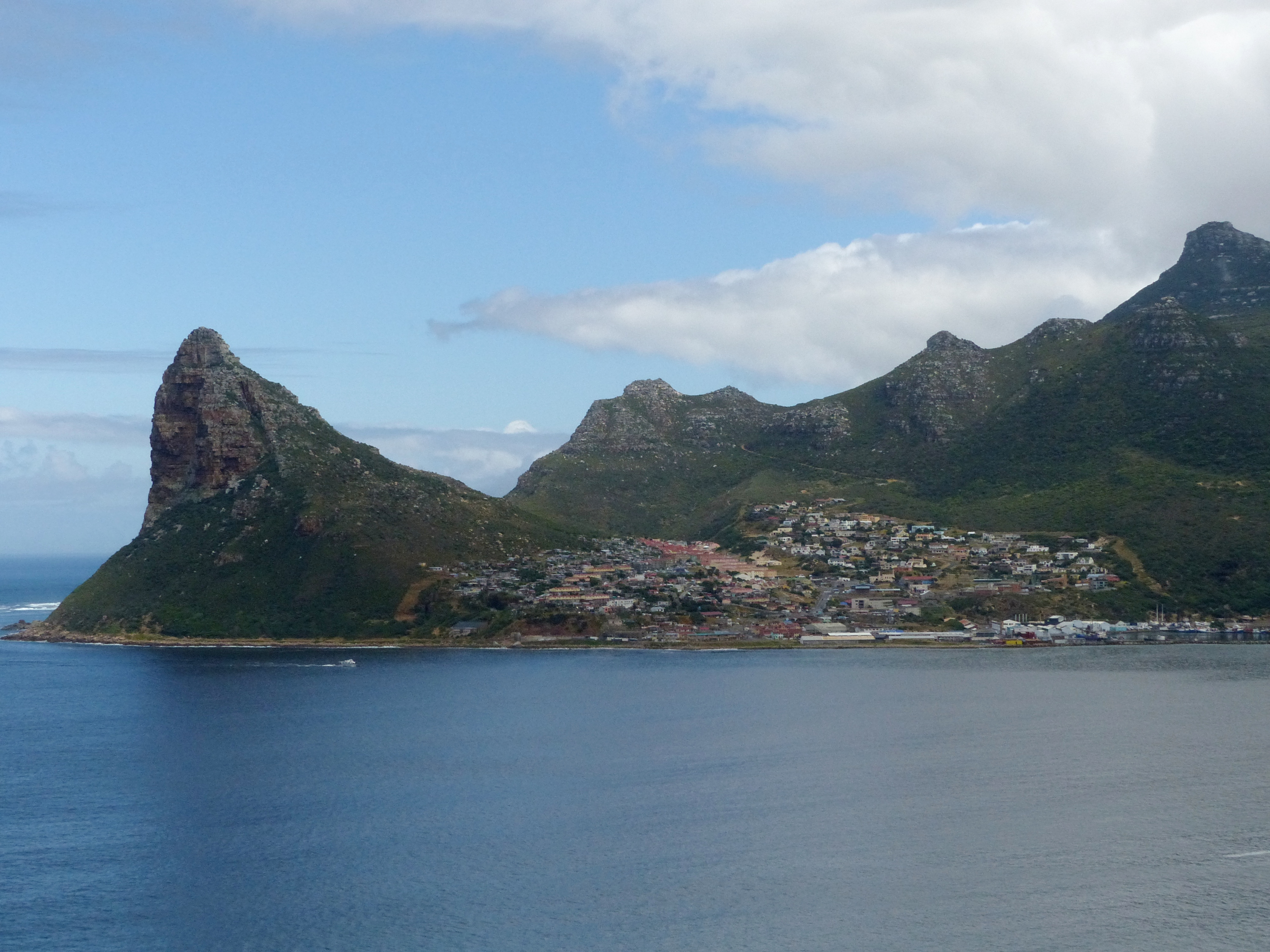
Looking back at Hout Bay

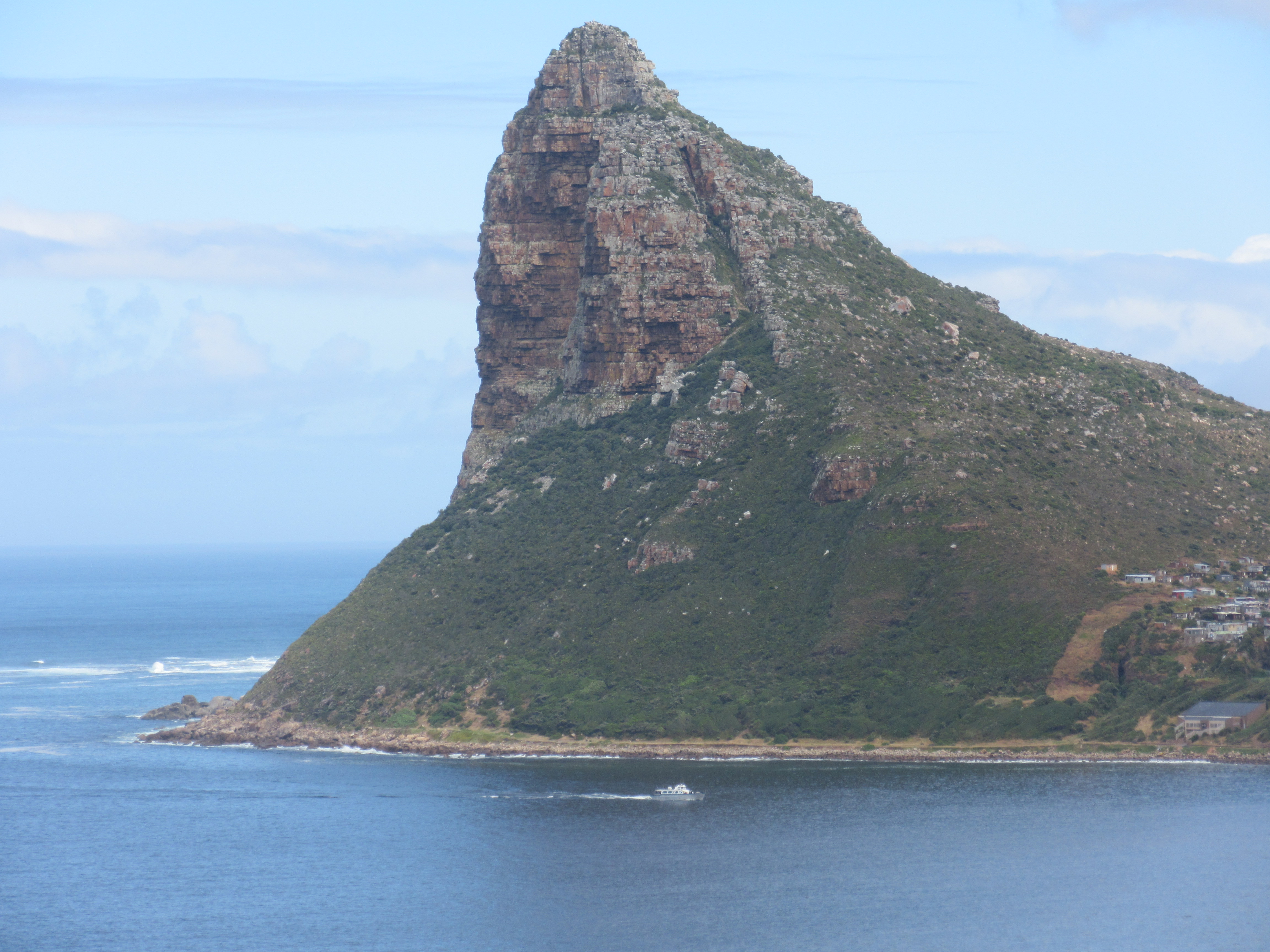
Looking back at Hout Bay

P1020736

IMG_0549

IMG_0546

P1020733

P1020738

P1020739

Michael admiring the Atlantic Ocean

P1020741

You can see Chapman Drive cut out of the mountain
IMG_0551

IMG_0552

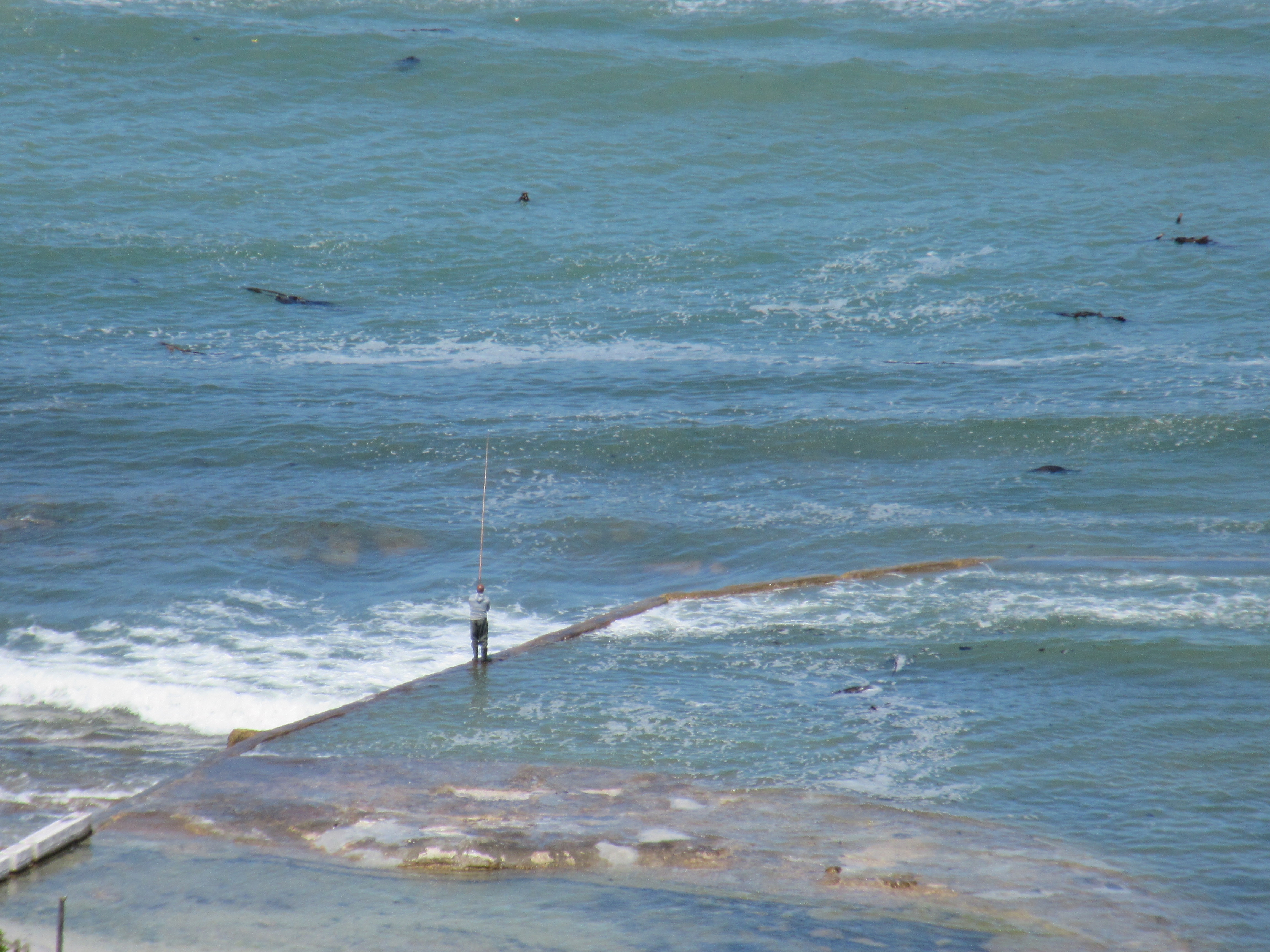
After reaching Noordhoek at the end of Chapman’s Peak Drive, we drove around Chapman’s Bay and continued down the coast. The scenery continued to be entertaining.

IMG_0554

Chapman’s Bay


P1020745

Notice the big statue of a whale down below!
IMG_0555

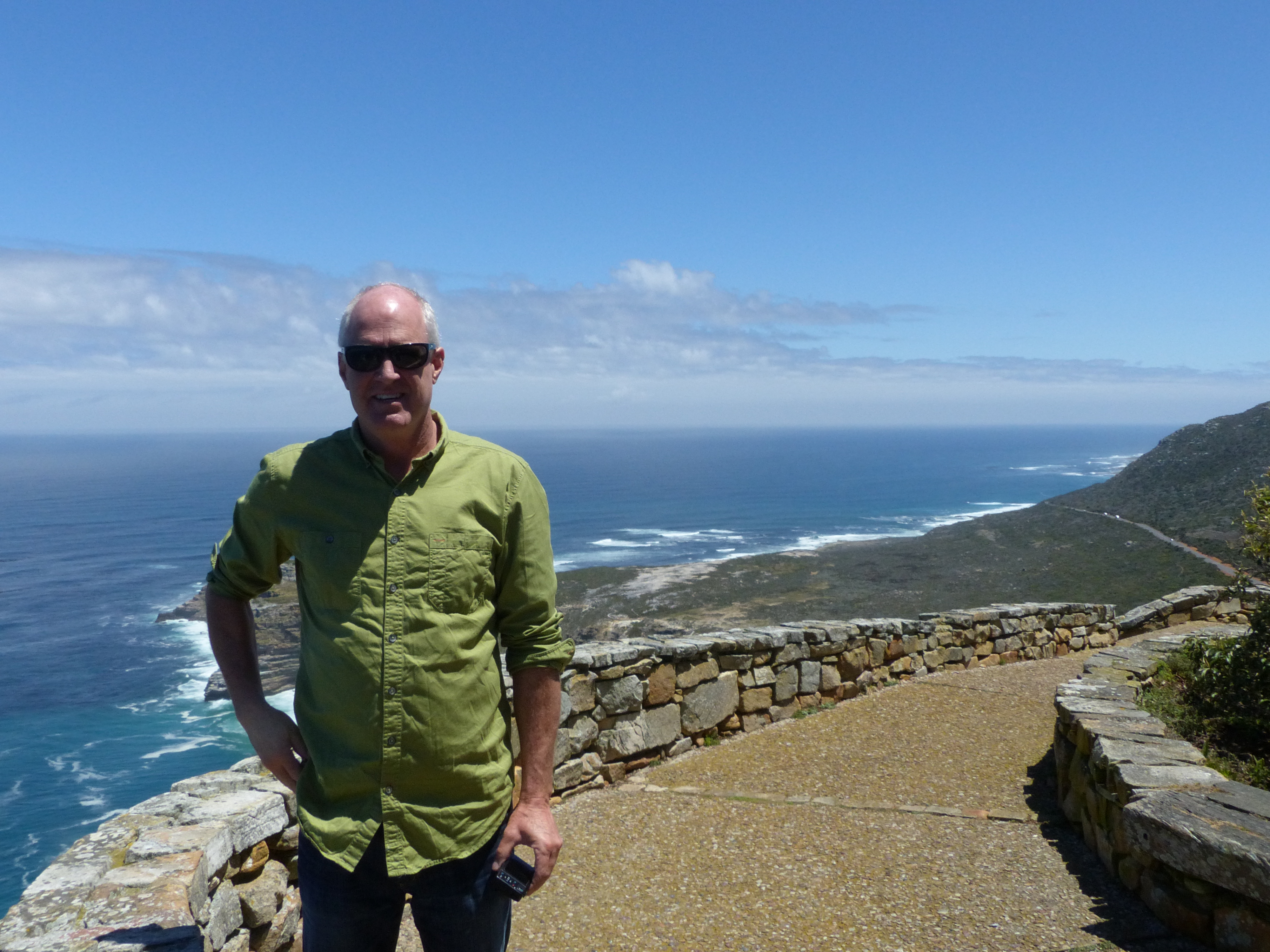
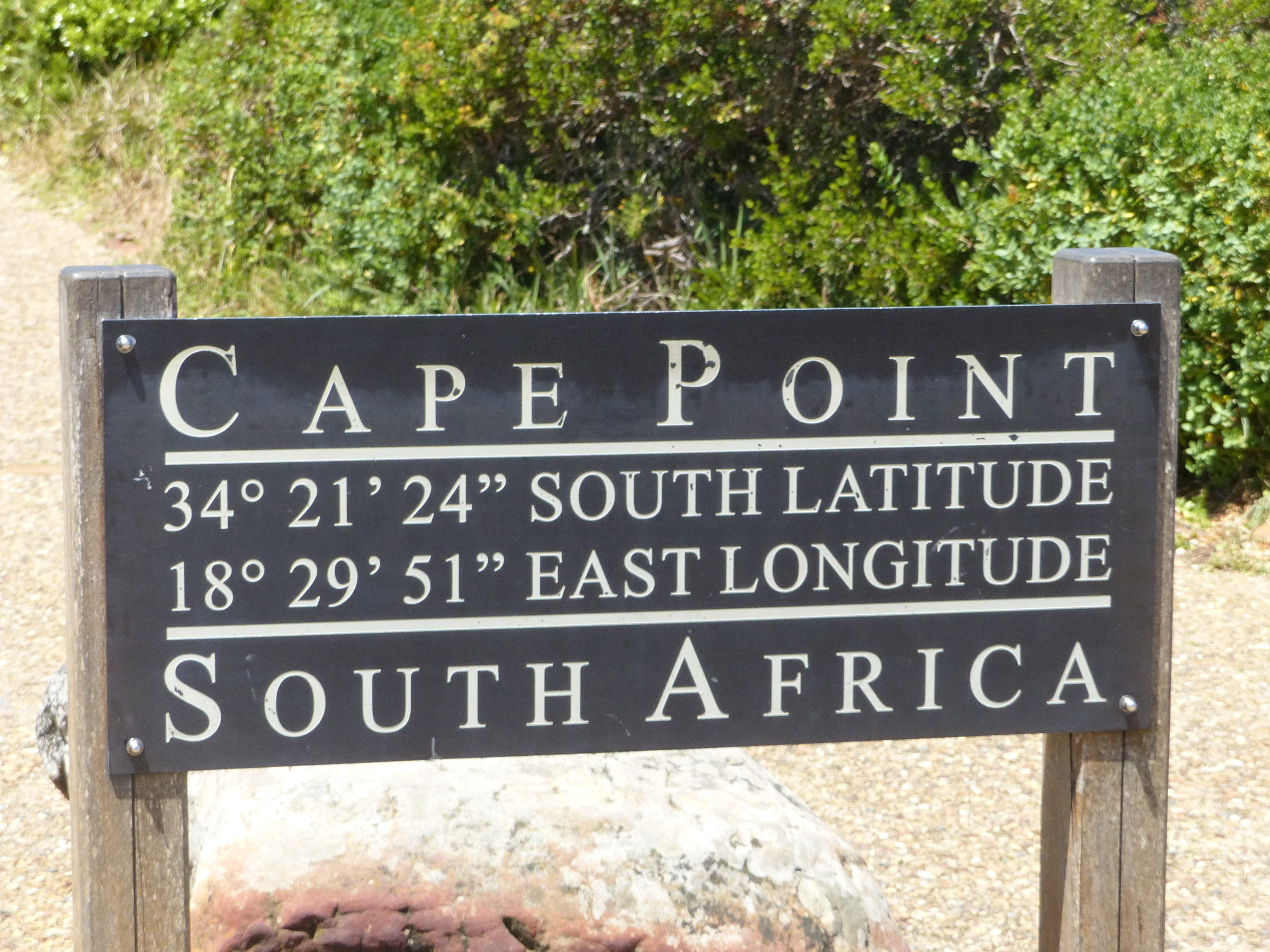
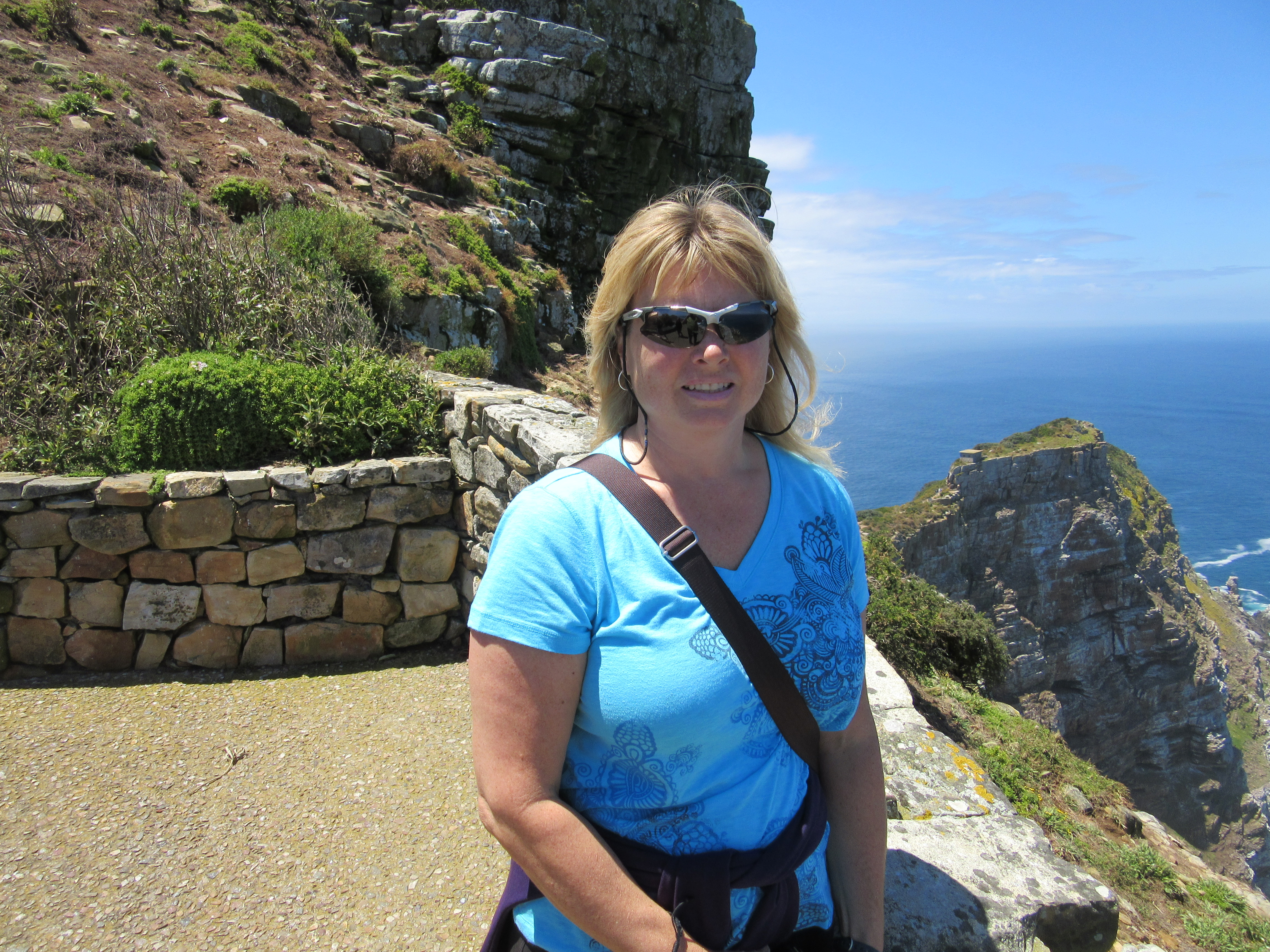
Eventually we got to the turn off for the Cape of Good Hope Nature Reserve. The whole southern tip of the peninsula is set aside as a nature reserve and provides a rather stark contrast of open heath to the spectacular rocky coastline of the tip of the peninsula. We drove out to the end and found a busy parking lot complete with large tour buses. Not our usual gig, but we parked and got out so that we could go to the top of the hill where the lighthouse is located and get the view. They had a funicular railway that carried passengers   up the rather steep hike for a small fee. We chose to do this and then walk down. By this time it was bright and sunny with not too much wind and we were enjoying the weather. At the top, we took in the view from the historic lighthouse. The lighthouse sits on the tip of Cape Point, whereas the actual Cape of Good Hope is just to the side. It is believed that as you look out from Cape Point you are looking at the point at which the Atlantic and Indian Oceans meet. Pretty cool! It is not, as is commonly mistaken, the southernmost point in Africa. That distinction belongs to Cape Agulhas, further East along the coastline, closer to where we were in De Kelders.
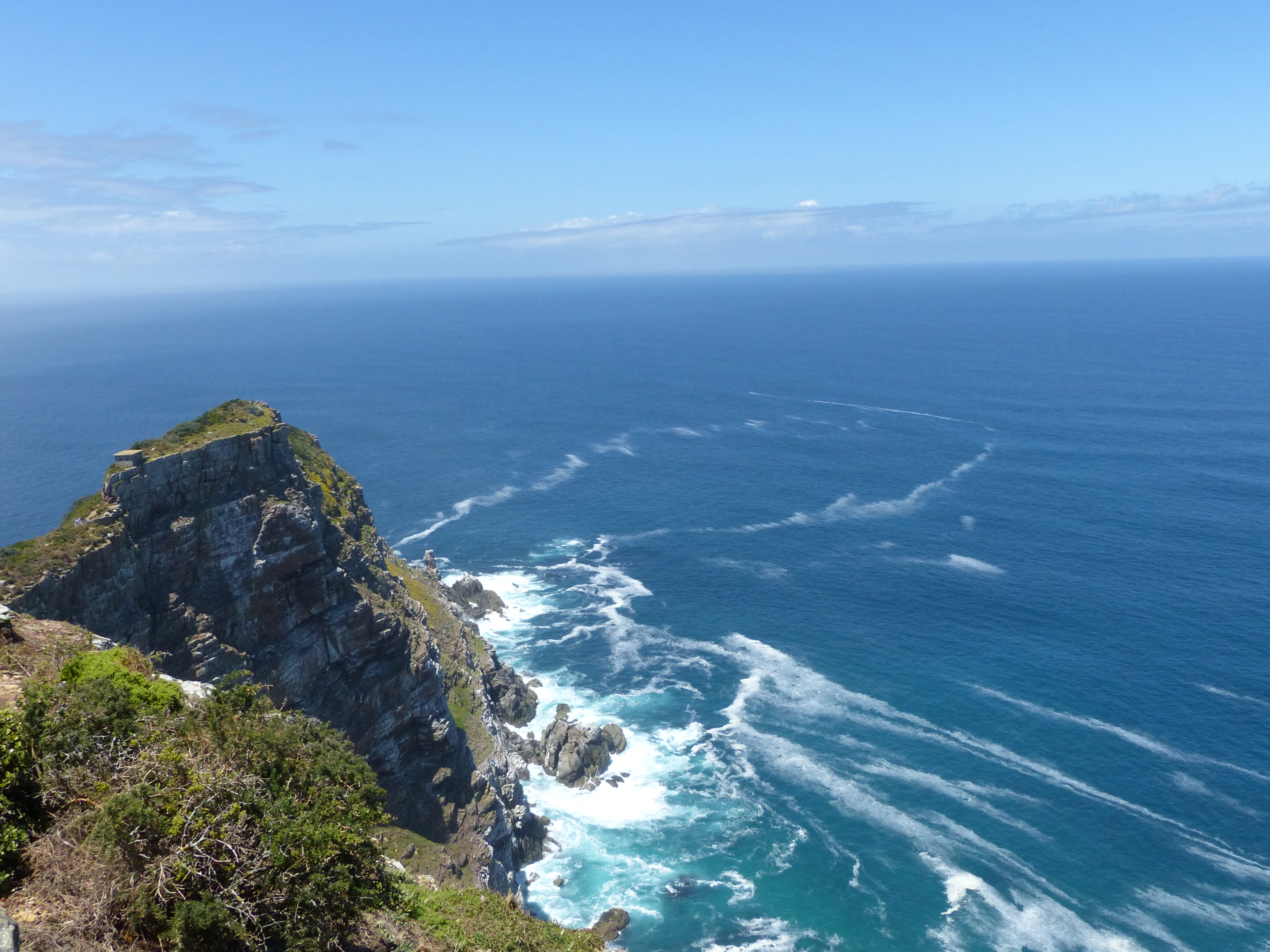
Cape Point where the Indian and Atlantic Oceans meet
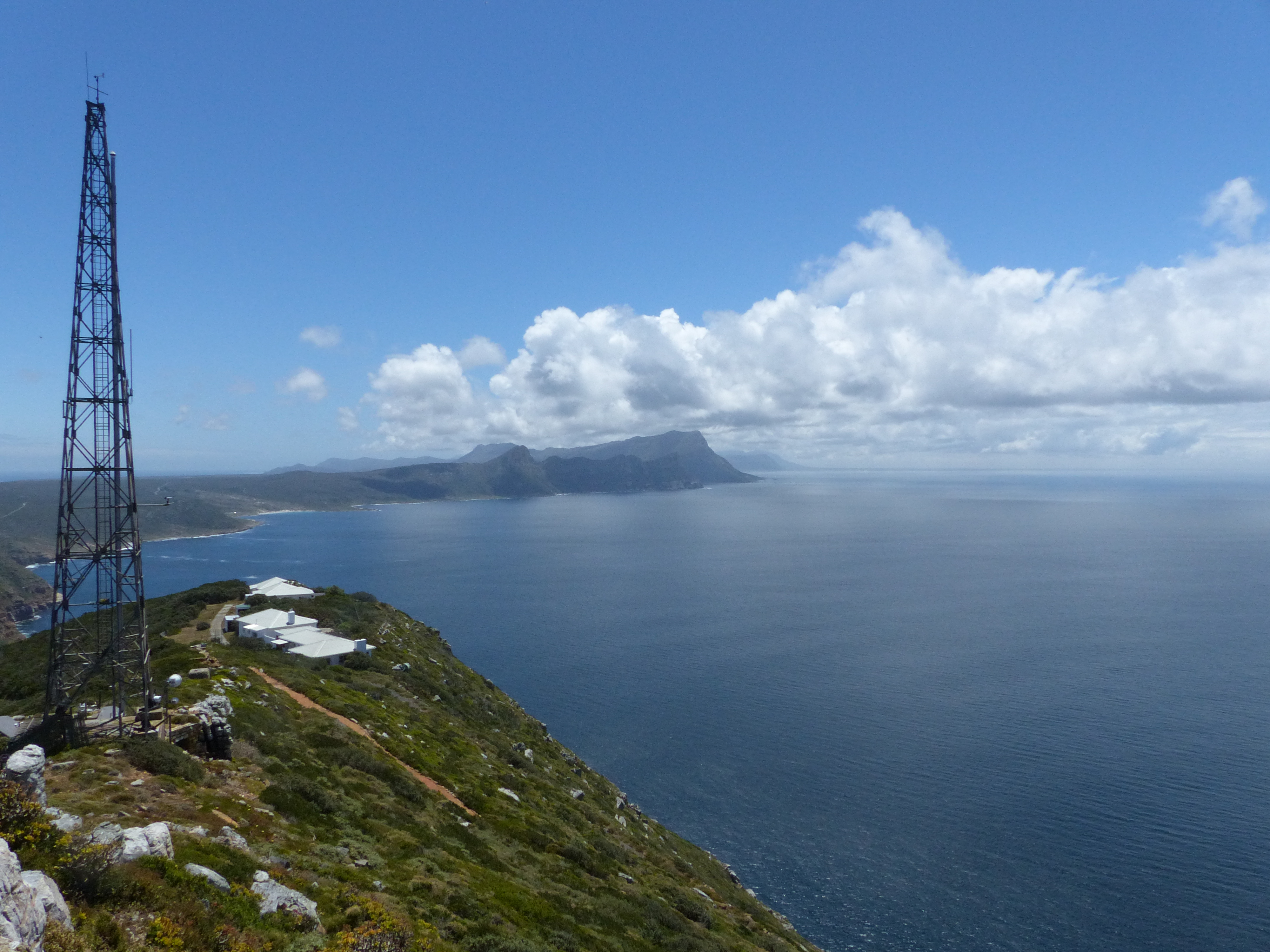
Cape Point where the Indian and Atlantic Oceans meet

P1020755

Looking up the Eastern side of the Cape Peninsula
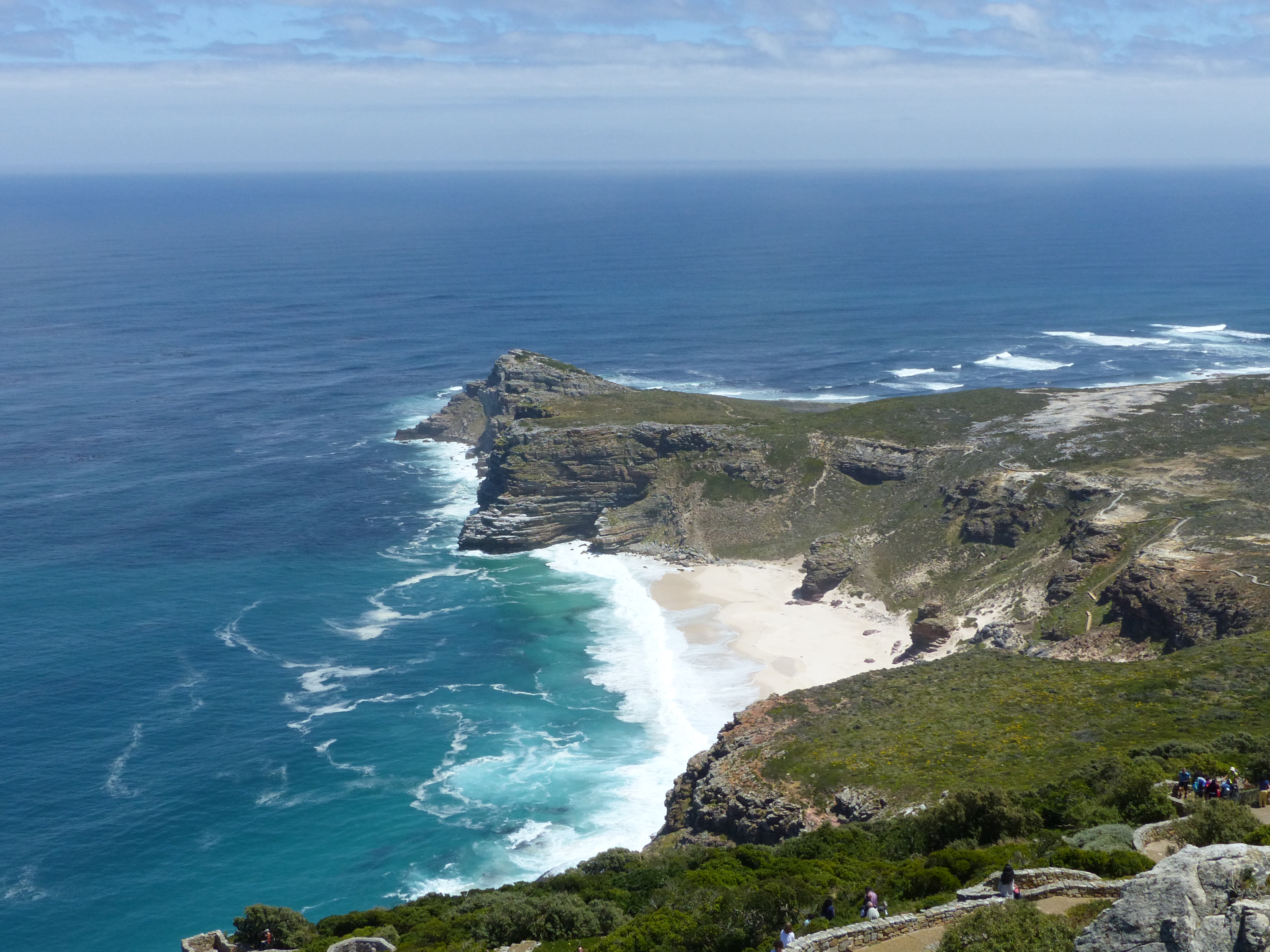
The Cape of Good Hope
The Cape of Good Hope

IMG_0560

P1020753

P1020756

P1020748

Rocks lurking off the point

Rocks lurking off the point

IMG_0568

P1020759

We did our best to ignore the throngs of visitors and enjoyed the views for a bit and then walked down the hill. The walk down convinced me that we had made the right choice in taking the easy way up! After a little peek in the souvenir shop and the purchase of a drink and a snack, we climbed back in the car and began the journey back up the other side of the peninsula.

Our next stop was near Simon’s Town at Boulders Beach where there is a land based colony of African penguins. African penguins are endangered and there are only a few of these colonies in the world. We paid a fee and walked down a boardwalk to the beach where we were able to see the birds nesting in the dunes and vegetation as well as hanging out on the beach and rocks and swimming in the ocean. It was pretty neat really see the penguins up close and nice that we could do it without bothering them by staying on the boardwalk.

This slideshow requires JavaScript.

After our visit with the penguins we drove on up the coast of the peninsula, through Simon’s Town, Fish Hoek, and Kalk Bay. We decided not to stop anywhere else except for a quick stop at the ATM in Simon’s Town. Simon’s Town is home to a Naval base and we saw some young men in uniform walking the streets.

IMG_0584

Simon’s Town

The afternoon was progressing and the weather had turned a bit cloudier as we drove up the peninsula, but we wanted to try to stop at the Kirstenbosch Botanical Gardens if we could get there in time. We found our way pretty easily and decided to go for it. Our visit to Kirstenbosch will be the subject of my next post. Thank you for your patience, dear reader, as I continue to chronicle our fantastic voyage!
Cape Town in the Rain

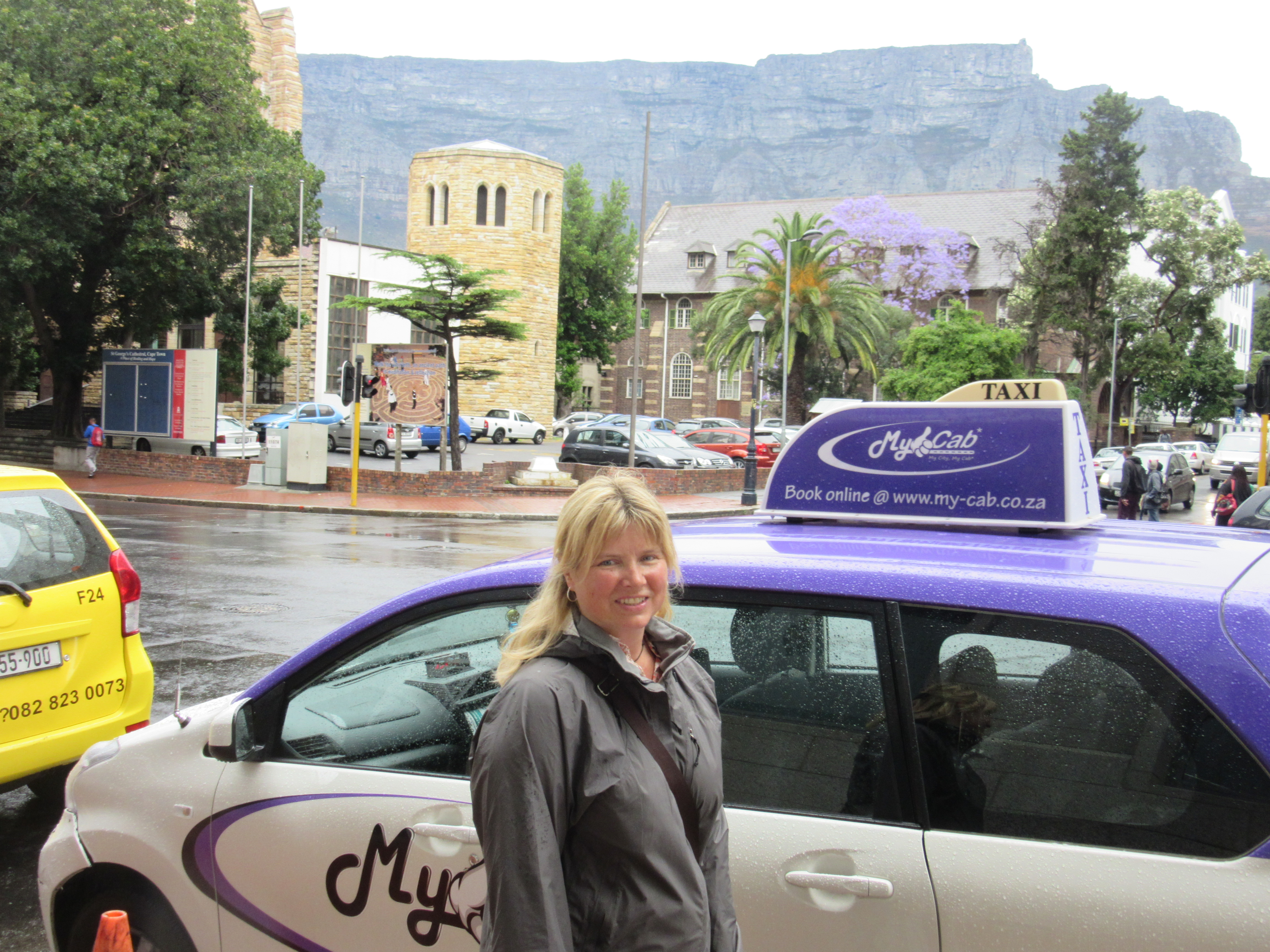
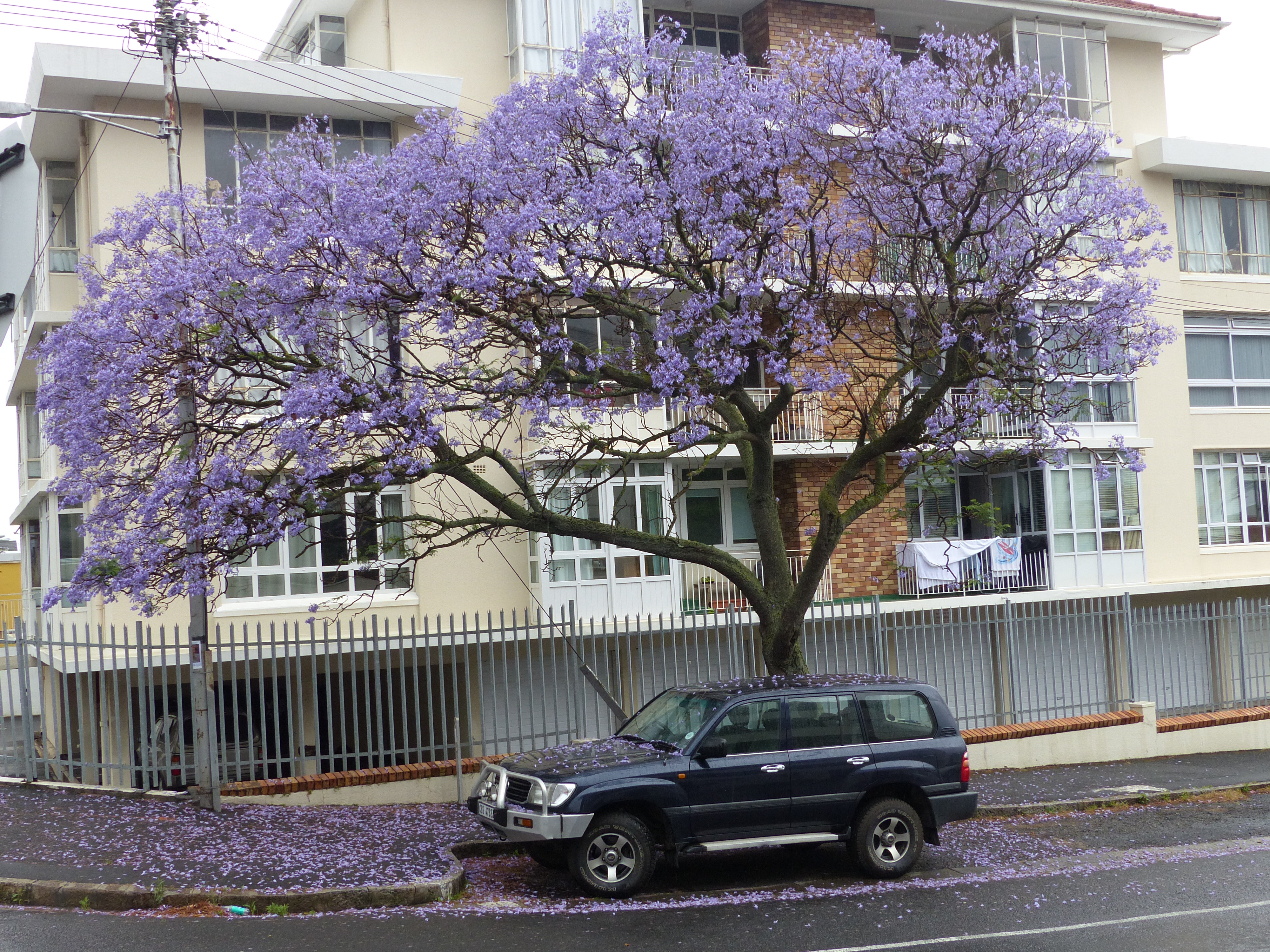
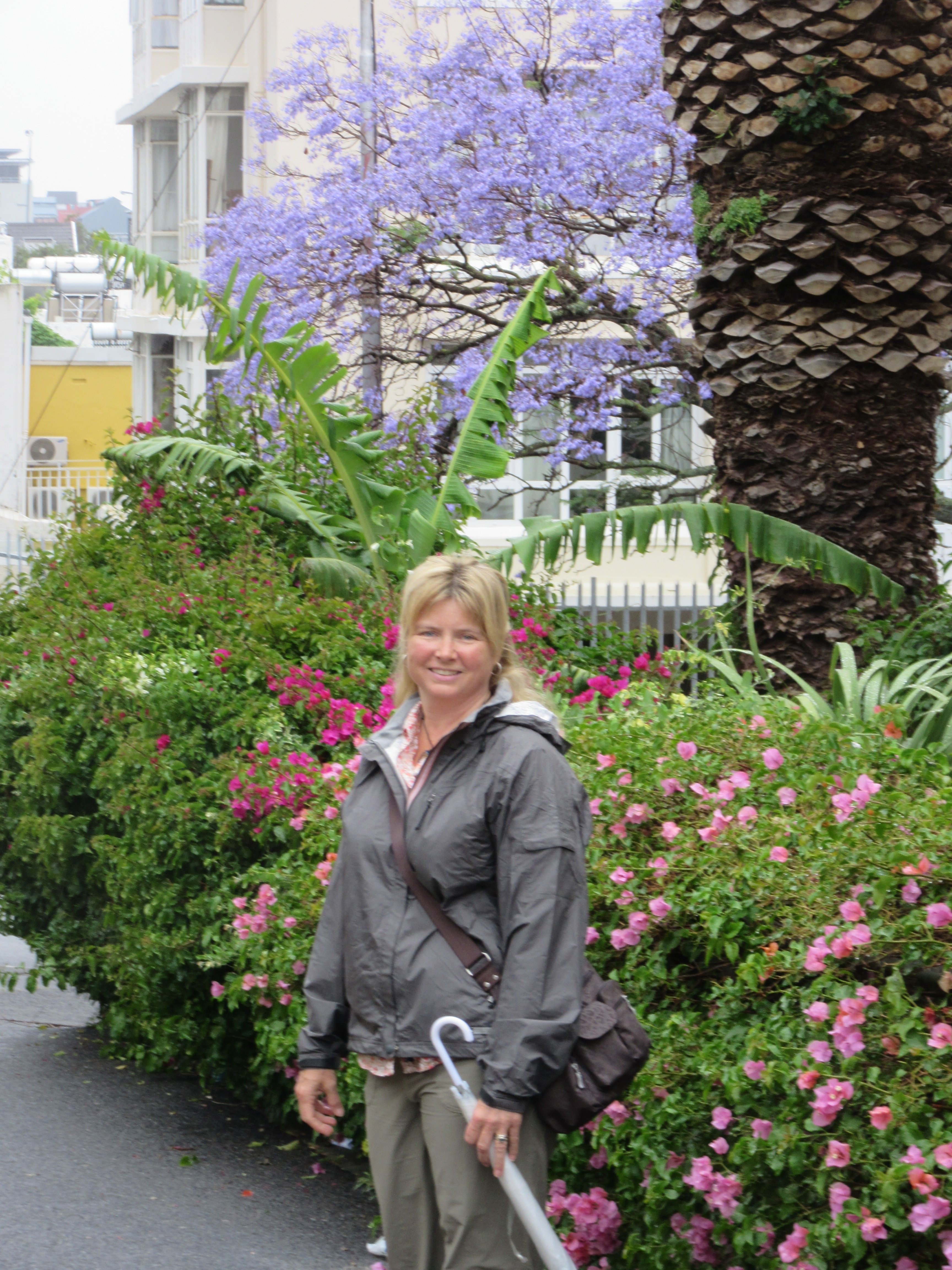
Our first day in Cape Town we woke to rain. It wasn’t supposed to get much better during the day so we took our time getting out and about in the morning. One of the things I wanted to do in Cape Town was go up to the top of Table Mountain. However you really need good weather for that, so I crossed my fingers that it would improve later in the week. Instead we donned our raincoats, took along an umbrella provided by the hotel, and set off walking down the hill toward the downtown area or city center. Almost immediately we came across this beautiful Jacaranda tree in full bloom. What a contrast to the city streets and such a fantastic color!

P1020716

IMG_0516

Soon we found Kloof St. and followed that until it became Long St. As we wandered Michael took a few shots of city scenes with his camera and we generally just looked around. We went into a music store we came upon and enjoyed checking out a lot of unfamiliar music. We each found a cd to buy which is a nice, easy, and lasting souvenir to take home.

IMG_0519

IMG_0520

IMG_0524

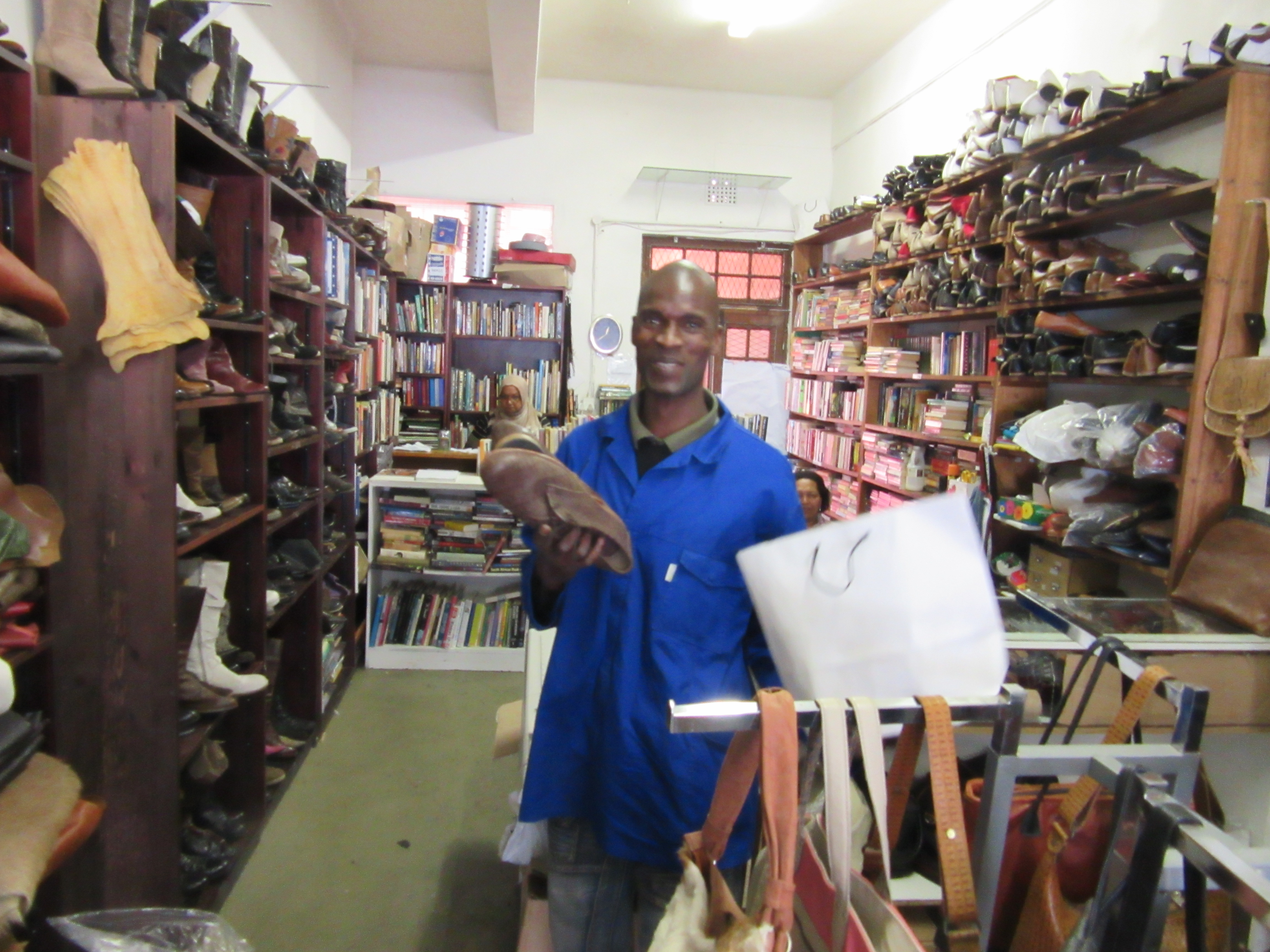
A little further down the road we passed a shoemaker called Diamande and decided to go in. He makes all his leather shoes by hand. There were shoes on display on the walls of the small shop and the shoemaker himself helps you. He doesn’t have a lot of different sizes made up but can custom make you a pair in a few days. A couple already in the store were just finishing up ordering some shoes and were very enthusiastic. The woman had ordered a red pair of booties. Michael was interested in shoes so Diamande helped him try on a few different pairs. In the end he found a handsome pair in brown buffalo hide.

IMG_0522

Diamande holding Michael’s shoes in his shop.

We continued down Long St. until we got to the Pan African Market which is a multi-story building with African crafts from different parts of the continent. There was a warren of little rooms filled with different vendors and artists and some occupied space in the hallways. It was a little overwhelming, but since it was rainy out, we didn’t mind being indoors. We visited two floors and I enjoyed seeing all the different styles of craft. This was also the kind of place where you are expected to bargain so we did our best on a few small purchases. Eventually I needed to find the restroom and when we got directions we discovered there was a funky little café tucked into one of the rooms. They had the key to the bathroom. While I went down the hall, Michael sat down to have a beer.

P1020721

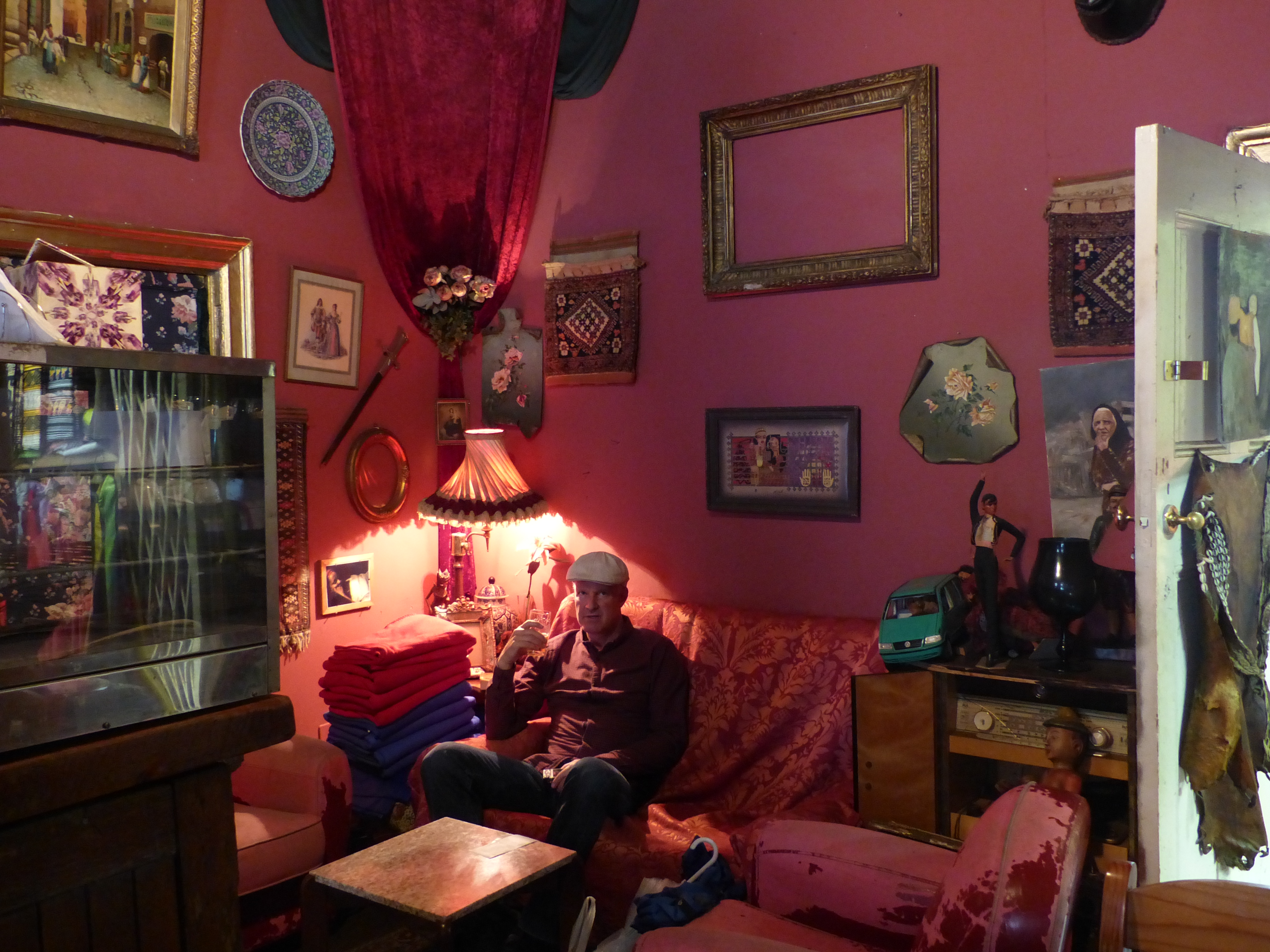
Michael ensconced with his beer.

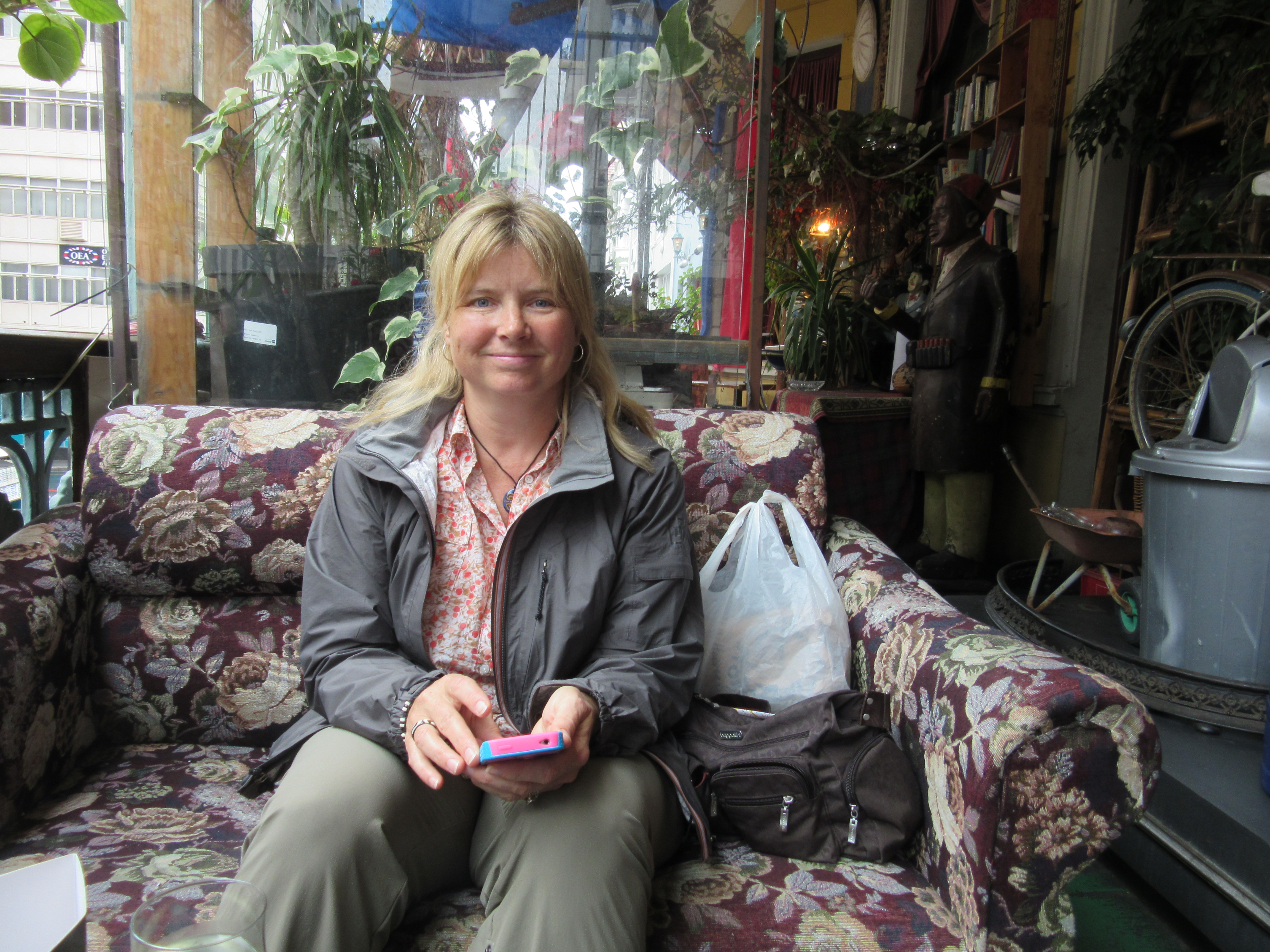
The café turned out to be Ethiopian and had seating on a long balcony overlooking the street. When I got back from my mission, we decided to sit down for a bite to eat and a respite. We ordered some drinks and some Ethiopian food and soaked up the funky atmosphere. I’m not sure how many tourists end up there, but we had fun.

P1020723

On the balcony.

P1020722

The view.

IMG_0528

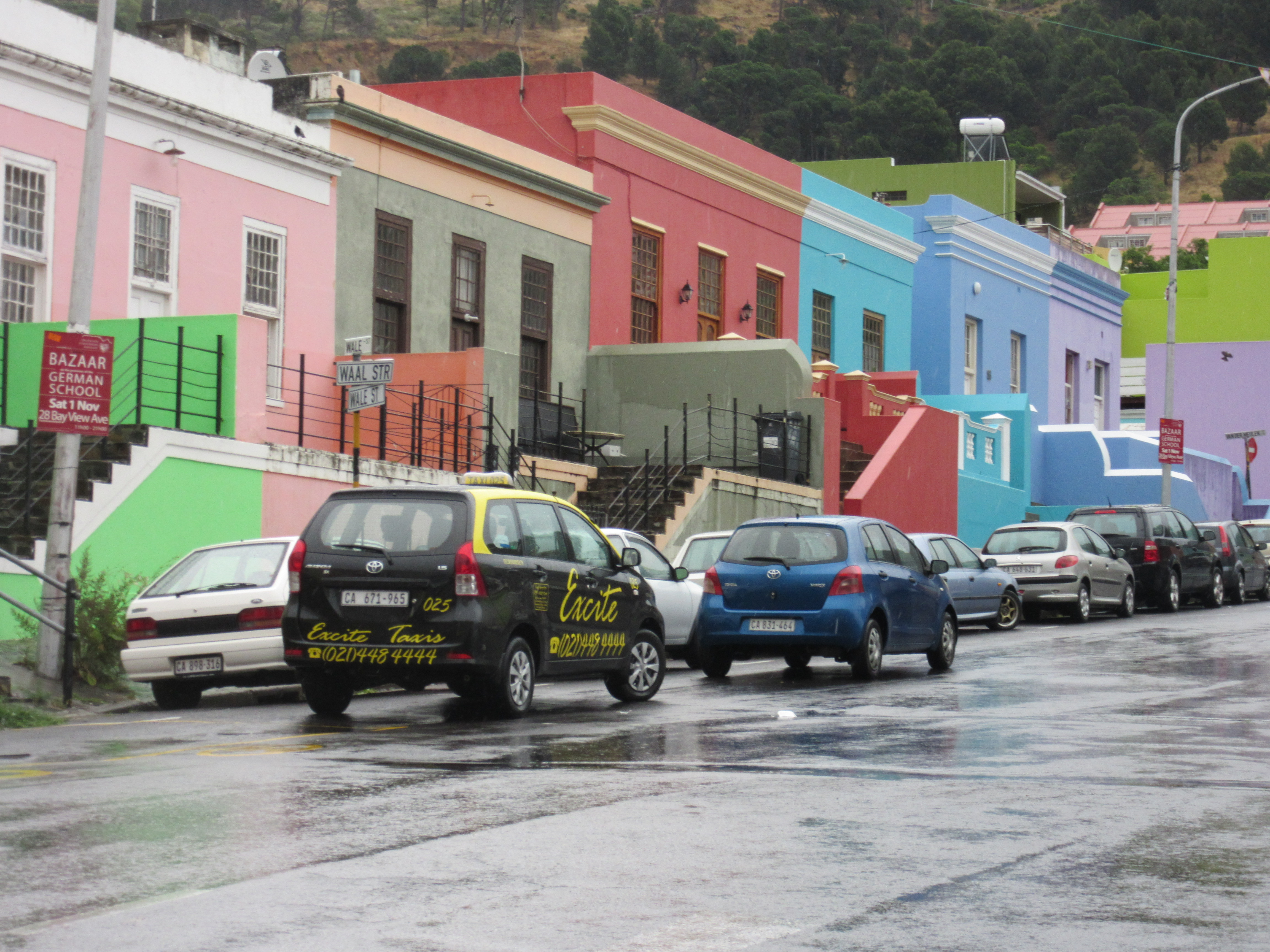
Suitably refreshed by our stop, we set out once again into the street to wander some more.  I had wanted to buy some spices in Africa and had looked up a shop nearby, so we set out in search of it. The Atlas Trading Company has been around since the 1940’s and is located in Bo-Kaap, the Malay quarter of Cape Town. It was raining again but fortunately the shop wasn’t too far. Atlas sells “bulk spices, rice, beans, lentils, seeds, coconuts, dates, pickles, herbs, nuts, incense sticks, books, kaffan etc.” according to their packaging. A lot of it is of Indian origin or flavor. It’s not really a tourist shop. When we arrived, there were men loading sacs of rice and other goods into a truck in front. Inside there were huge bins full of powdered curries, masalas, turmeric, ginger, and many, many others. I wanted some masala but had no idea what the differences were between the many kinds. There didn’t seem to be an obvious customer service presence. Fortunately they also had some pre-measured packages and I just took a guess and picked a few things that looked good. It wasn’t very clear how one should proceed but I went first to one window to have the inventory accounted for, and then to another window to pay. I came away with Leaf Masala, Smoked Paprika, Lemon & Garlic BBQ, and Potjiekos Spice. I’m sure they will inspire many cooking adventures.

Outside Atlas Trading Co. Bo-Kaap has colorful houses!

Outside Atlas Trading Co. Bo-Kaap has colorful houses!

After the spice adventure we headed back toward our hotel but went by way of the Company’s Garden. The Company’s Garden was started in 1652 by the Dutch East India Company for the purpose of re-supplying their ships as they stopped on their way between Europe and the East Indies. It is now a beautiful garden, much like a botanical garden, with old trees of varying species nicely identified with placards, including a huge rubber tree. It really was an oasis in the city and we walked the length of it enjoying the plants and trees and at the end, the rose garden.

IMG_0532

On the way to the Garden, Table Mountain appears in the background.

IMG_0536

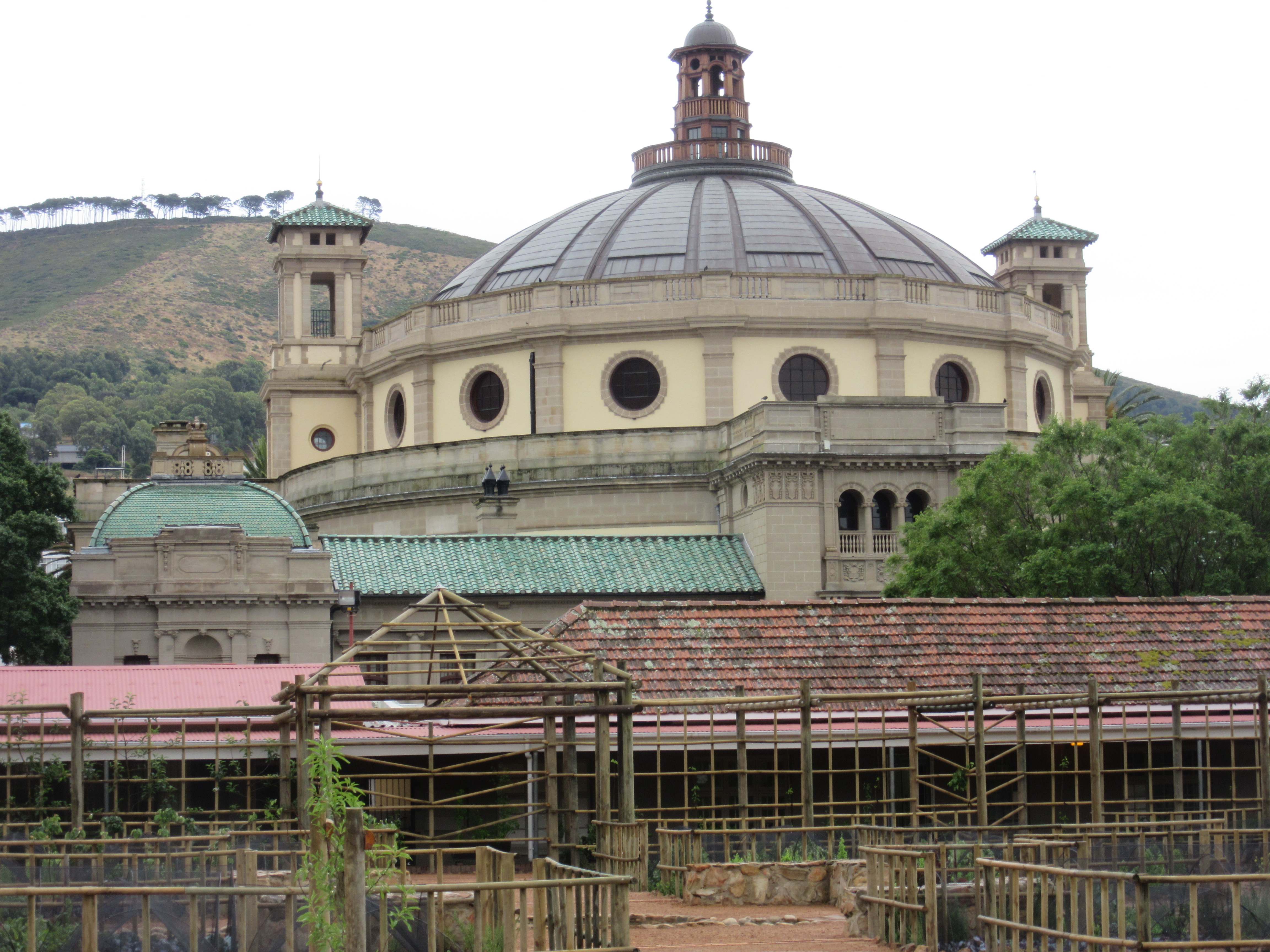
Signal hill appearing behind a The Center for the Book as seen from the rose garden.

IMG_0537

IMG_0539

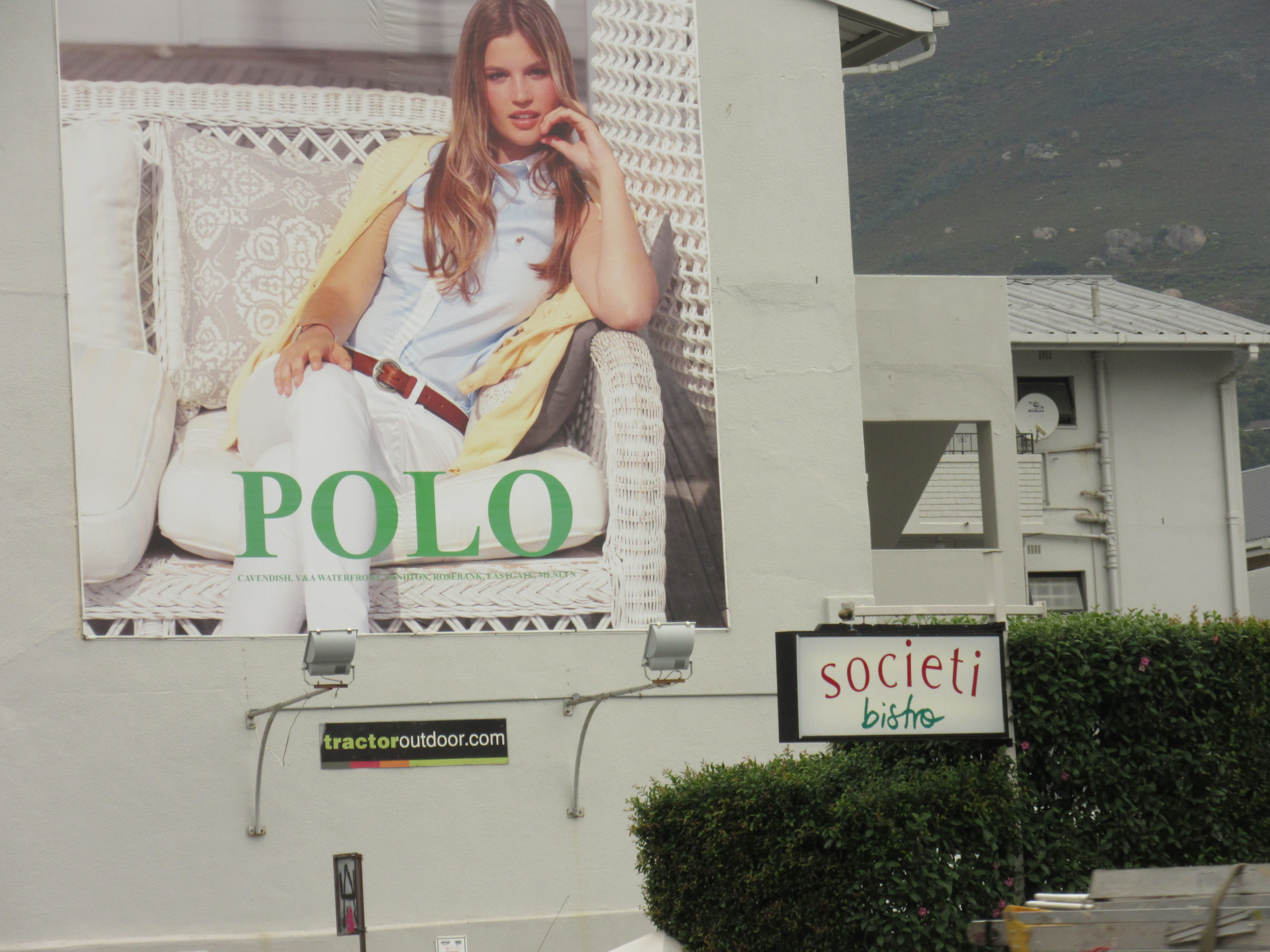
Michael found this juxtaposition amusing. South Africans seem quite fond of Polo style.

IMG_0540

A city view

After finding our way back to An African Villa, we did what any sensible traveler does after a walking tour and took a nap. That evening we made a second attempt at dining at Saigon. This time we were successful, although there were threats that the power might go out again. Apparently a coal silo at a major power plant in South Africa had fallen over, damaging the coal supply system to the power plant. The power company was scrambling to bring in coal by truck to keep the plant going, but they were warning that there might be rolling blackouts imposed if need be until they could get the supply up to speed. Happily for us, there were no more power outages and we enjoyed a dinner of Vietnamese dishes and walked home on lighted streets.

To Cape Town

The day after our wine tour we were scheduled to drive to Cape Town where we would spend four nights. We knew the drive wasn’t far and so we took our time getting packed up and breakfasting at The Coach House before leaving. It was Sunday morning and once again the sun was shining. After saying goodbye to Franschhoek we drove through the valley to Stellenbosch, one of the other wine towns. Stellenbosch, which is home to a University, is a good deal larger than Franschhoek, which is really more of a village. We found our way to the main center of town and parked so we could walk around. Not everything was open since it was Sunday, however we found plenty of shops to occupy us for a bit. Though Stellenbosch was pleasant, I was pleased I had chosen Franschhoek instead for our stay.

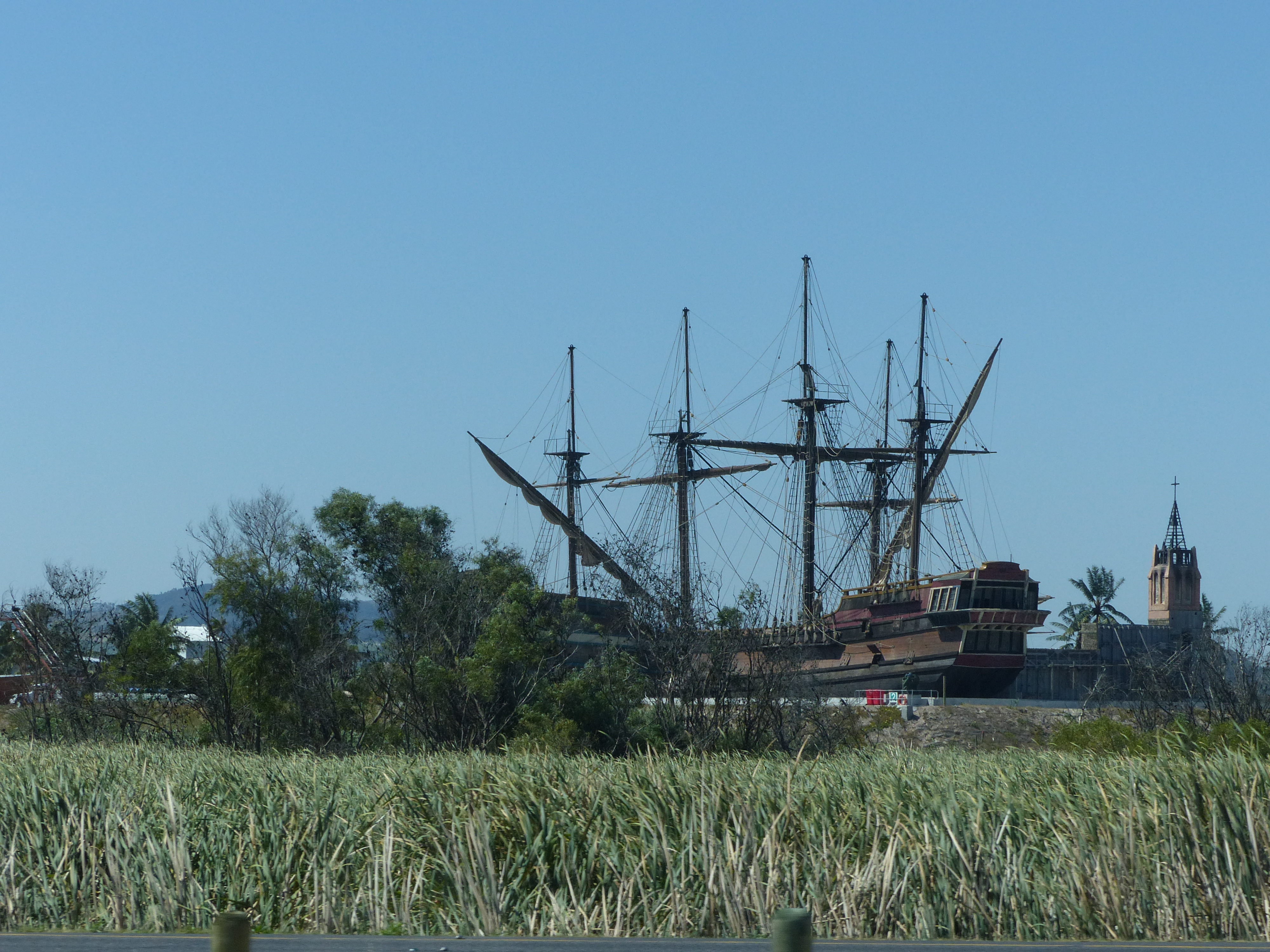
After our bit of shopping, we got back in the car and headed for Cape Town. As we got closer, the traffic and speeds increased steadily. As we merged onto the highway we saw a strange sight over in a field. It looked like a large sailing vessel but there was no water anywhere. Then we remembered that Aylmer had told us about a set from a pirate movie that had been filmed near Cape Town, and how you could still visit it. Here is what we saw.

P1020707P1020709

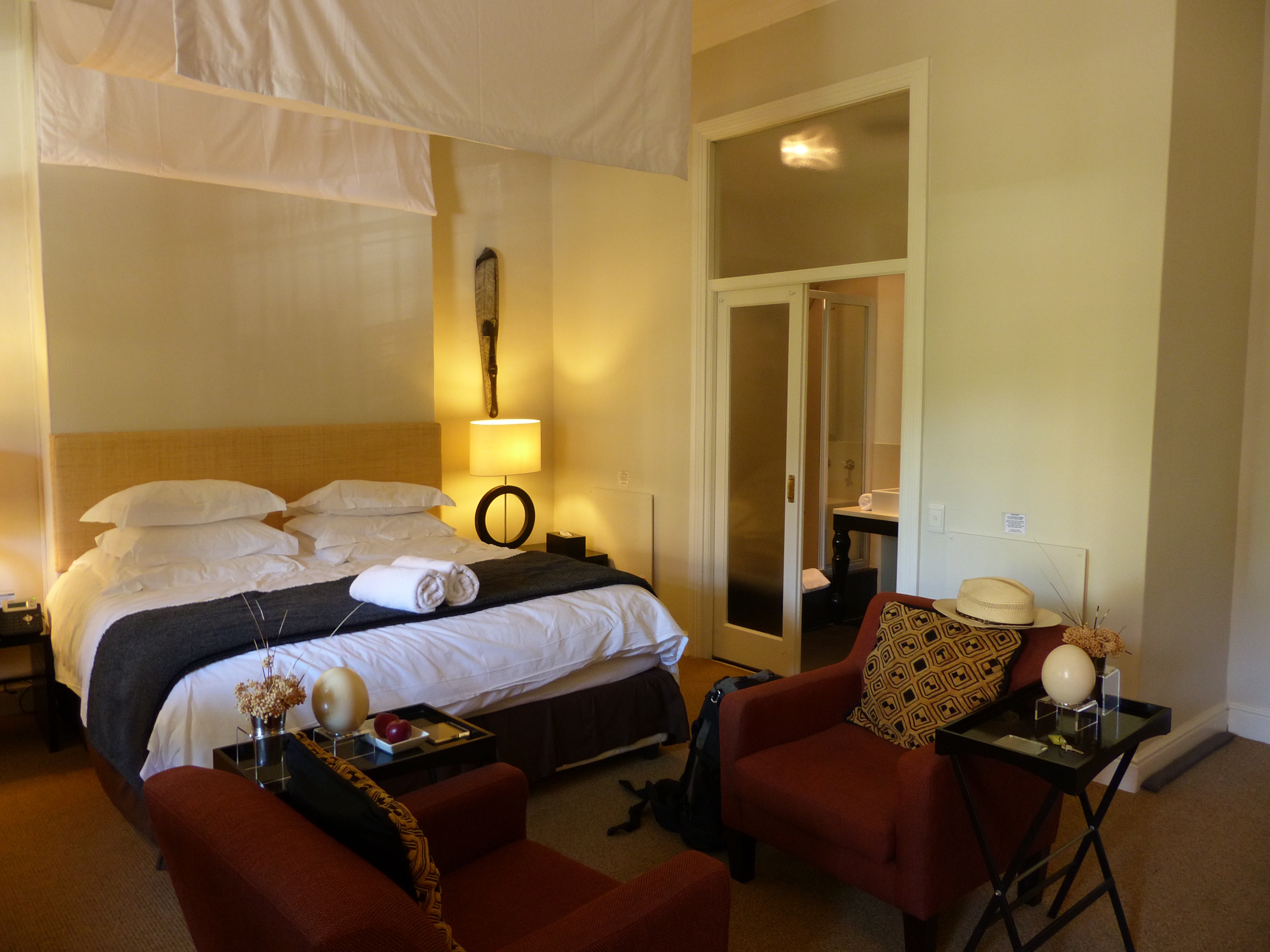
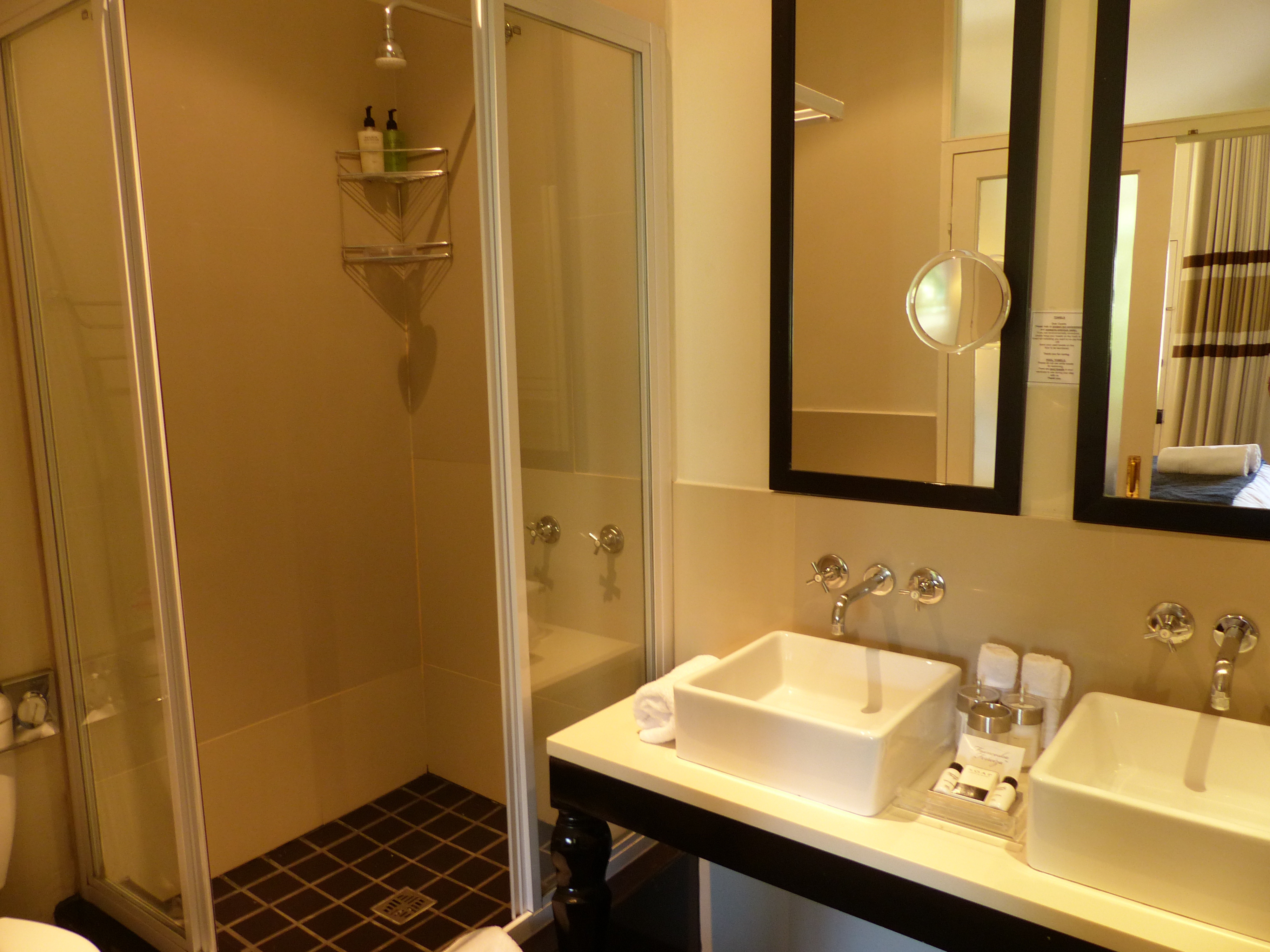
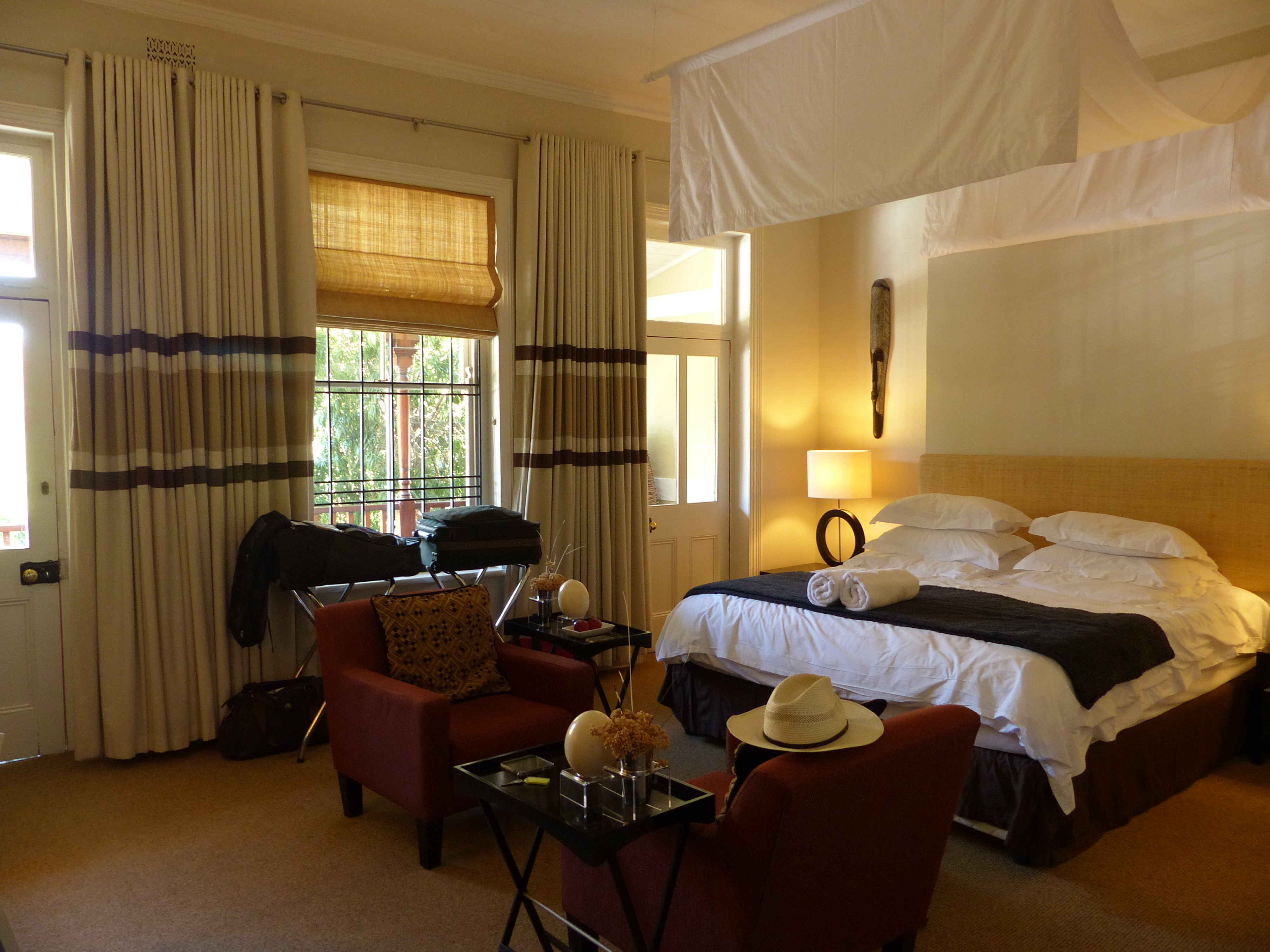
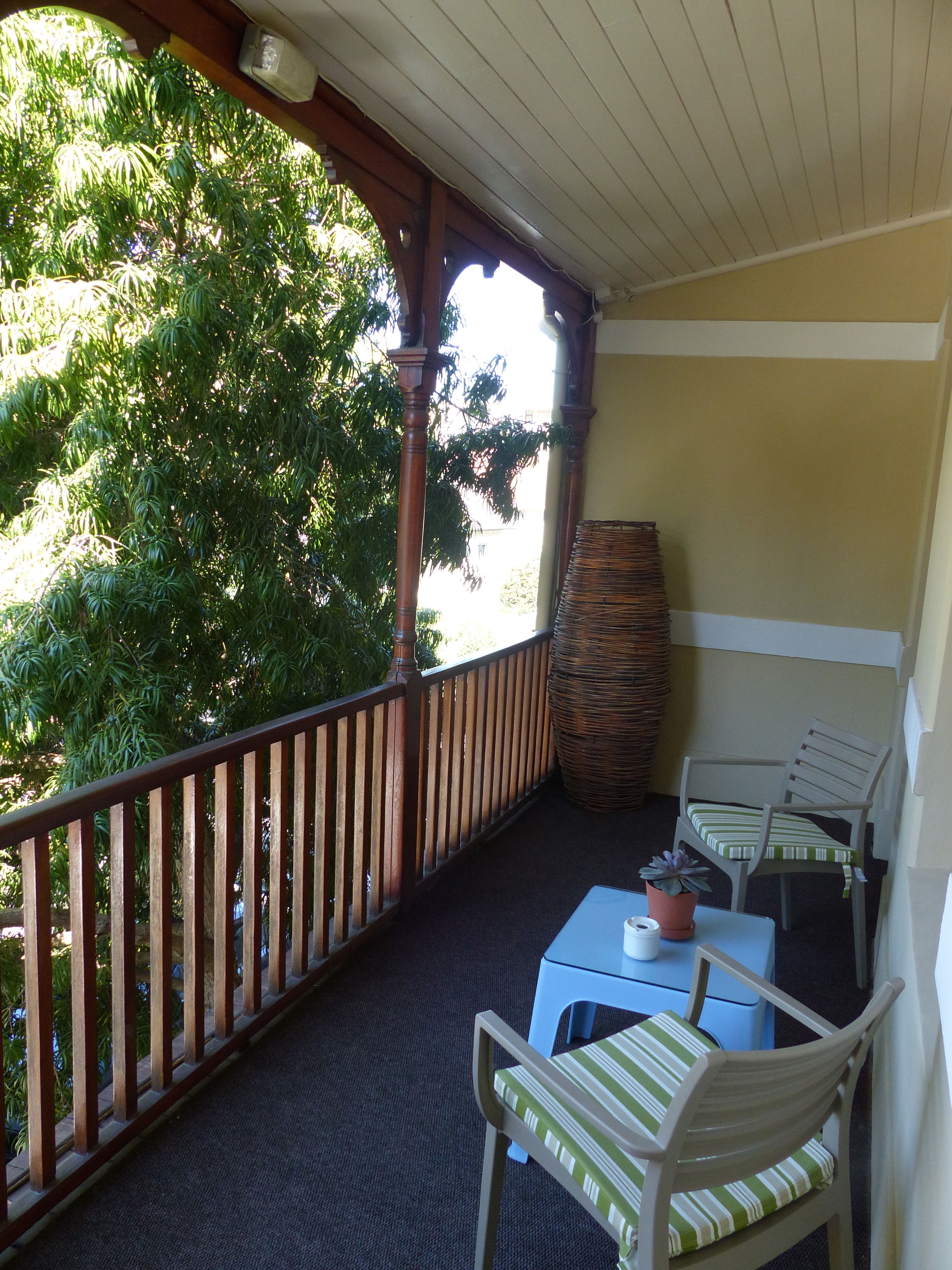
Michael drove and I navigated. I was happy that I had had the foresight to print out the directions to the hotel before we left the U.S., and that I could actually find them almost three weeks later! Between that and my iPad, it really wasn’t too bad, but it certainly was the most urban environment we had driven in yet. We found our hotel and a parking space in front at just about 3pm – perfect timing for check-in. An African Villa is a small boutique hotel with perhaps 16 or 18 rooms. It’s actually 3 townhouses that were connected, restored, and transformed into the hotel. It had funky, modern, artsy decor, comfortable common areas, and a small pool and terrace garden in back. Our room was on the second floor and had a nice balcony overlooking the street.

P1020714

Our room at An African Villa

P1020711P1020715

The balcony

The balcony

We enjoyed having a little extra space and the idea of not going anywhere for four nights. One of the first things we did was sort out how to get some laundry done. After unpacking and relaxing a bit, we went downstairs and sat down with Louis, one of the hotel managers, who guided us through an introduction to Cape Town and the most popular sights, restaurants, shopping, etc. He made a reservation for us for dinner that evening at a local asian place called Saigon. It was within walking distance which appealed to us and we were yearning for more ethnic variety in our food. One of the things we paid attention to were the recommendations on safety. Cape Town is a city and as such, presented a different ball of wax in terms of crime and personal security. We had emptied the car of absolutely everything as recommended.

That evening we went out and walked the ten minutes or so to our restaurant up and down some steep hills. Most of Cape Town is situated in a bowl ringed by mountains sloping down towards the harbor. Our hotel was in the Tamberskloof neighborhood which climbs up the side of Signal Hill. It was quite warm out and somewhat humid. When we got to the restaurant, we were told that the power had gone out and therefore they couldn’t serve us. This was a surprise as we hadn’t noticed it on the walk since it wasn’t dark yet. It also presented a bit of a pickle for us. We hadn’t researched other places to go nearby and weren’t sure what to do. I guess the power had gone out while we were walking from the hotel to the restaurant as it had been on when we left. They said it was out all over the city and they weren’t sure when it would come back on. Turned out into the street, we looked around and decided a bird in the hand was the best option. There was an italian restaurant below Saigon which was still serving pizza as they had a wood fired oven that did not require electricity. They allowed as how they could also drum up a salad, so we took a table and ordered some drinks while they were still cold. We have found most of the restaurants in South Africa to be dimly lit, so it was really no different to be trying to read the menu by candlelight! We had sensibly remembered to bring our little travel flashlights too, so that helped. As we waited for our pizza and salad we discussed a couple of issues that we hadn’t thought of before then. Would it be safe to walk back to the hotel with no street lights? Would the electric, keypad operated, outer gate still function? Fortunately for us, we never had to find out. The power came back on just before we left the restaurant. It was a relief to have the streets lit up for our walk back. We hadn’t been in the city long but were already well aware of the homeless population and the potential for unsavory characters. Both Michael and I have traveled plenty and spent time in cities, so we weren’t uncomfortable. However it never hurts to take sensible precautions. In the end we had a fine time that evening and flopped happily into bed with no major agenda for the next day.

Of Wine and Sunshine

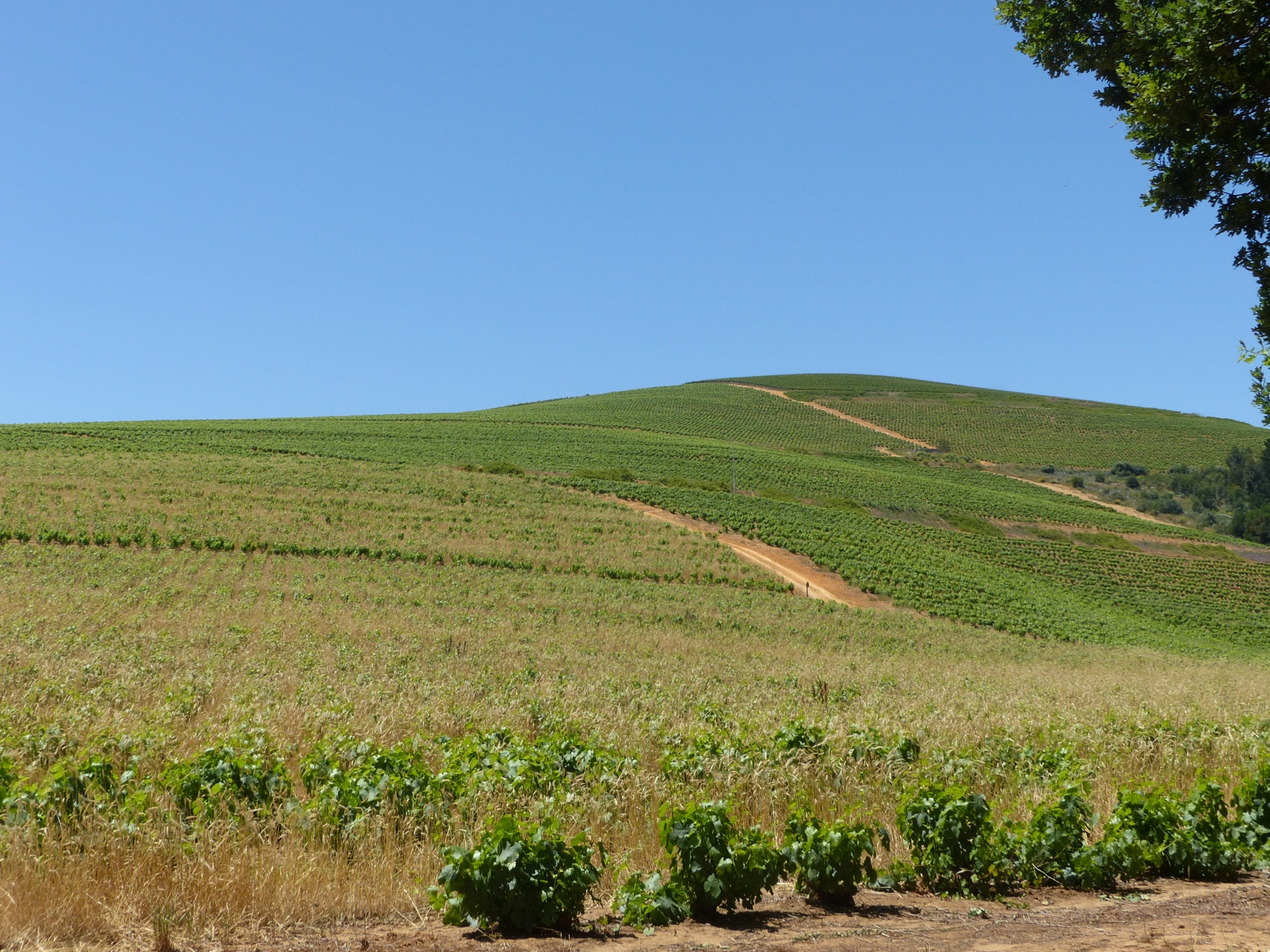
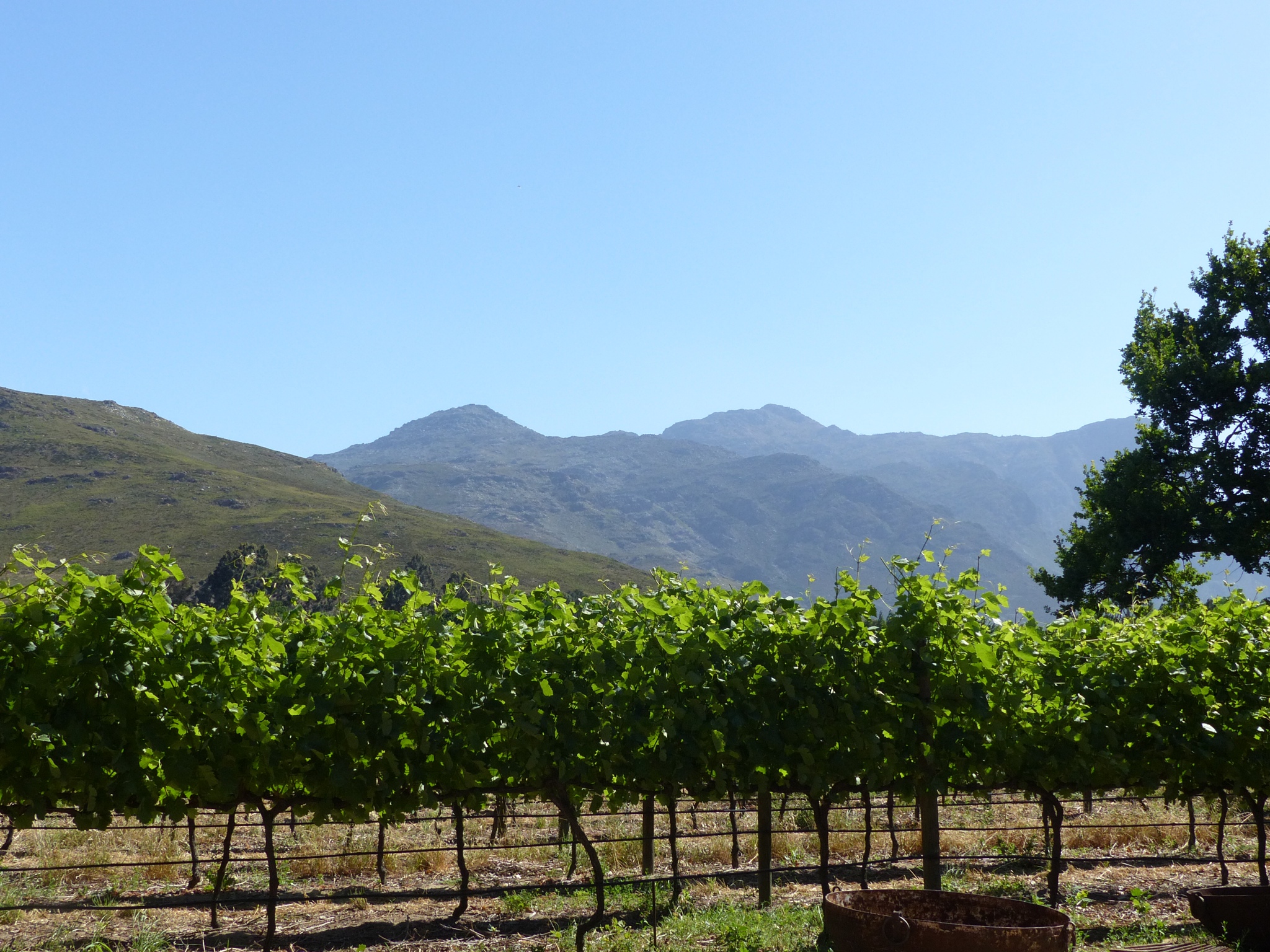
For our day in the winelands we were blessed with fantastic weather. It was sunny, dry, and not too hot, but pleasantly warm. This was much appreciated after the mixed weather we had experienced thus far. It really was perfect. South Africa has a long history of wine making and produces a lot of really excellent wines. The area surrounding Franschhoek is one of the premier wine farming regions in the country and I was excited to spend a day exploring it. We had breakfast at our guesthouse and were picked up promptly at 10am for our private wine tour. I wanted to visit some wine farms, do some wine tasting, and learn about the area and the winemaking without having to drive ourselves or spend hours researching where to go. A private tour seemed the best and most flexible way to do this and I'm so glad we chose to do it that way. We could have gone with a group tour but a private tour allowed us to go at our own pace and accommodate only our own preferences. Aylmer from La Rochelle tours arrived in a small van and greeted us warmly. He lives in a nearby town called Paarl which is one of the three main centers of wine making in the region with Franschhoek and Stellenbosch being the other two. They form a sort of triangle about an hour inland from Cape Town. He was a personable young man who began by asking our interests and preferences. One of my requests was that we not go to the big wineries where the tour buses go. I wanted to go to smaller, lesser known wineries that were more of the hidden gem variety. We started out with a drive to the furthest winery we would visit, to be followed by others as we made our way back toward Franschhoek with a stop for lunch along the way.

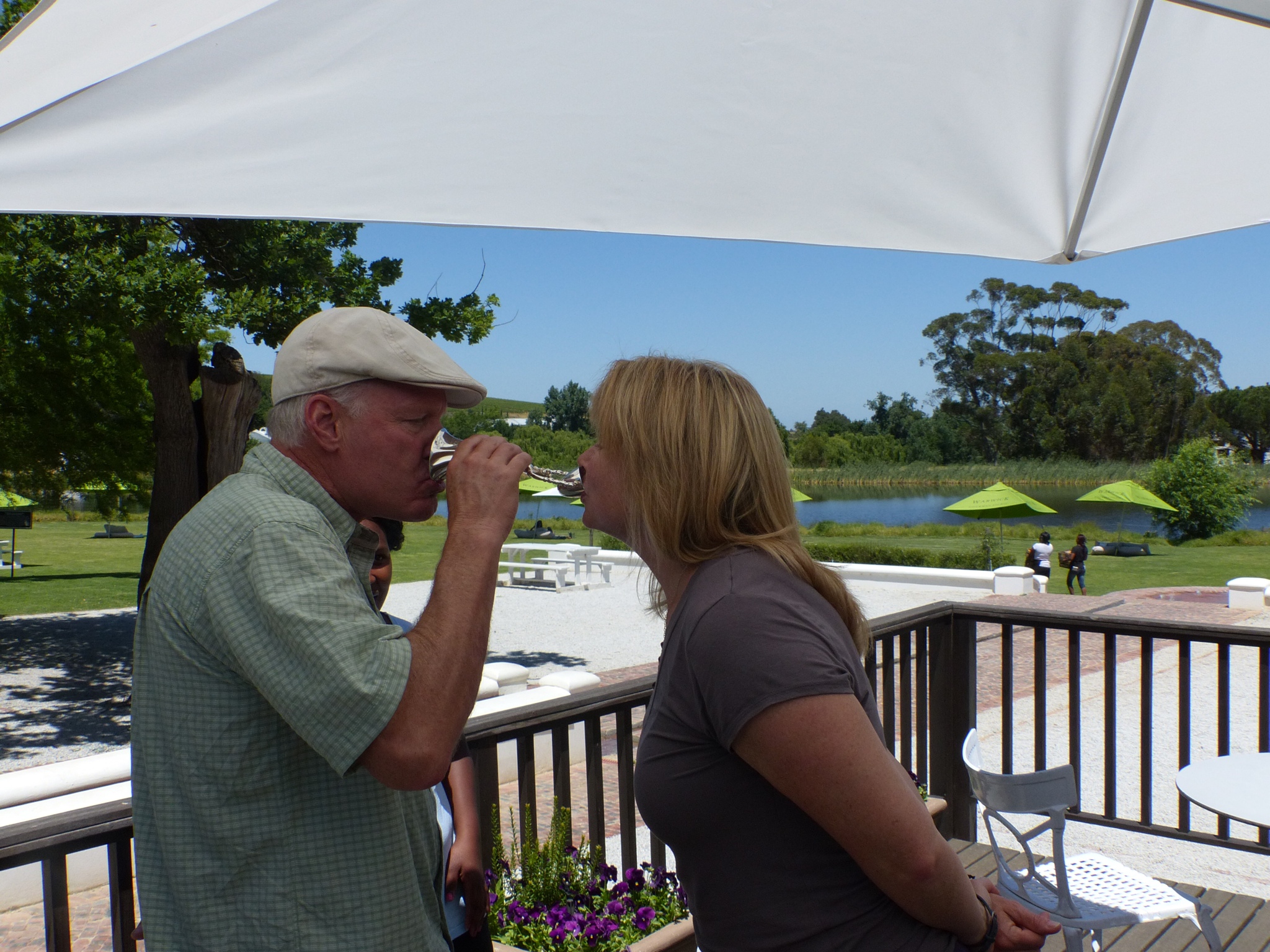
As we drove past vineyards and mountains and beautiful scenery, Aylmer gave us some background and pointed out some geographical features to help orient ourselves. Our first stop was a winery called Warwick Estate. It had a lovely small lake and beautiful grounds. I could see why people would choose to come there for a picnic on a Sunday afternoon. They had a fairly large tasting room and shop, perhaps the biggest we saw that day. We were seated outside at a small café table on a terrace and a nice woman came to serve us the tastings. She would pour and give us a brief introduction and then Aylmer would really delve into it. We had a wonderful time learning new things about wine and wine tasting. Aylmer was very knowledgeable and really knew how to convey the concepts. I found myself learning new things which was quite refreshing as I have done a fair amount of wine tasting at wineries before and lived and worked in the wine country in California. He really knew his stuff and even Michael, who is less of a wine enthusiast than me, was enjoying himself. Warwick poured eight wines to taste which is rather a lot, but it was fun to try so many and discern the nuances of difference guided by Aylmer. After that we took a peek at the shop and then went back to the van to move on. I wanted to buy a few bottles of wine from the wineries that day but knew that I was severely limited as to quantity, so I chose to hold out.

We are attempting to drink out of a special cup without spilling!

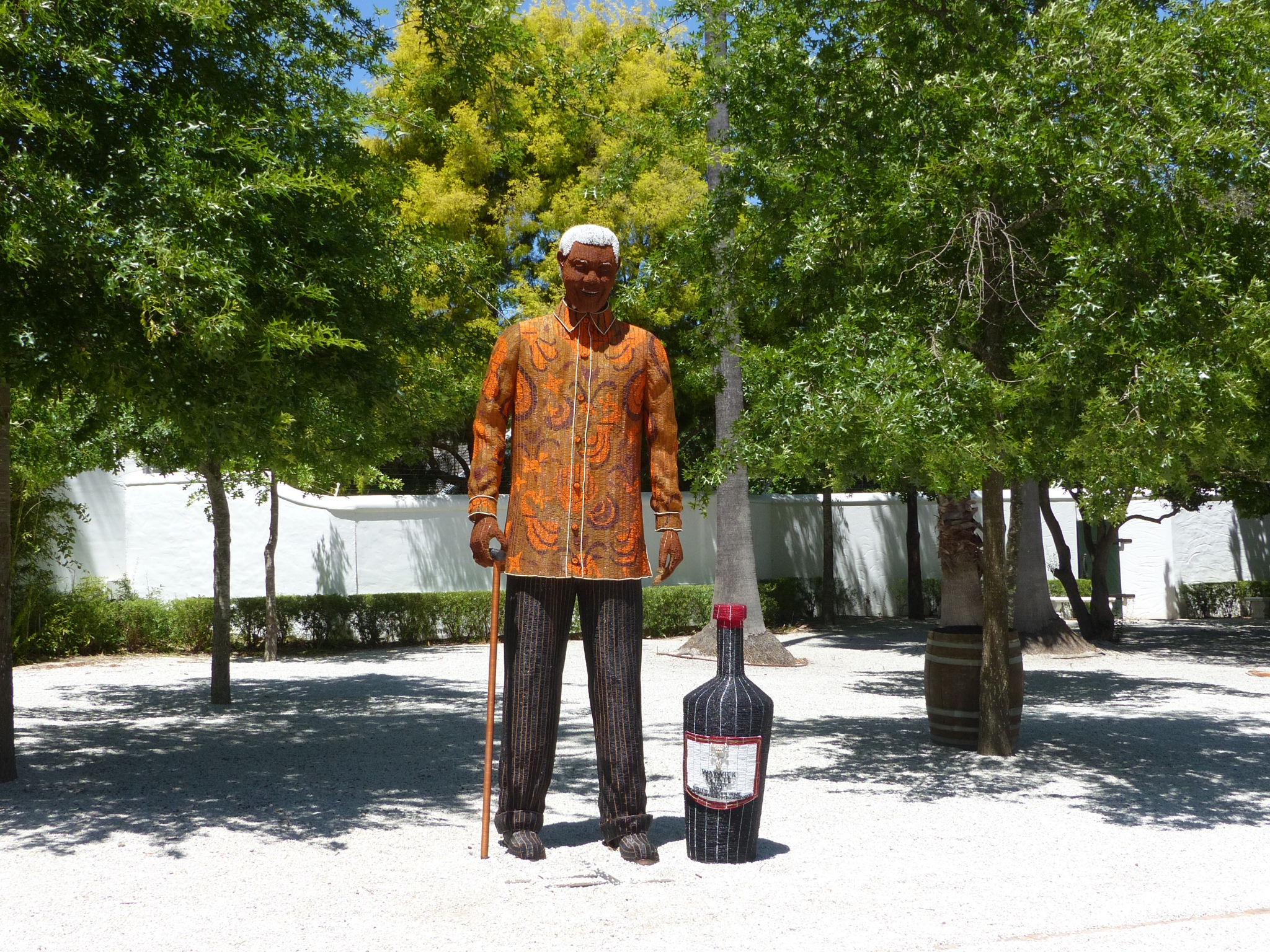
Some artwork at Warwick Estate

Our next stop was not too far away. It was a winery called Kanonkop. The name refers to the cannons on a hill by Cape Town that were used to signal the people living in what is now the wine lands to bring their goods to market. When ships would arrive in port, the cannons would be fired in a prescribed sequence signaling the farmers in the interior that they needed to load up their produce and start heading to Cape Town to re-provision the ships. As expected, there was a canon at the winery. Kanonkop uses cement tanks for their fermentation– a process that us not very common anymore. They had some delicious Pinotage to try. Pinotage is a grape that is unique to South Africa. It was developed by crossing the Pinot Noir grape with Hermitage and has resulted in delicious red wine.

Out the window

After Kanonkop we drove up into the hills to a small family run estate called Camberly Farms. Apparently the winemaking is actually a hobby for this family instead of their main income and they produce small quantities of high quality wine. We got to see the rooms where they do the fermentation and keep the barrels before going up to the tasting room.

They had some really good Cabernet blends and Cabernet Franc. Once again Aylmer did a masterful job of leading us through the tasting. That was certainly a place we never would have found on our own. It was small enough that while trying to find the restroom on the way out I took a wrong turn and found myself in the kitchen of the owners house! Fortunately I had enough sense to realize I probably wasn't supposed to just go down the hall and use the bathroom in the house. I tiptoed out and found the one by the barn where the wine is made. It was all connected so it was easy to take a wrong turn.

Our next destination was our lunch stop. Aylmer took us to The Kitchen at Maison for a late lunch. I wasn't quite clear if it was just a restaurant or also a winery, but in any case we sat outside in a lovely garden with a view of the vineyard and hills and enjoyed some very gourmet fare. Michael had abalone which he hadn't had for a long time. We snapped a few photos as well.

The view from our table

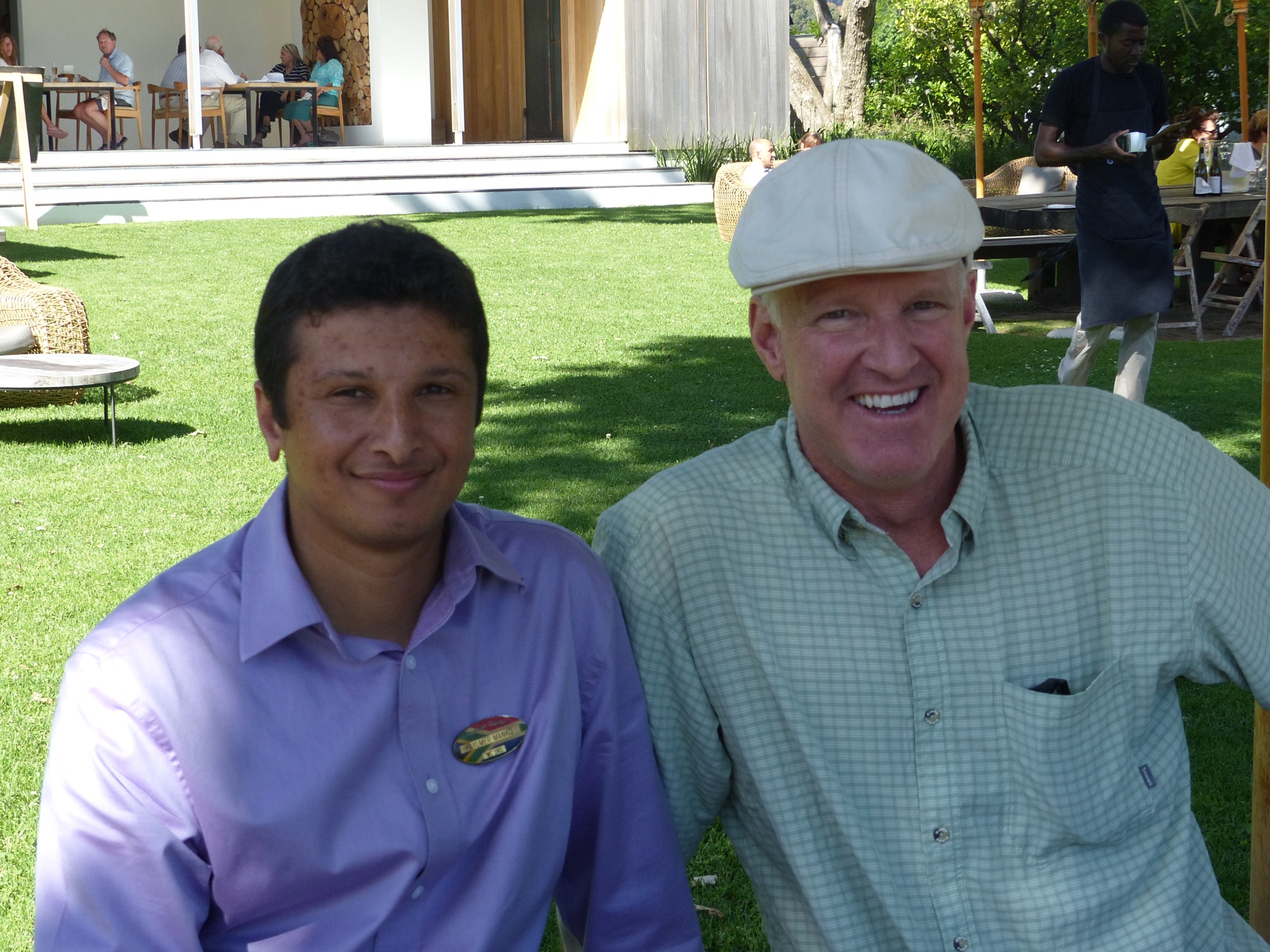
Michael with Aylmer

Some chickens nearby

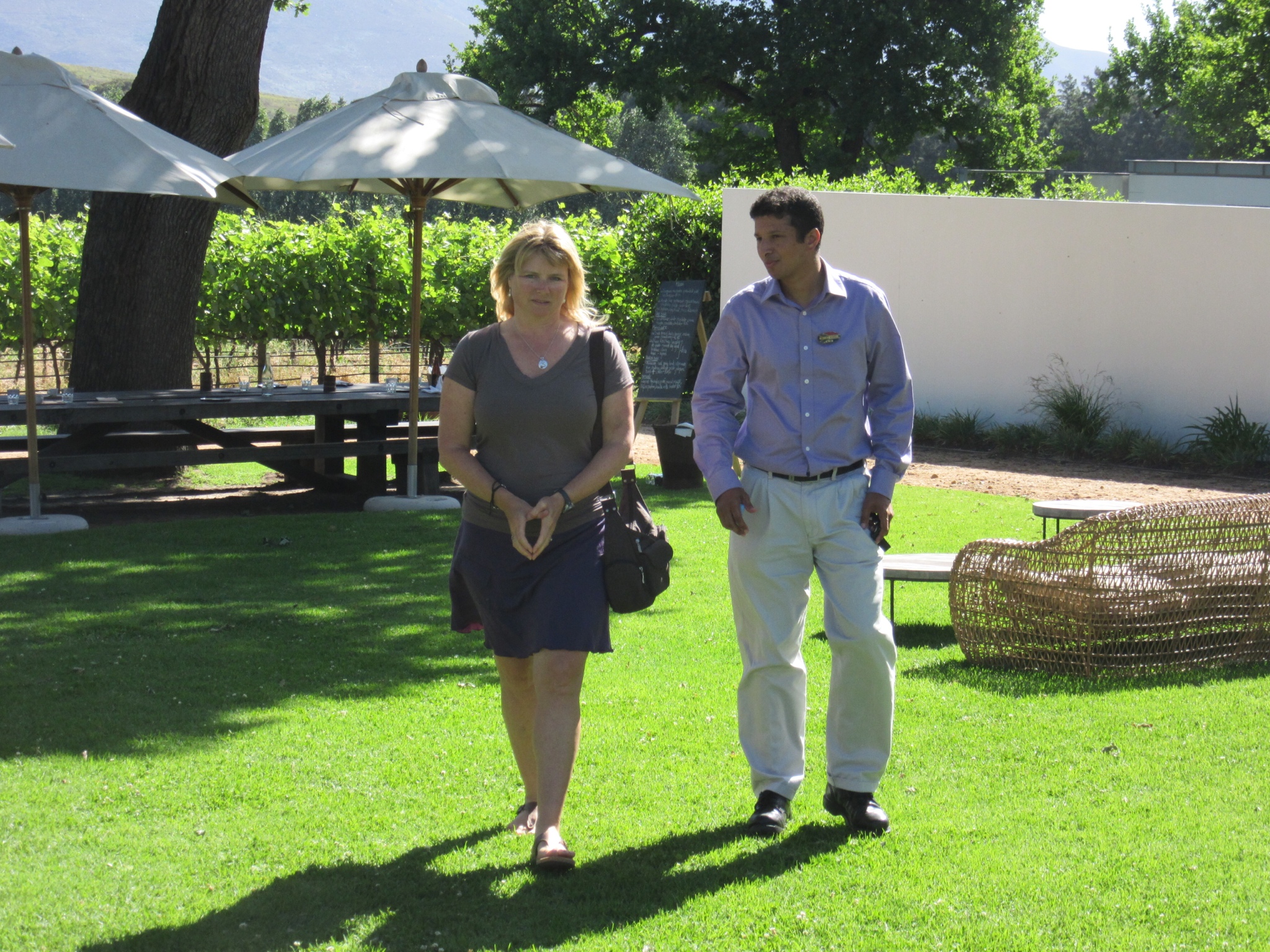
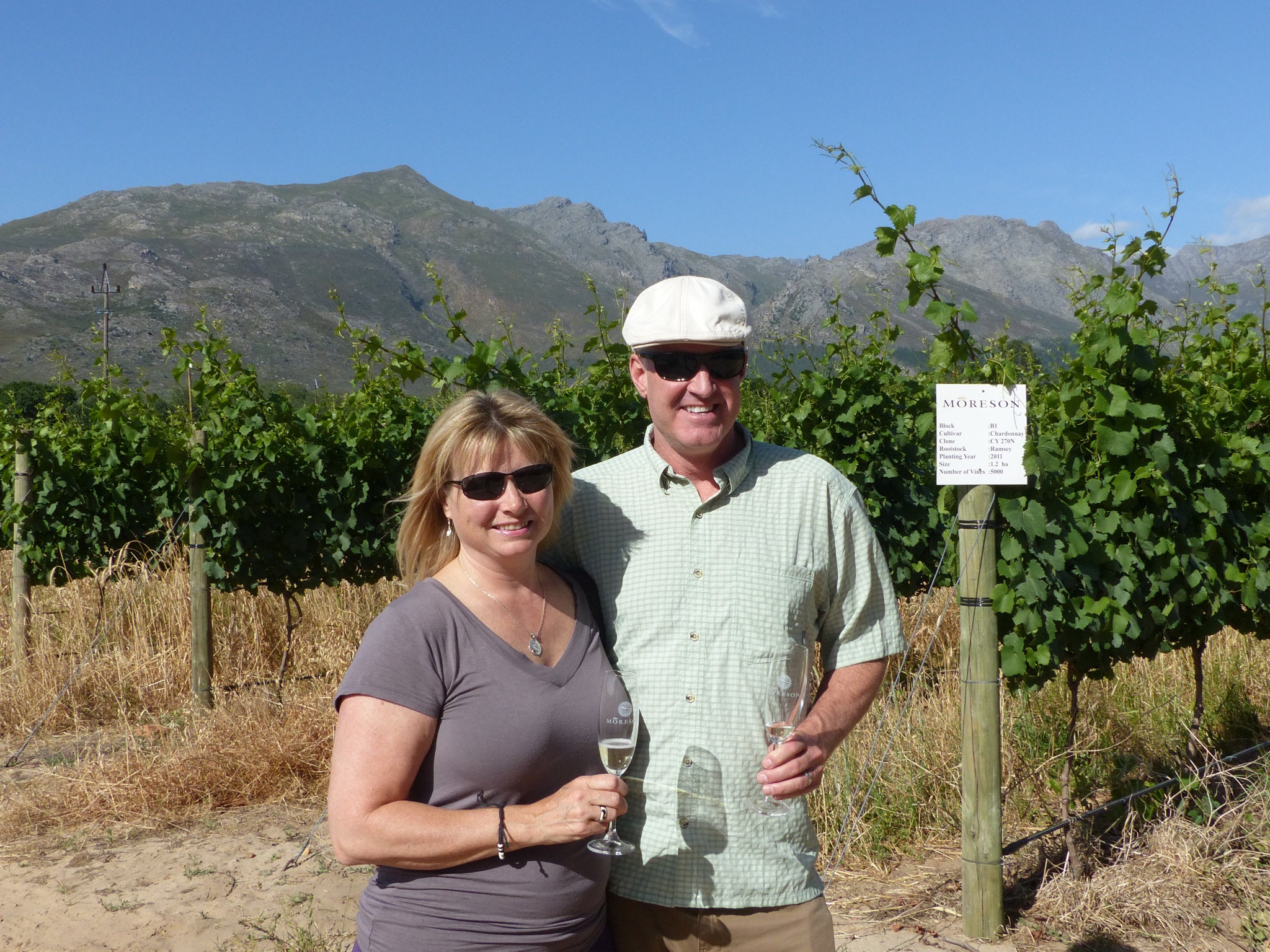
After lunch we had one more stop and made our way in leisurely fashion to Moreson, known for it's sparkling wines. In South Africa they make MCC or Méthode Cap Classique, which is their version of Méthode Champenoise, the traditional way of making Champagne style wines. Once again we got a terrific education on MCC wine making methods and tasting techniques. We wandered out into the vineyard so that Aylmer could illustrate to us how the experience changes when the wine warms up even a little from being in the sunshine.

We tasted other wines as well and enjoyed the late afternoon at a little table outside in the shade. When we finally drove back to Franschhoek, we were surprised to find we weren't very far away. It was past 5pm when he dropped us off and we'd had a wonderful day. We really enjoyed discussing culture with Aylmer and finding out a bit more about life in South Africa. I highly recommend doing a private tour with La Rochelle if you ever find yourself staying in Frandschhoek.

That evening we had a table booked at The French Connection for dinner. It was pleasant and fun but I wouldn't say I was truly wowed. All in all however, it was a fantastic day.


Inland to Franschhoek

Originally we had planned to go whale watching with Dyer Island Cruises the day after we did the shark tour. Unfortunately we got a call the morning of our shark tour to say that all the whale watch tours for the next 3 days had been cancelled. They said it was due to impending bad weather. It was a bit disappointing as it would have been cool to see the whales up close. However, after a rather long afternoon on the shark tour, and having been fortunate to see quite a few whales from shore, we didn't feel too badly. Instead, we took our time leaving Whalesong Lodge and De Kelders and were glad to not be rushed on our journey to Franschhoek.

The first thing we did was to go back to the Great White House in Kleinbaai. I had wanted to visit the gift shop, but it was so late when we had returned on the boat the night before that I had opted to skip it at that time. It all worked out rather well as everything was quiet and we had the place to ourselves. They had quite a few nice locally made art and craft items. Since the weather didn't look that bad I inquired about their cancellations out of curiosity. They said it was due to be very windy. Having experienced the swell when the wind was moderate, I could see that it would be untenable if it were really windy. Afterwards, we set off around the bay and through Hermanus on our way to Franschhoek in the winelands. Along the way we stopped briefly in the town of Stanford and picked up a snack to take along.

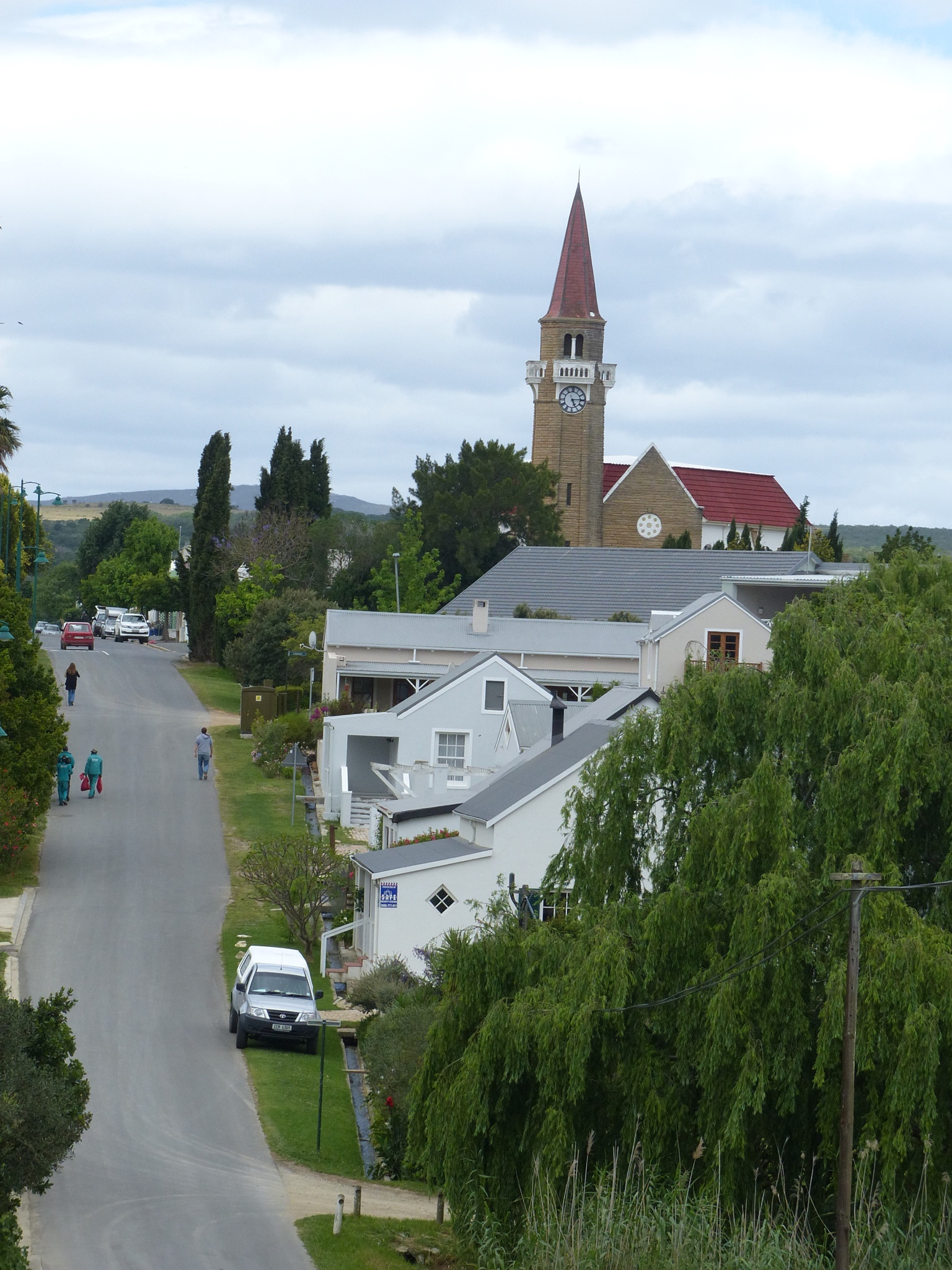
Stanford

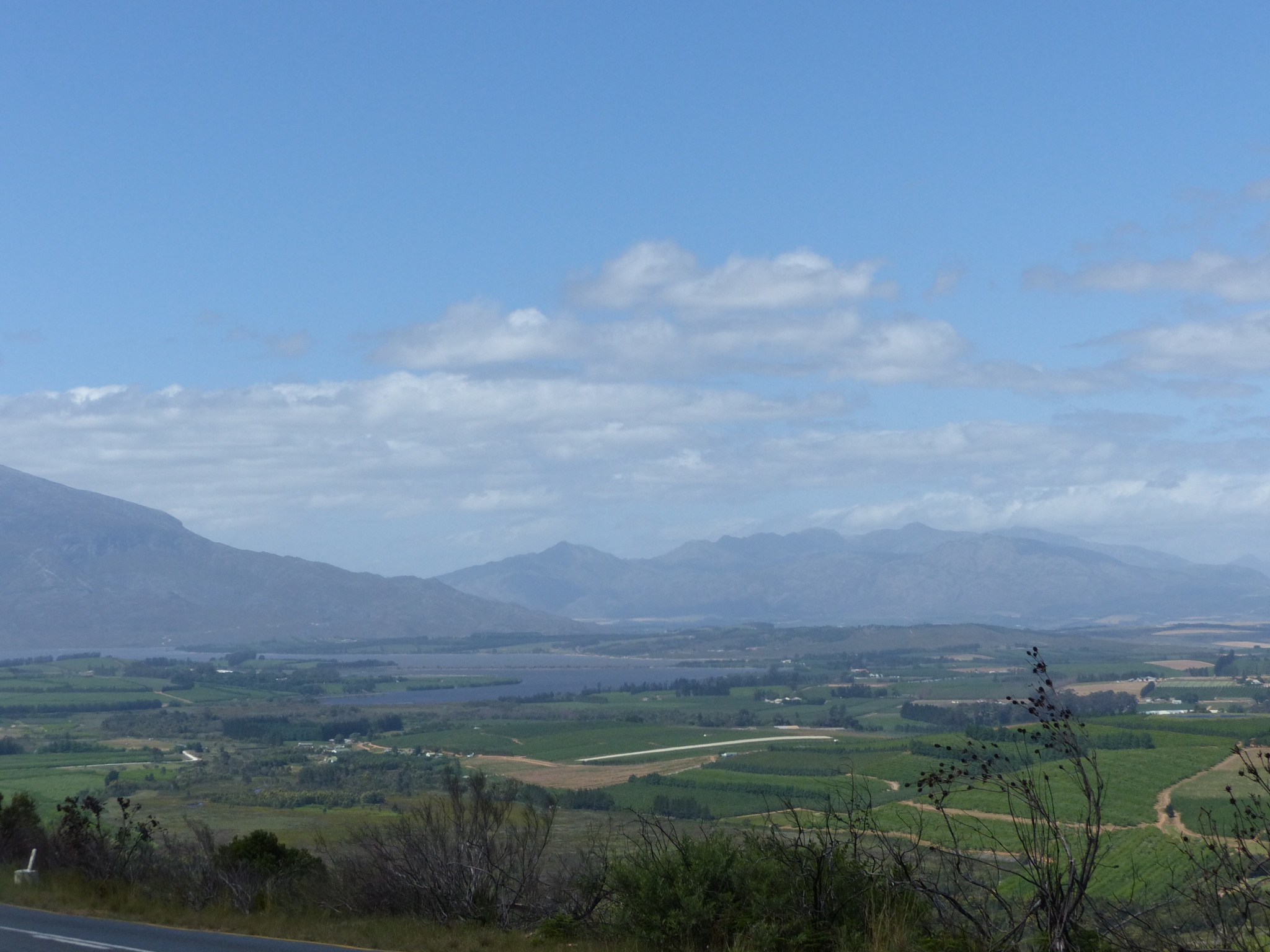
The drive turned out to be very scenic and the weather got steadily better as we went. It was indeed windy, but the sun was shining and the wind lessened as we turned inland. We went over a couple of smaller mountain passes and past some large reservoir lakes enjoying the views as we went.

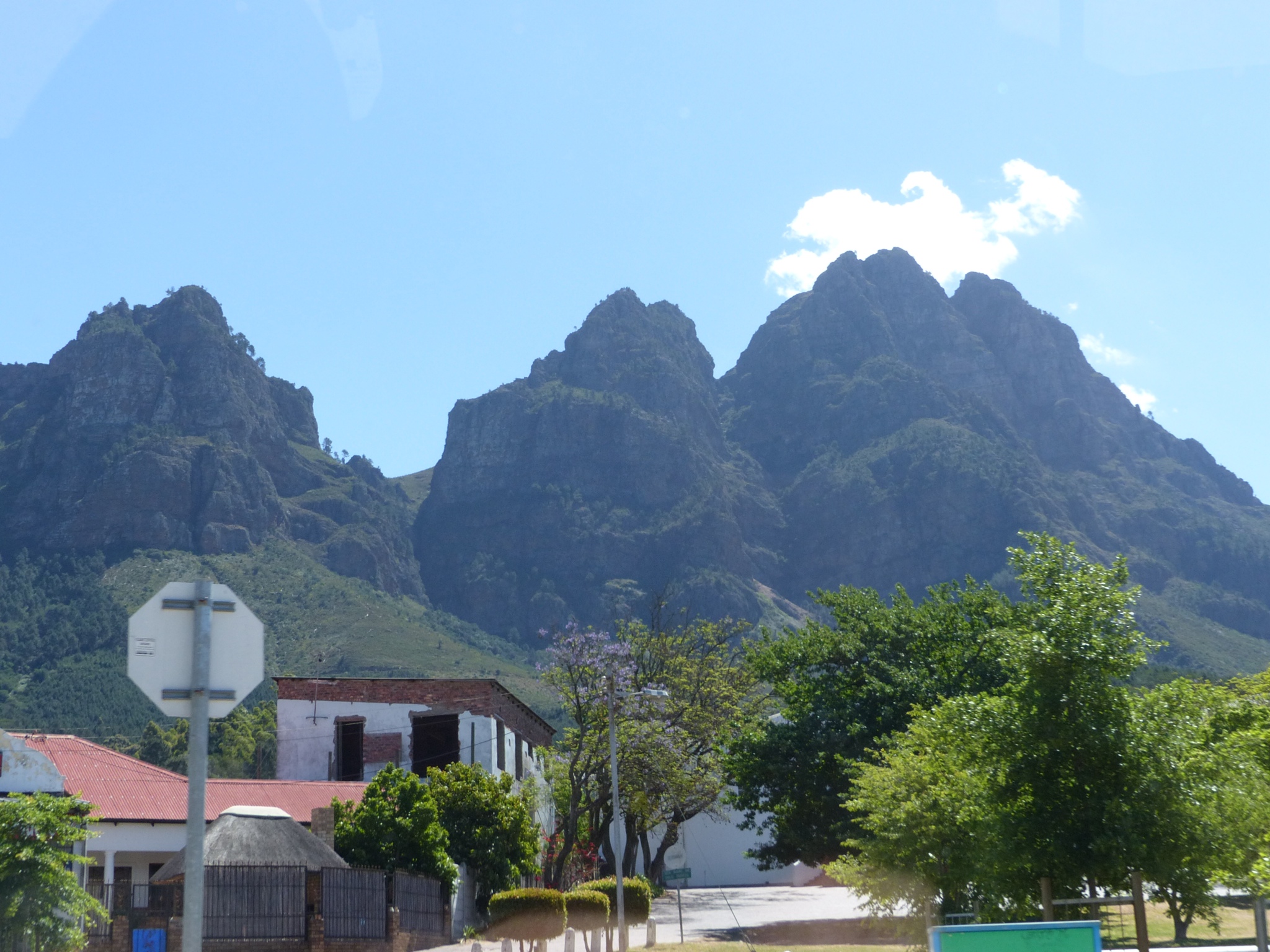
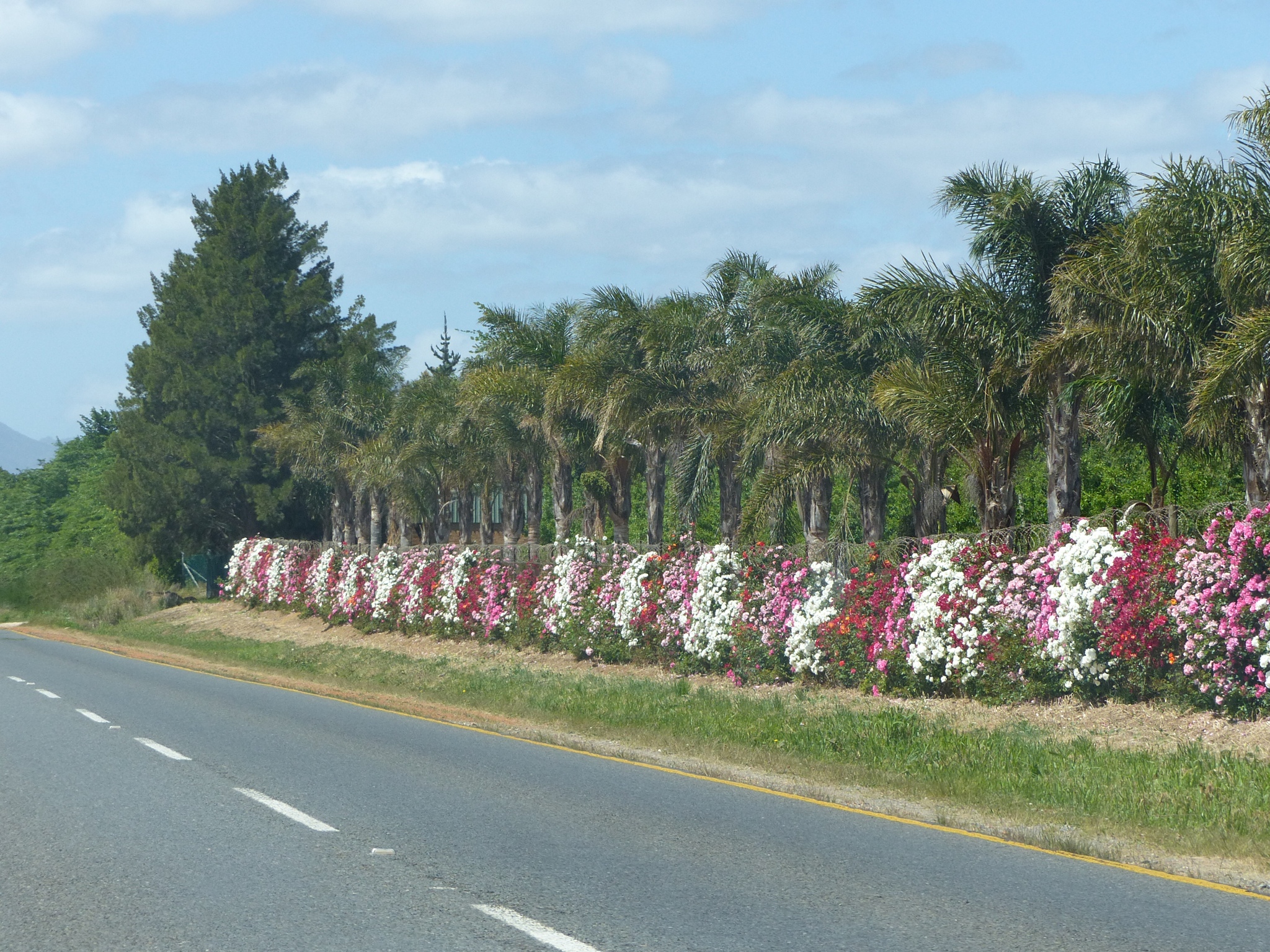
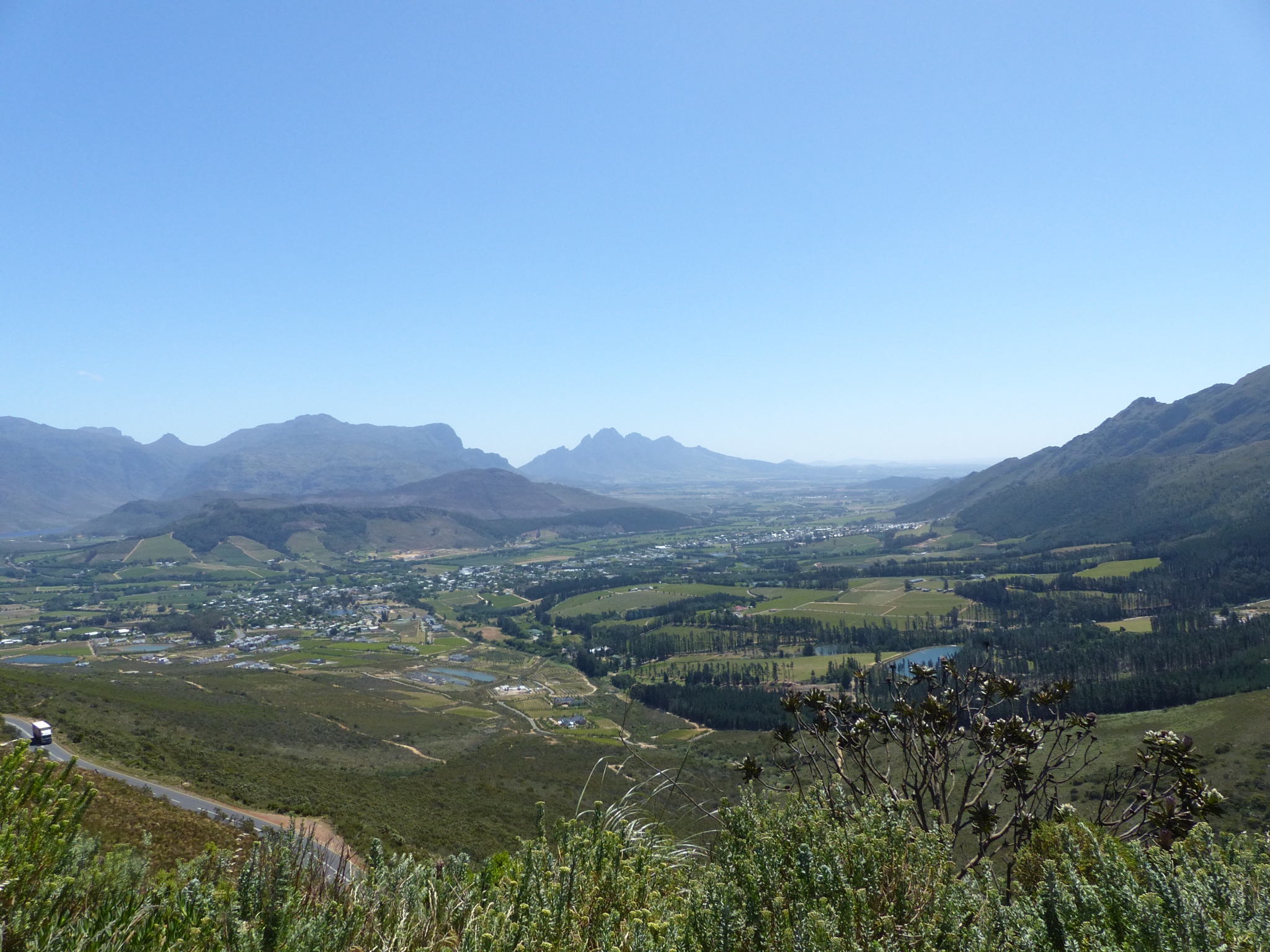
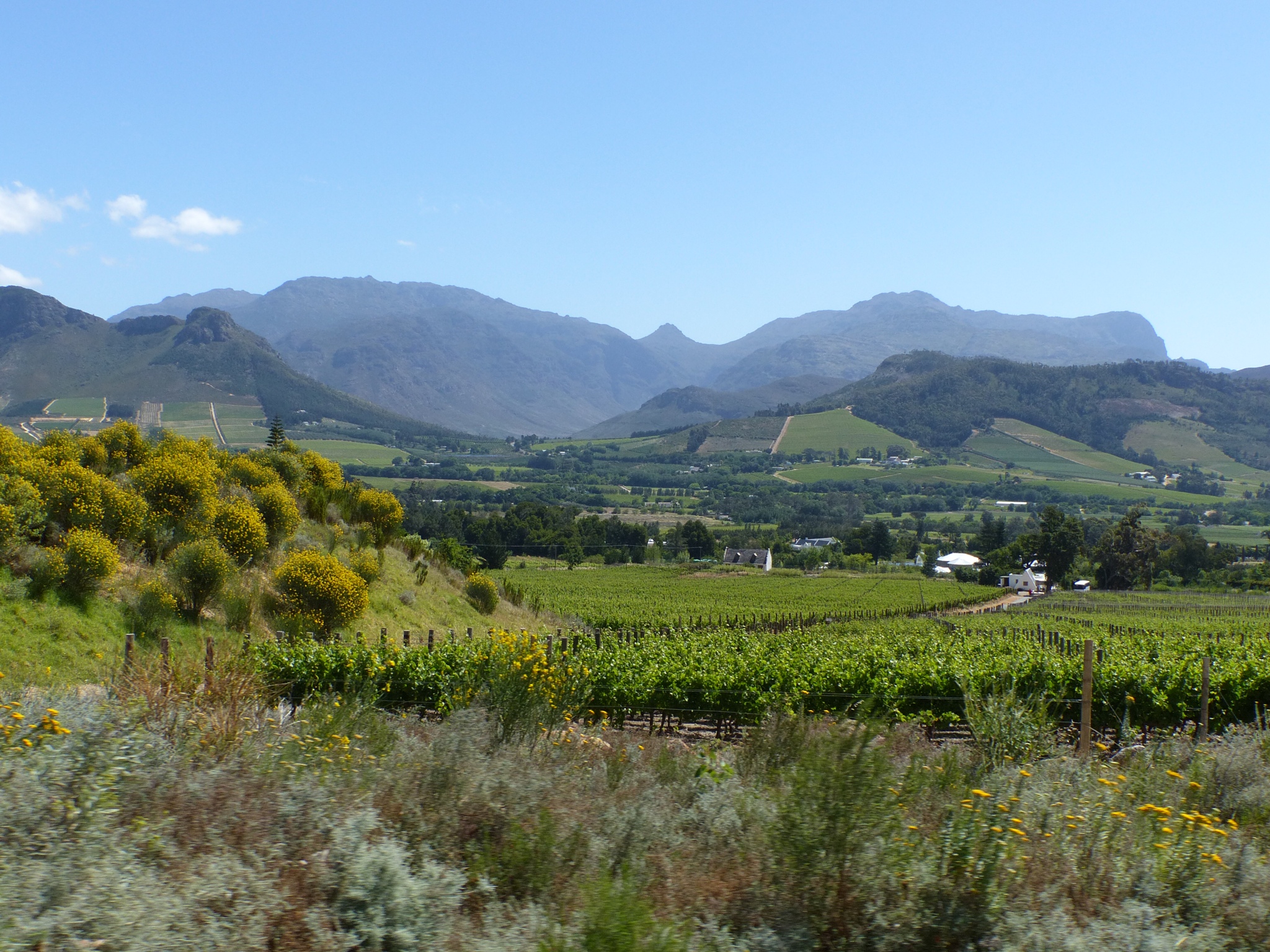
Then came the Franschhoek pass which was spectacular. The views were simply stunning as we dropped down into the Franschhoek valley. Franschhoek is a small town about an hour from Cape Town. It is in the heart of the wine country and the setting couldn't be more picturesque. Vineyards are everywhere with roses and bougainvillea blooming. Mountains rise steeply from the valley floor.

The Franschhoek Valley

We found The Coach House, our B & B, easily and checked in to find a lovely garden oasis with a pool and a small patio off our room.

The Coach House

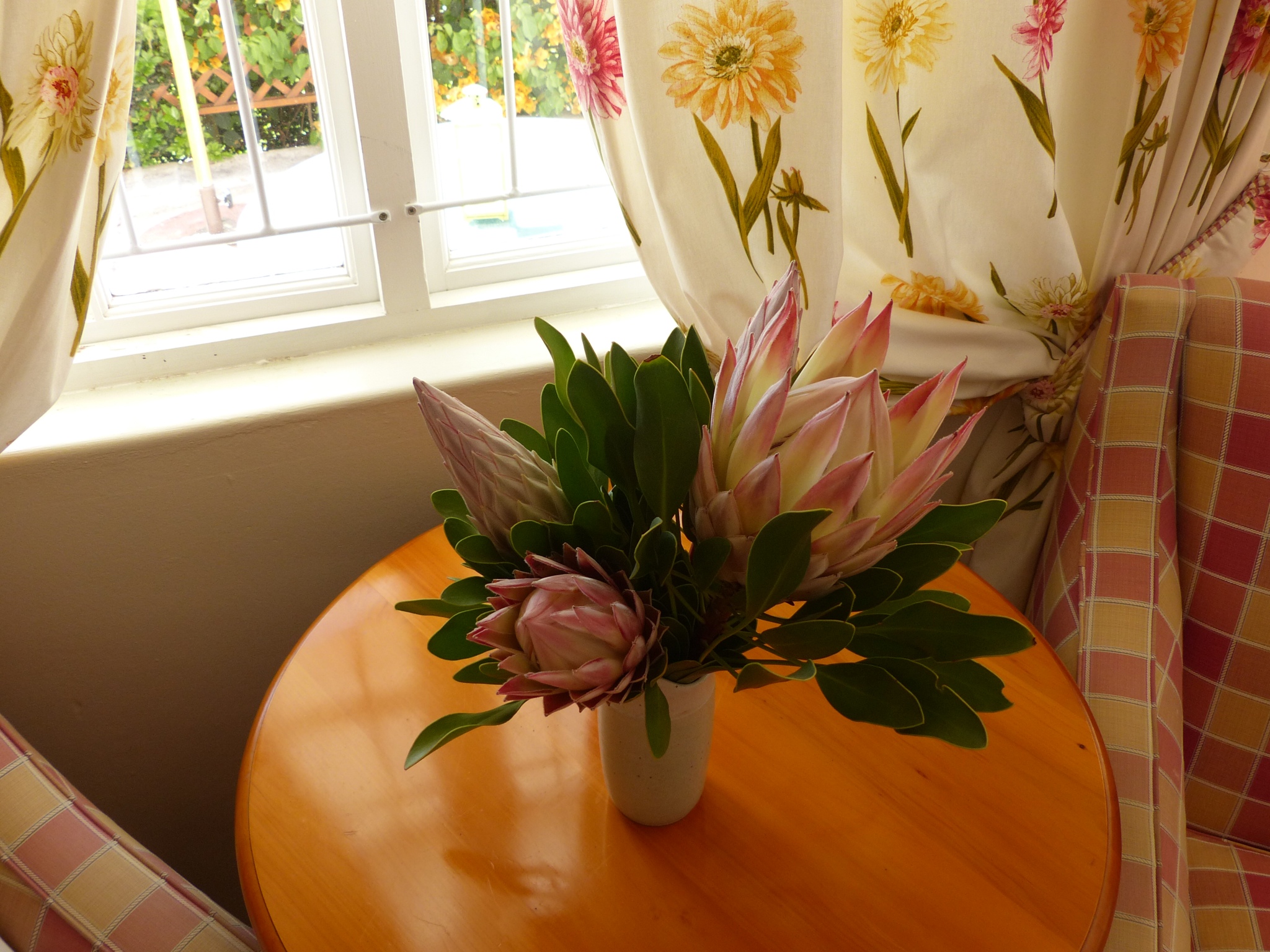
Proteas

The proprietress was very nice and confirmed our booking for our private tour the next day as well as gave us suggestions for restaurants. After a little lazing about we went for a walk down the main street. It was nice to be able to leave the car behind and simply walk. There were lots of shops, art galleries, and restaurants lining the road for several blocks. We stopped at a small park where there were some vendors selling crafts and did a little bargaining. After our wanderings we went back to our B & B for some more lazing about before going out for dinner. It was Friday night and our B & B hostess had warned us that many restaurants might be booked up. She had called one we were interested in and they were full, but there were so many restaurants that we figured we'd be able to find something. We did have her book us a table for the following night but took our chances that evening and found a decent place without too much trouble.


Shark Day

When we woke the next day we found it was overcast and spitting rain. So we took our time and enjoyed a leisurely morning, which included a bath for me in the fabulous tub in our room. We’ve really enjoyed the tubs we’ve encountered because they are usually longer and deeper than standard American bathtubs. In this case the room also provided some nice soaking salts. At breakfast we met a nice Scottish/German family. Robin, the Scottish father, was also going on our Shark excursion and we agreed to give him a ride to the departure point so his family could do other things. Since he had been there the day before for a whale watching tour, he could show us the way.

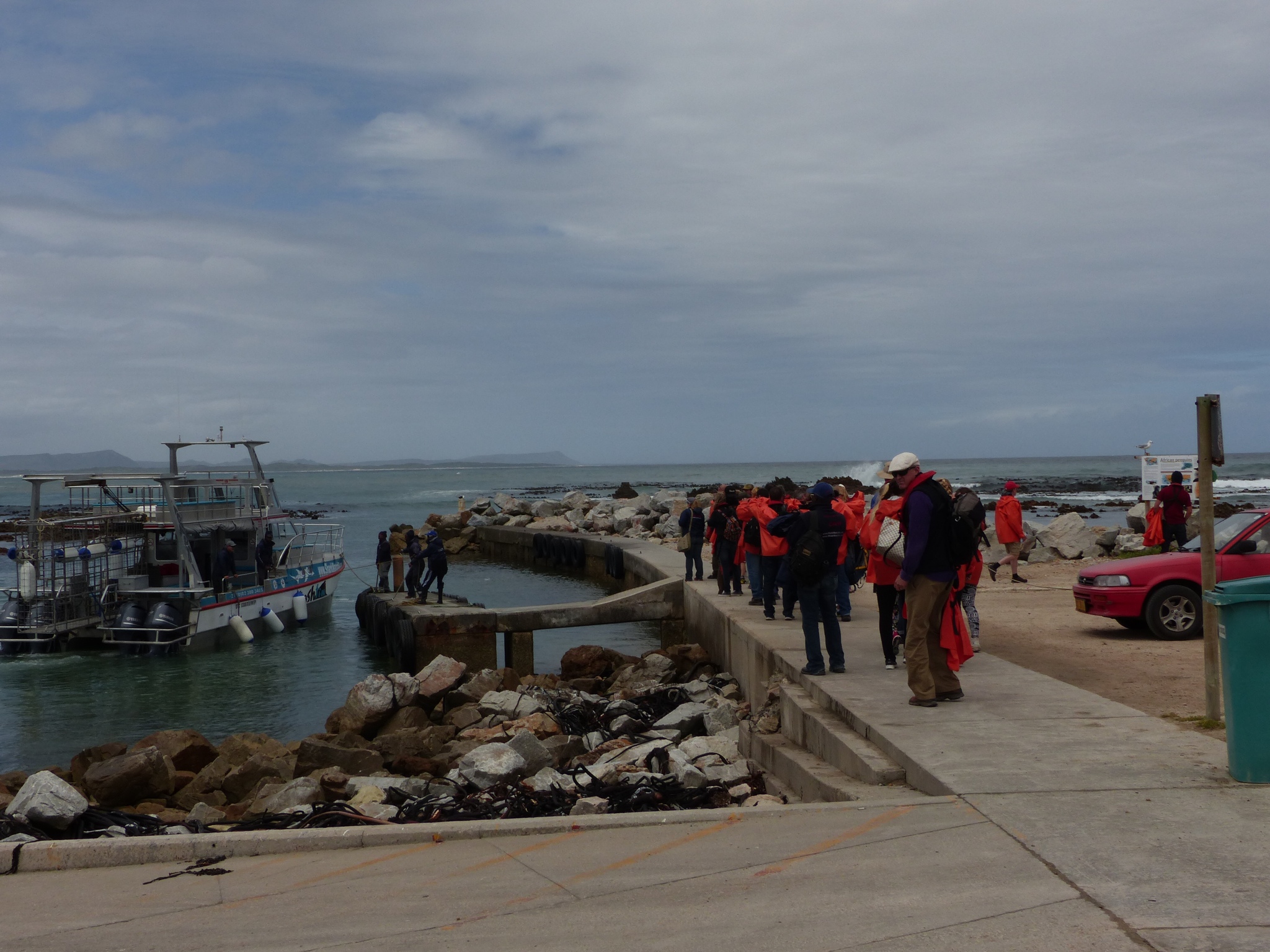
Gansbaai is a small fishing village next door to De Kelders where we were staying. On the other side of that is Kleinbaai, where you find The Great White House. This is the home base of Marine Dynamics and Dyer Island Cruises, sister companies that do shark cage diving excursions and whale watching respectively. The company is also heavily involved in marine conservation in the area. The drive was only 10 minutes or so and quite easy. We were greeted by the staff at Marine Dynamics and brought to a room where they provided some drinks and snacks while we waited to be checked in. Then they gave a welcome talk, described what we’d be doing, and showed us a video with all the details. After we signed a liability release, we were all led down to the water where the boat is kept and issued life jackets and slickers.

At the harbour

Heading to the boat

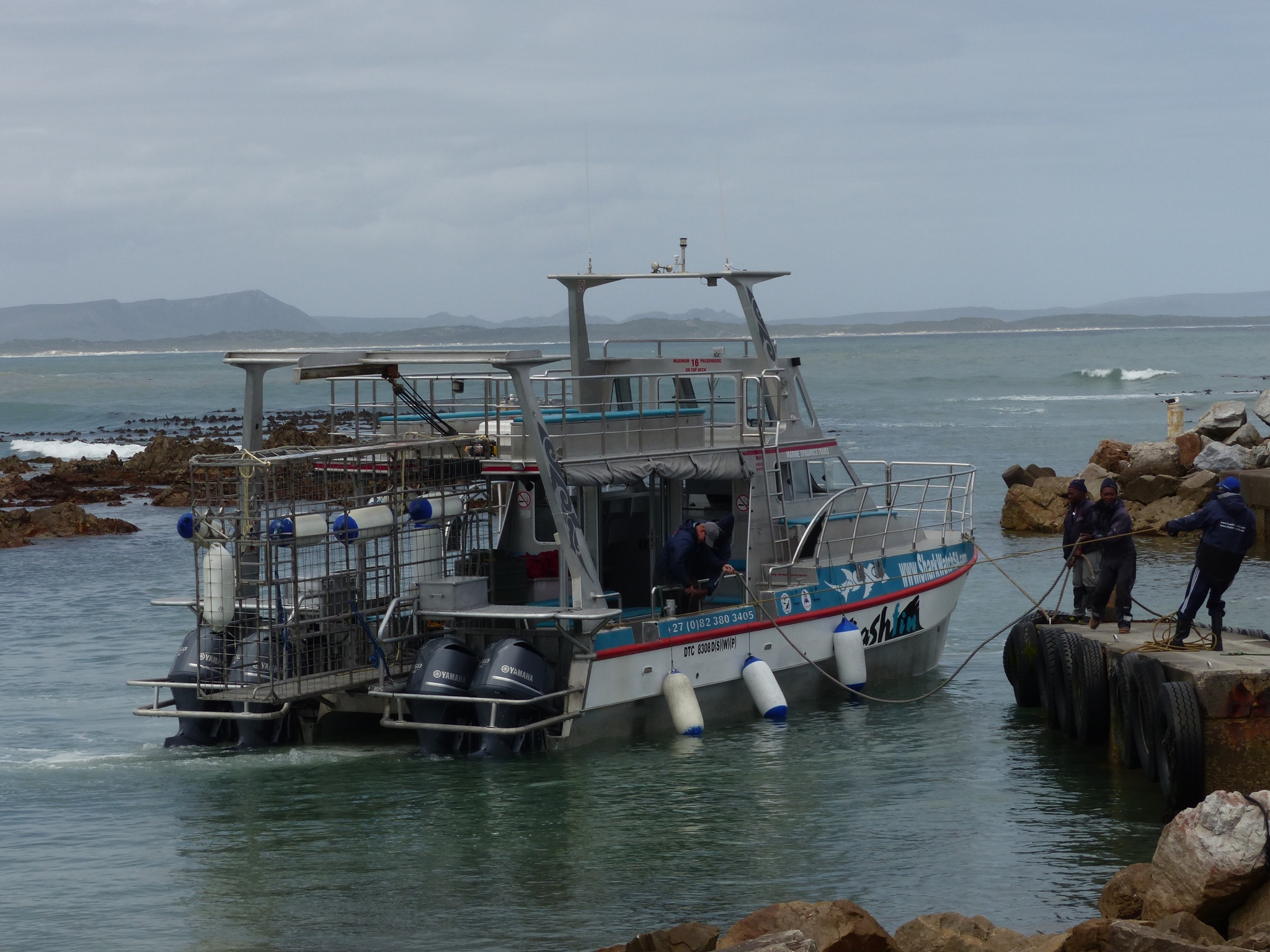
The Sharkfin

You can see the cage held in place for transport at the back left of the boat

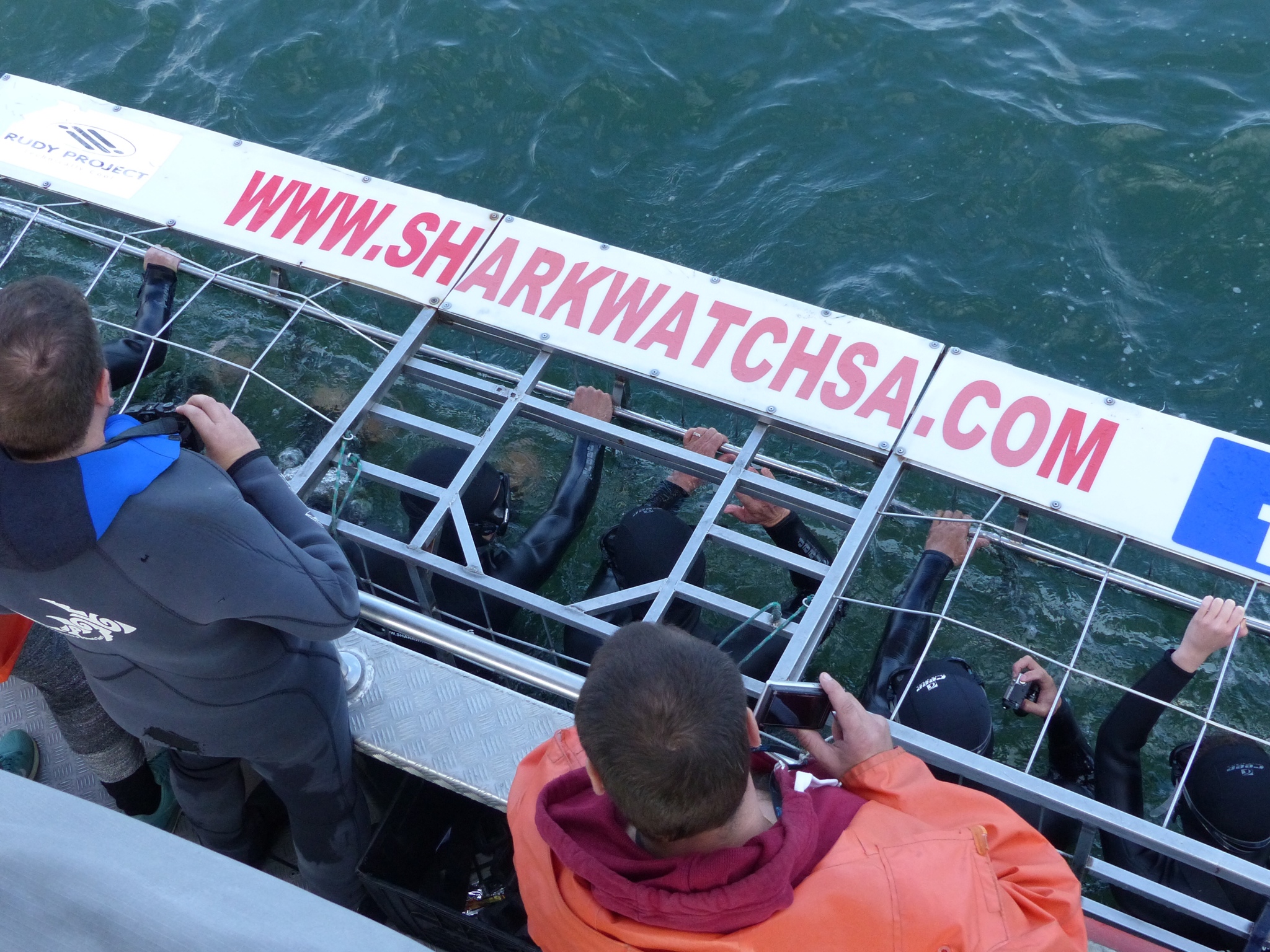
The basic setup is that you go in their specially designed boat out to the area where the great white sharks hang out, they lay a scent trail for the sharks to follow, and go and anchor. Then you wait for sharks to show up. When they do, up to 8 people at a time climb into a cage which is tied to the side of the boat and floats just under water. Standing on the bottom of the cage, your head is above water. When the sharks swim by, you lower yourself under water and look through a mask while holding your breath. On a bright sunny day with lots of sharks I can see this might be kind of cool.

Our day had cleared up a lot from the morning, but it was quite windy with the possibility of some swells. Most of the time they go out to “Shark Alley” which is between Dyer Island and Geyser Rock. People who are fans of Discovery Channel’s Shark Week on tv will recognize the name. There is a huge colony of cape fur seals on the rock–perhaps 60,000 strong– which is why the sharks hang out there. On our day, the captain decided the swells were probably too big to comfortably anchor in Shark Alley, so we went to the shallows. The shallows is where the sharks are often found at this time of year anyway, so there was still a good chance we’d see them.

The trip out didn’t take that long and once we reached the area and had laid the scent trail, we anchored. On board they gave out wetsuits, hoods and booties, and most people donned them right away. I accepted one, but decided to wait and see whether I wanted to get in the water before putting it on. I had heard there weren’t as many sharks around as usual, so I wasn’t sure we’d even see anything. The biggest problem people have on this trip is sea sickness. Once they anchor the boat you are susceptible to whatever swell comes through, and those waters are not known for calmness. Sure enough, it started almost immediately. People began getting sick and the crew went about handing out sick bags, moving people to the front of the boat, and fetching water and juice or a snack to help. It was understandable since the boat was definitely rocking. I usually have no trouble on boats, but I’ll admit I sometimes found myself concentrating on the horizon. Fortunately the sick bags and the breeze meant there was virtually no smell and everyone was incredibly discreet, so the proximity casualties were minimized. In any event we sat and waited. And waited. And waited.

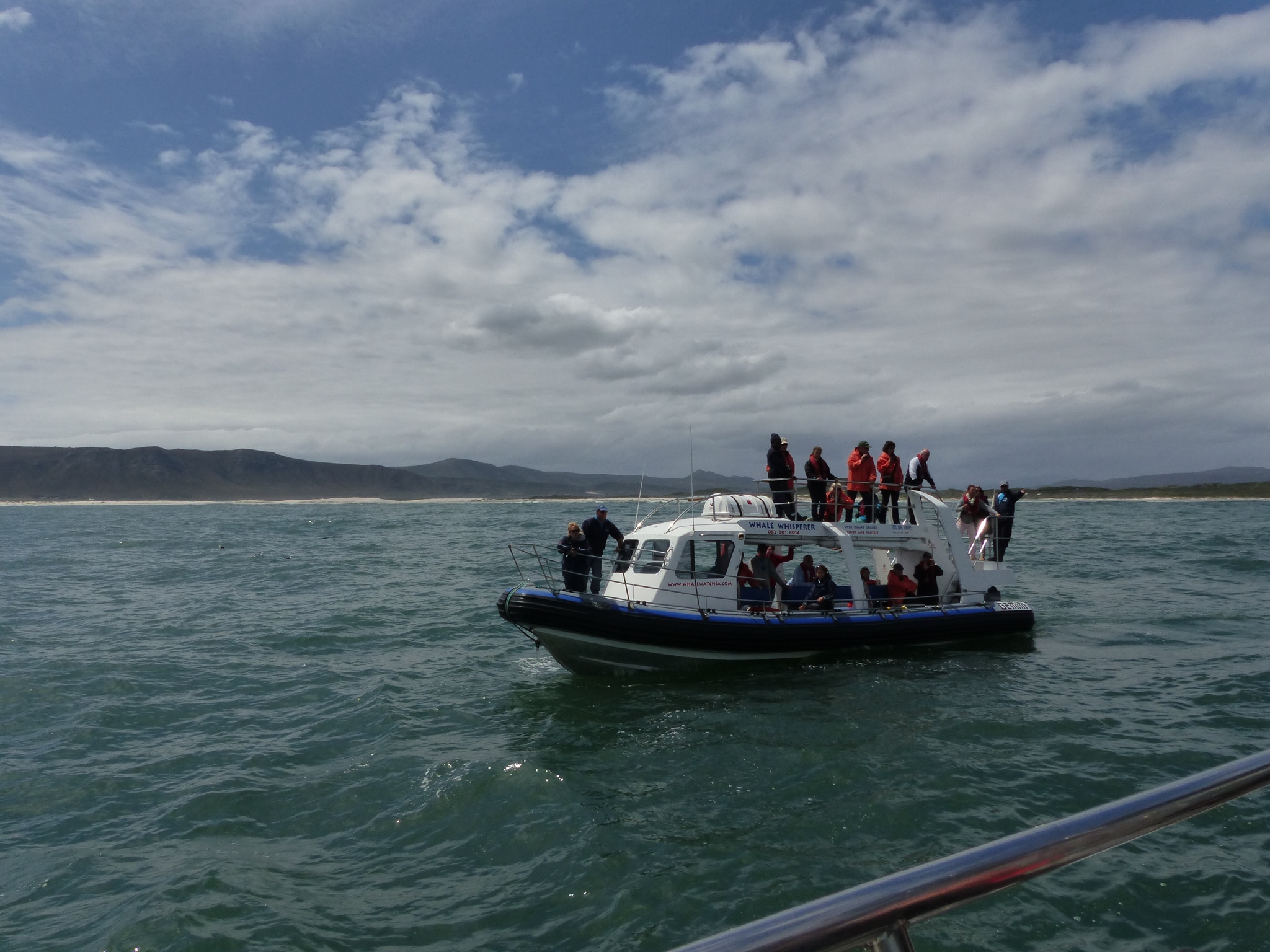
A whale watching boat came by

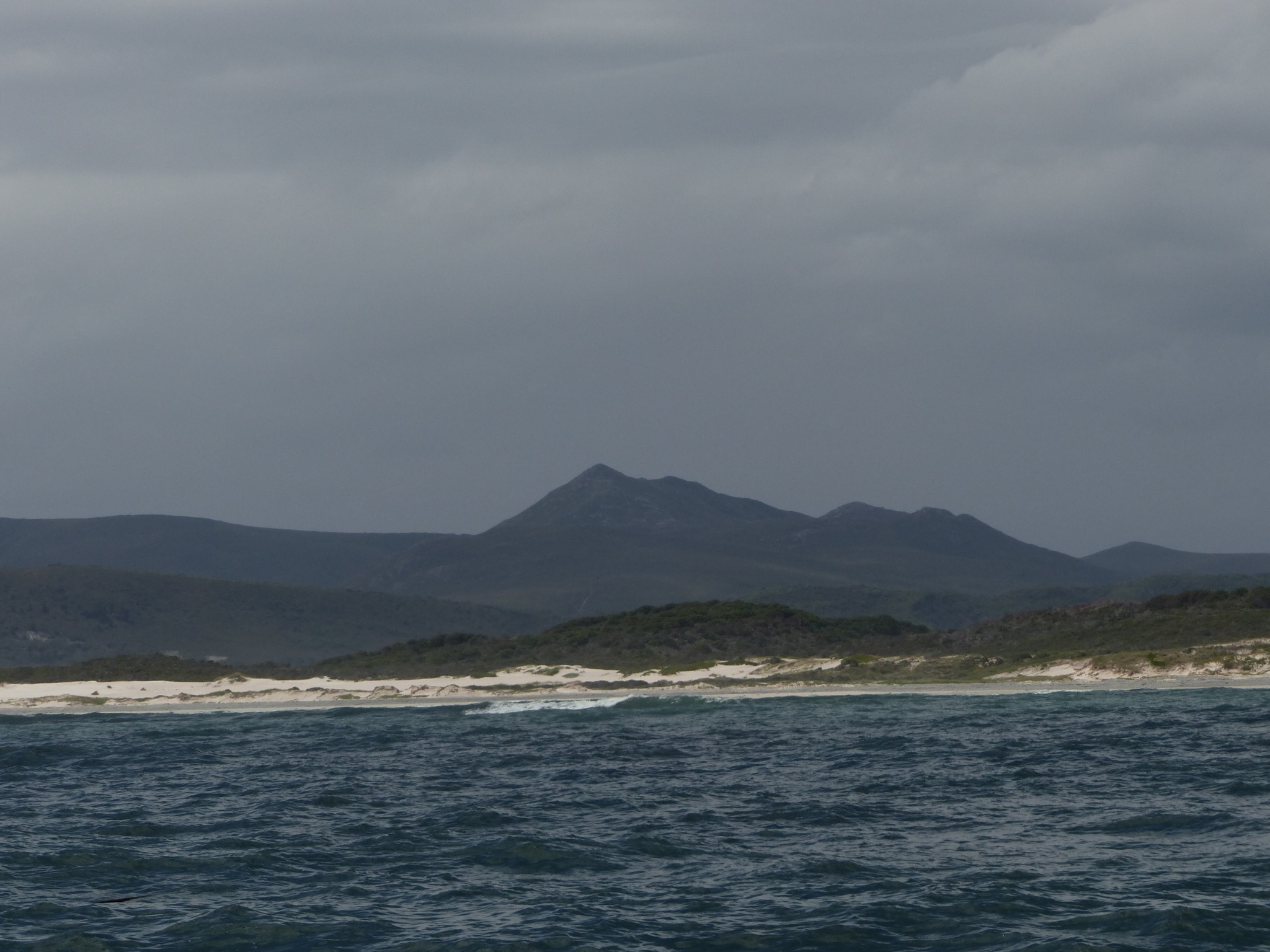
The shore had dunes

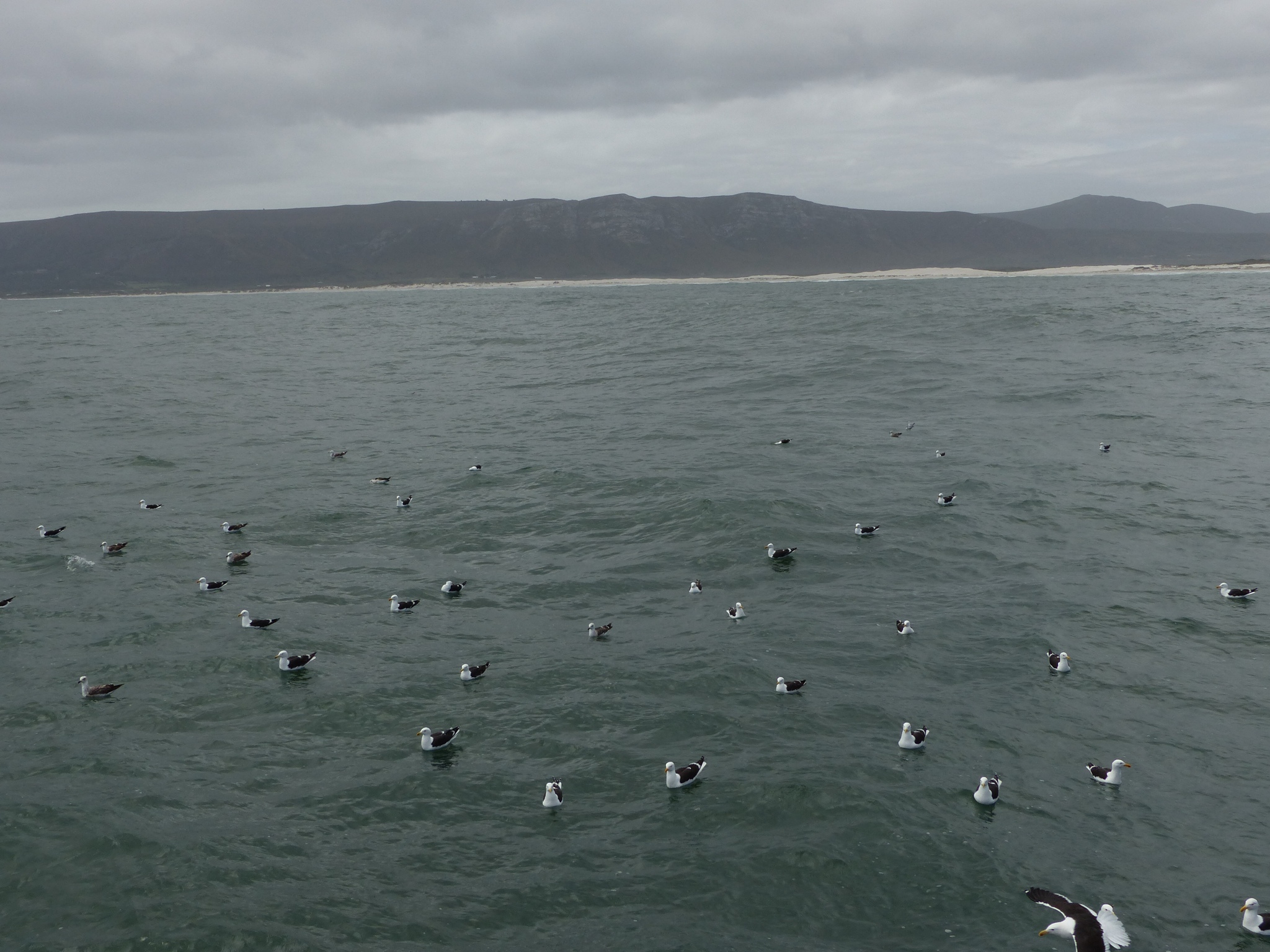
We’d been told it can sometimes take a couple of hours for the sharks to show up. A couple of hours went by and still no sharks had appeared. We waited some more. I guess they don’t like to give up. Their policy is to refund half your money if you don’t see any sharks, so that’s another incentive to stay out. After at least 3 hours, all of a sudden they said “Here we go!” and there was a flurry of activity. I was sitting up top by this point enjoying the sun and watching the seagulls. We all rushed to the side to look over and saw a great white shark swim by. A crewman had some fish heads on a line with a float to entice the shark to come to the surface. After a couple of passes Michael ran below to get in the cage.

The cage

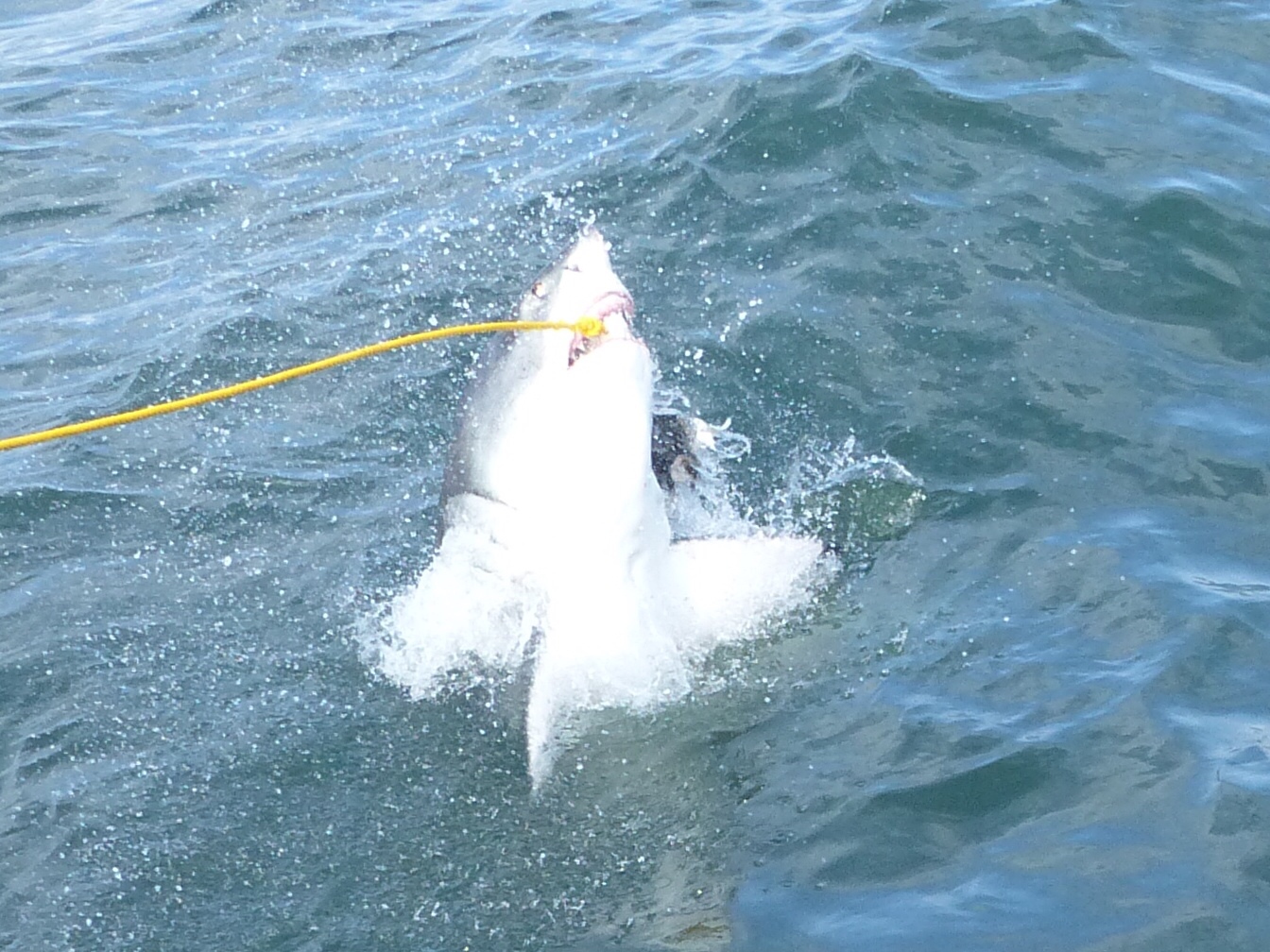
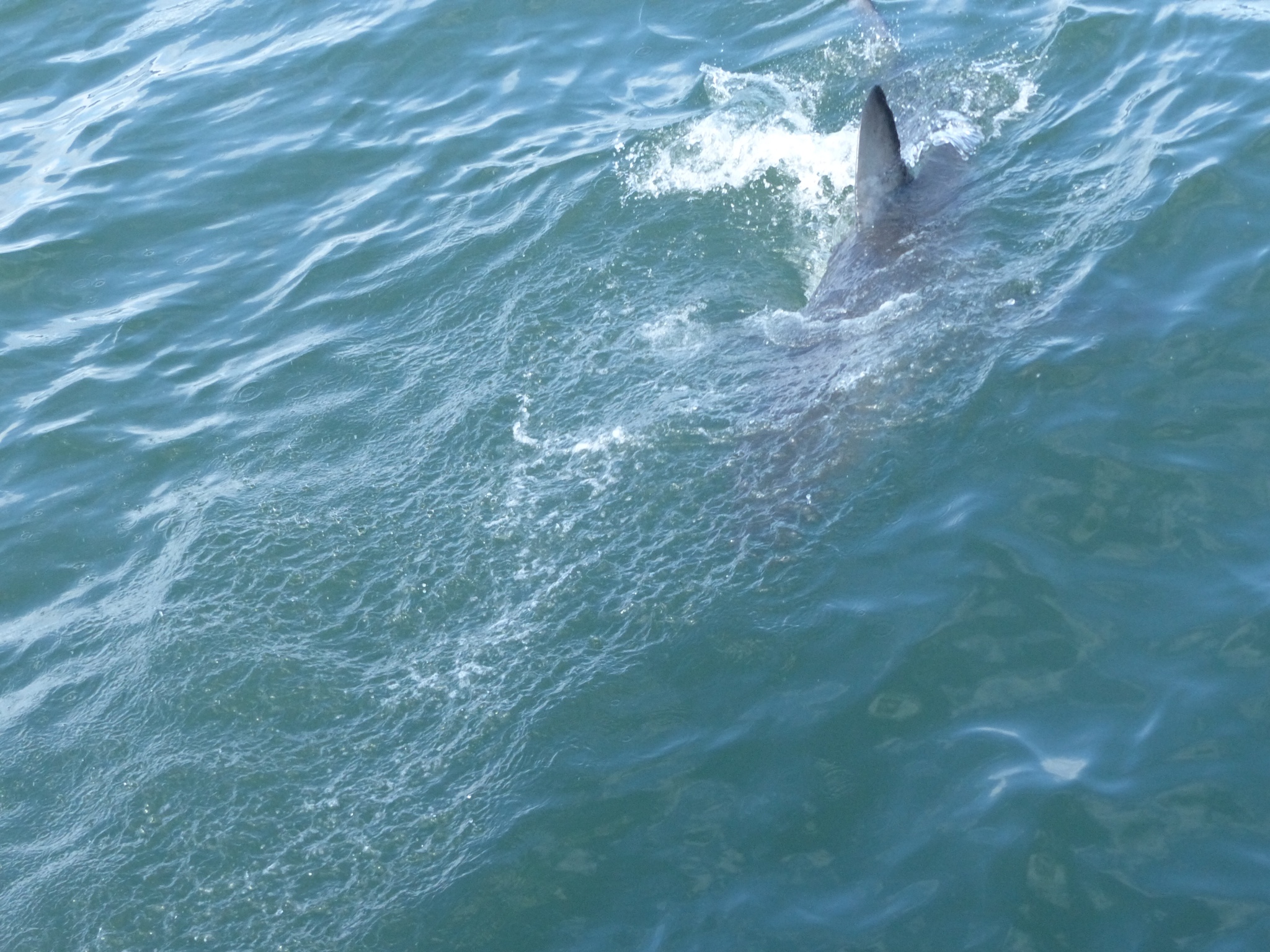
When the shark came by he stole the bait in one big bite, float and all. I don’t think this is supposed to happen. It’s supposed to be bait, not dinner.

Here is the shark taking his bite of free dinner.

A few minutes later, the float resurfaced with a frayed piece of line attached. They put out some new bait and we waited again.

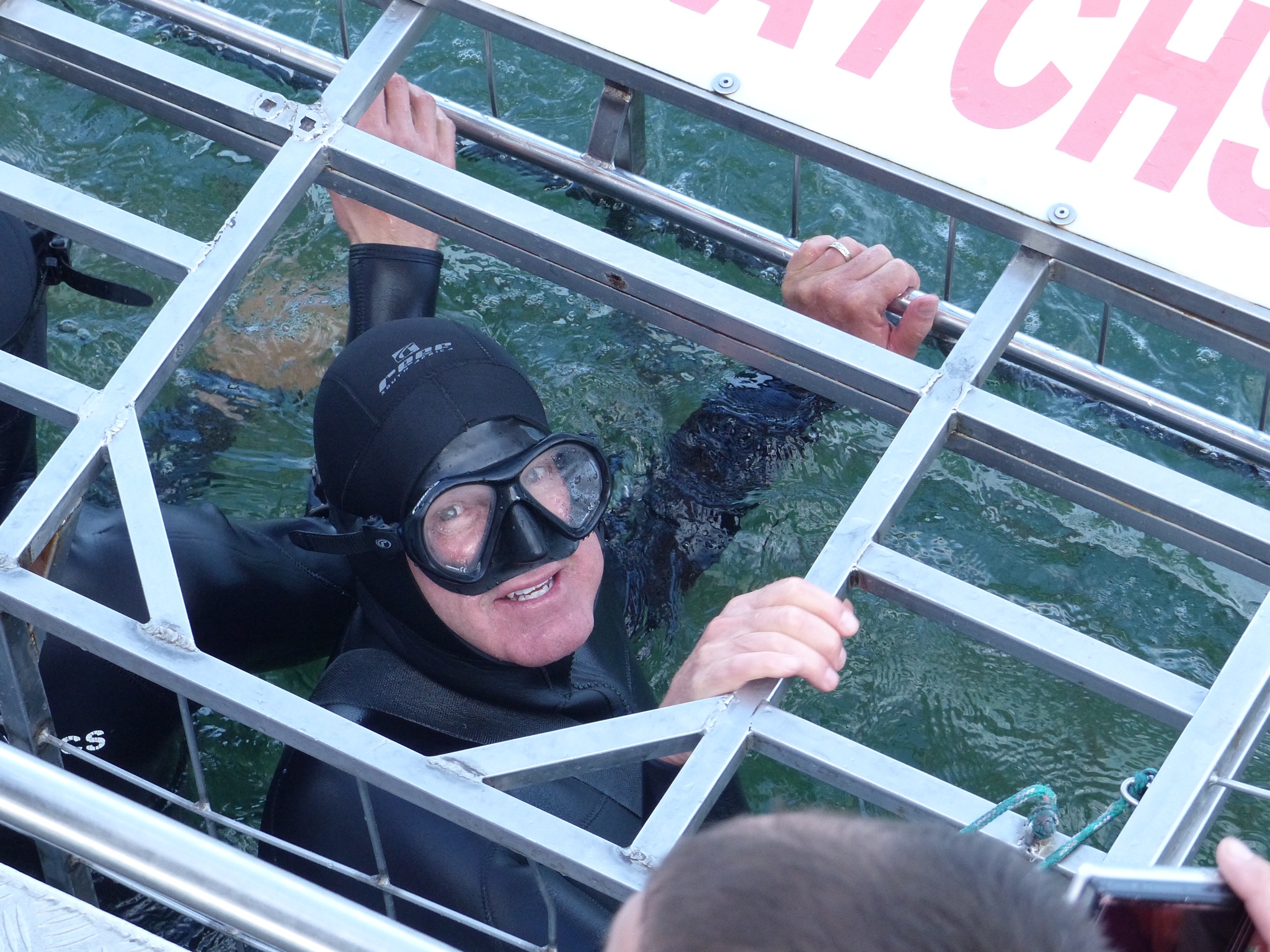
It was a while before another great white shark came by. The water was pretty cold even with a 7mm wetsuit. Michael said it was colder than Jeffrey’s Bay, probably in the low 50’s Fahrenheit. Some of the people got out of the cage and others took their place. Many were still just feeling queasy. Michael stayed in the longest of anyone!

Michael enjoyed himself

We saw one or two more passes of a shark, but no more serious tries at the bait.

After an hour and a half they pulled the plug and we headed back to shore. It had turned into a beautiful sunny evening, but there were still a lot of sick people on board.

Culturally, the great white shark has been demonized by movies and sensational media coverage. In reality, they are just another beautiful sea creature. I didn’t find our encounter with them to be scary. Granted, I was on a boat, but even in the water, it was clear they were not interested in eating the people. It would have been nice to see more of them and more clearly, but at least we saw them. That completed the Big Seven for us. You may have heard of the Big Five which refers to the Lion, Leopard, Rhino, Buffalo, and Elephant. The term originated when going on safari referred primarily to hunting the animals instead of photographing them. The Big Five are the five most dangerous animals to hunt on foot. South Africa touts the Big Seven which adds in the Great White Shark and Southern Right Whale (or other whales).

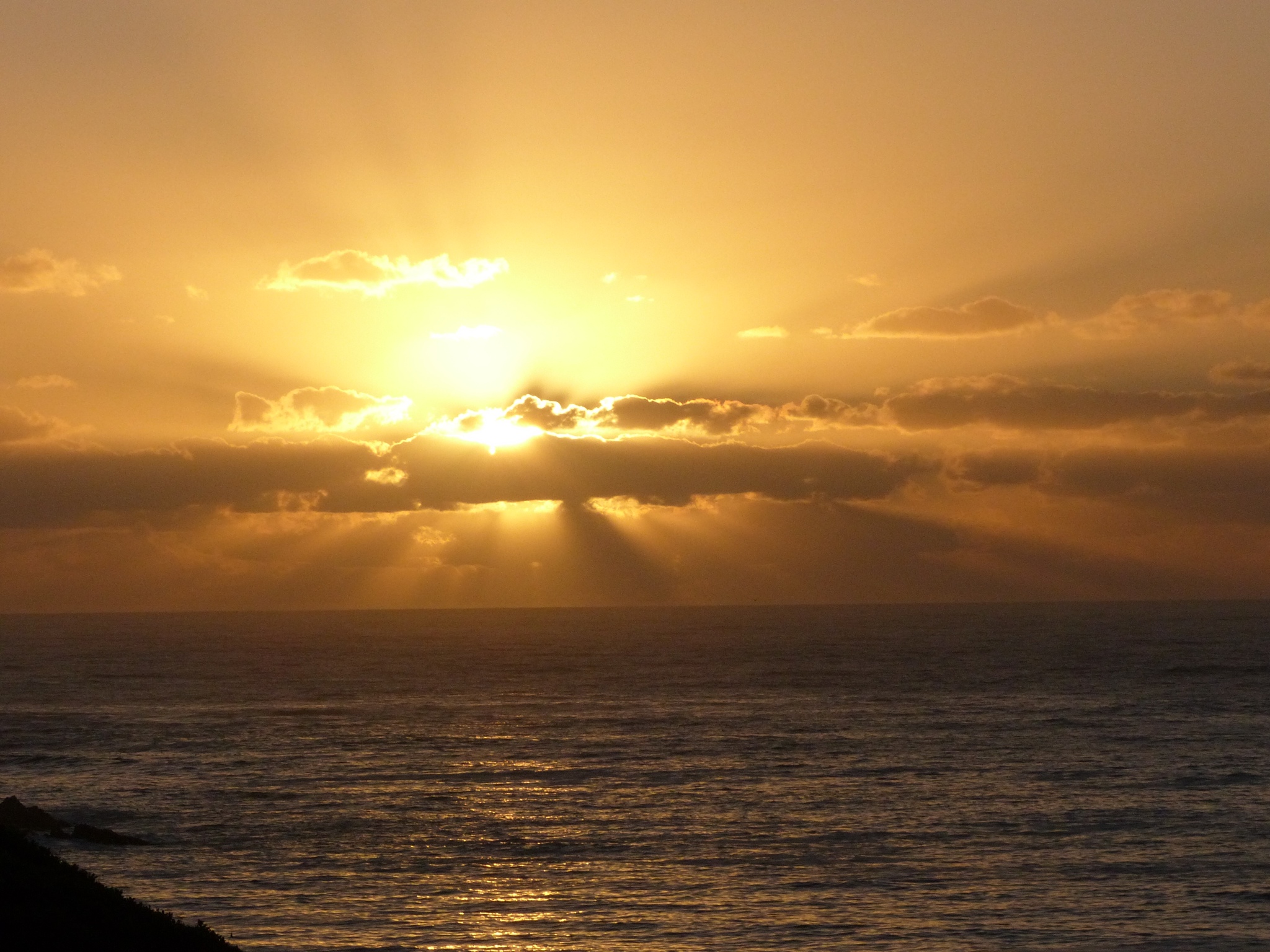
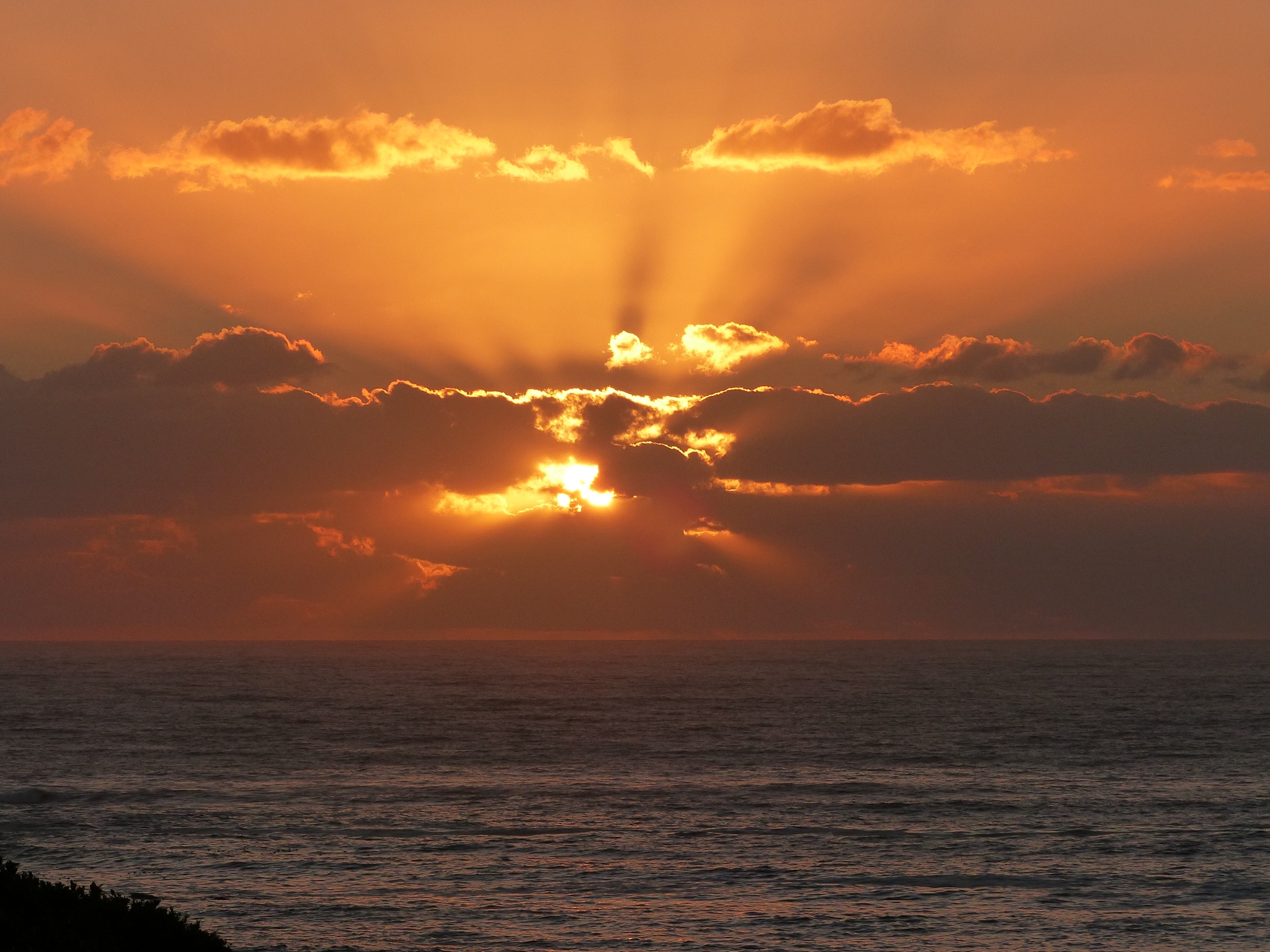
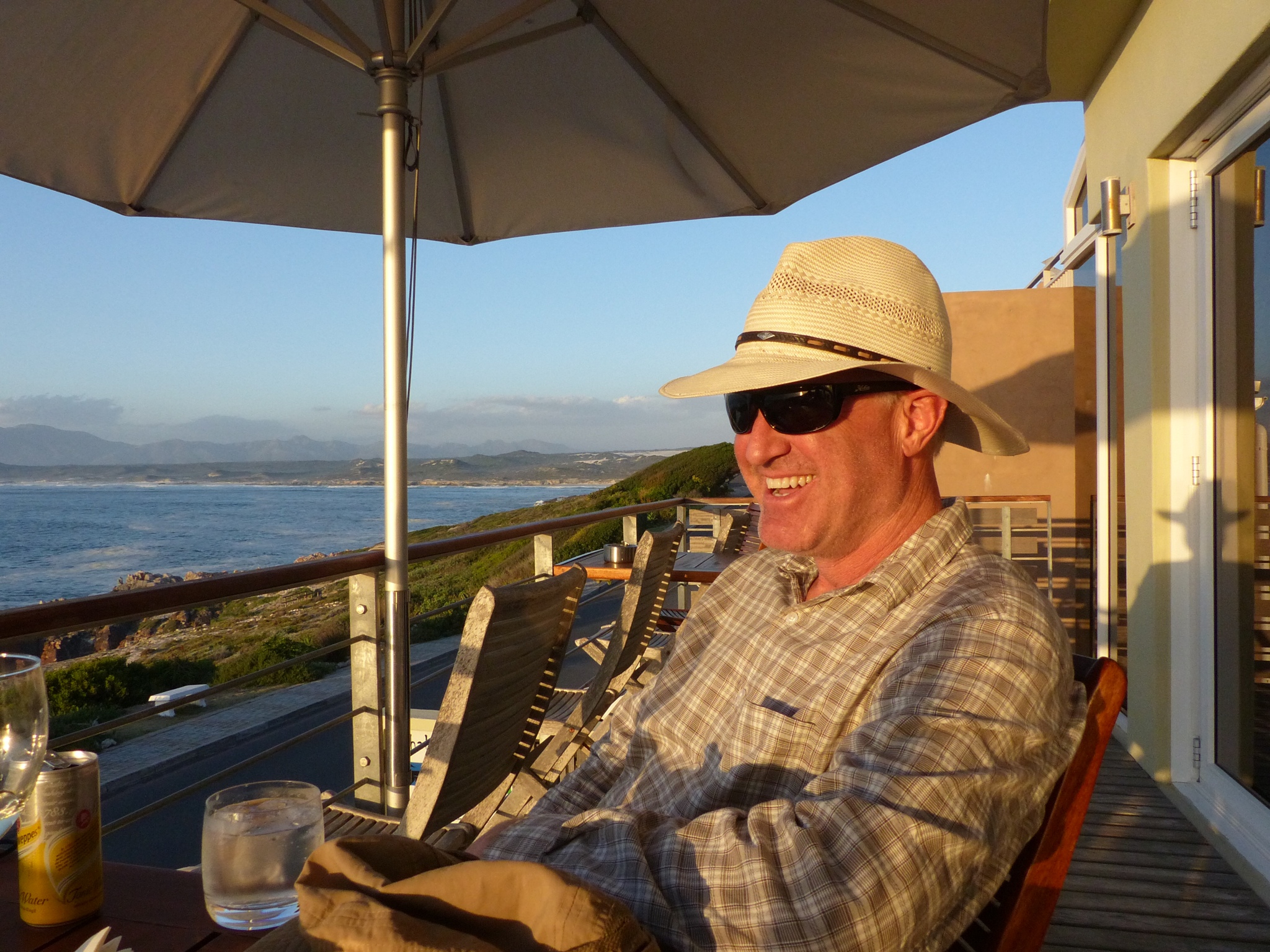
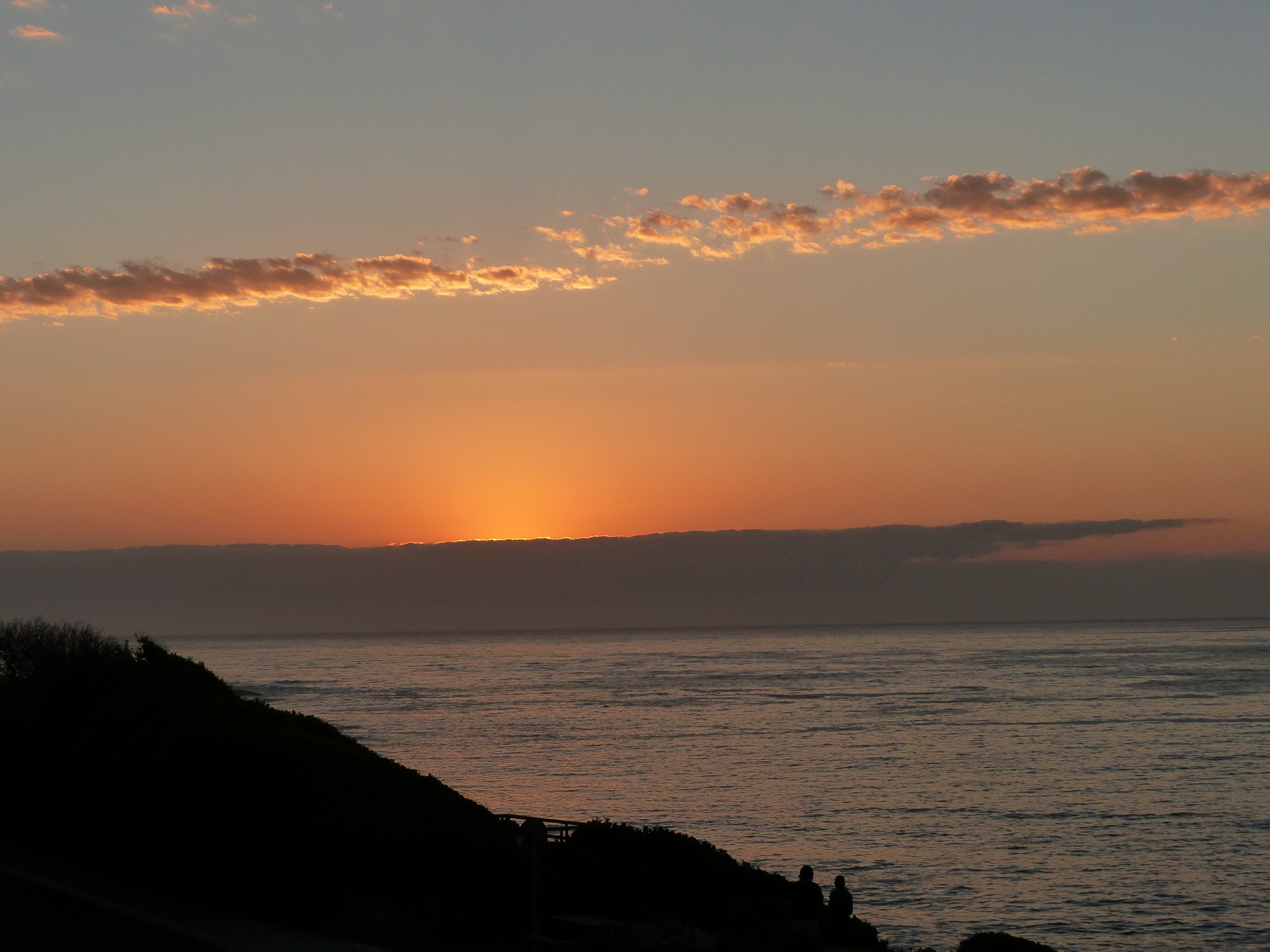
Back on shore we drove with Robin back to Whalesong Lodge. All in all, what was supposed to have been a four hour trip had turned into five and a half, so we were ready for a gin and tonic on the deck. We enjoyed chatting with Robin and his family while we admired more whales and the setting sun. Later we walked to dinner nearby and had some good food and a particularly entertaining waiter.


Mossel Bay and Onwards

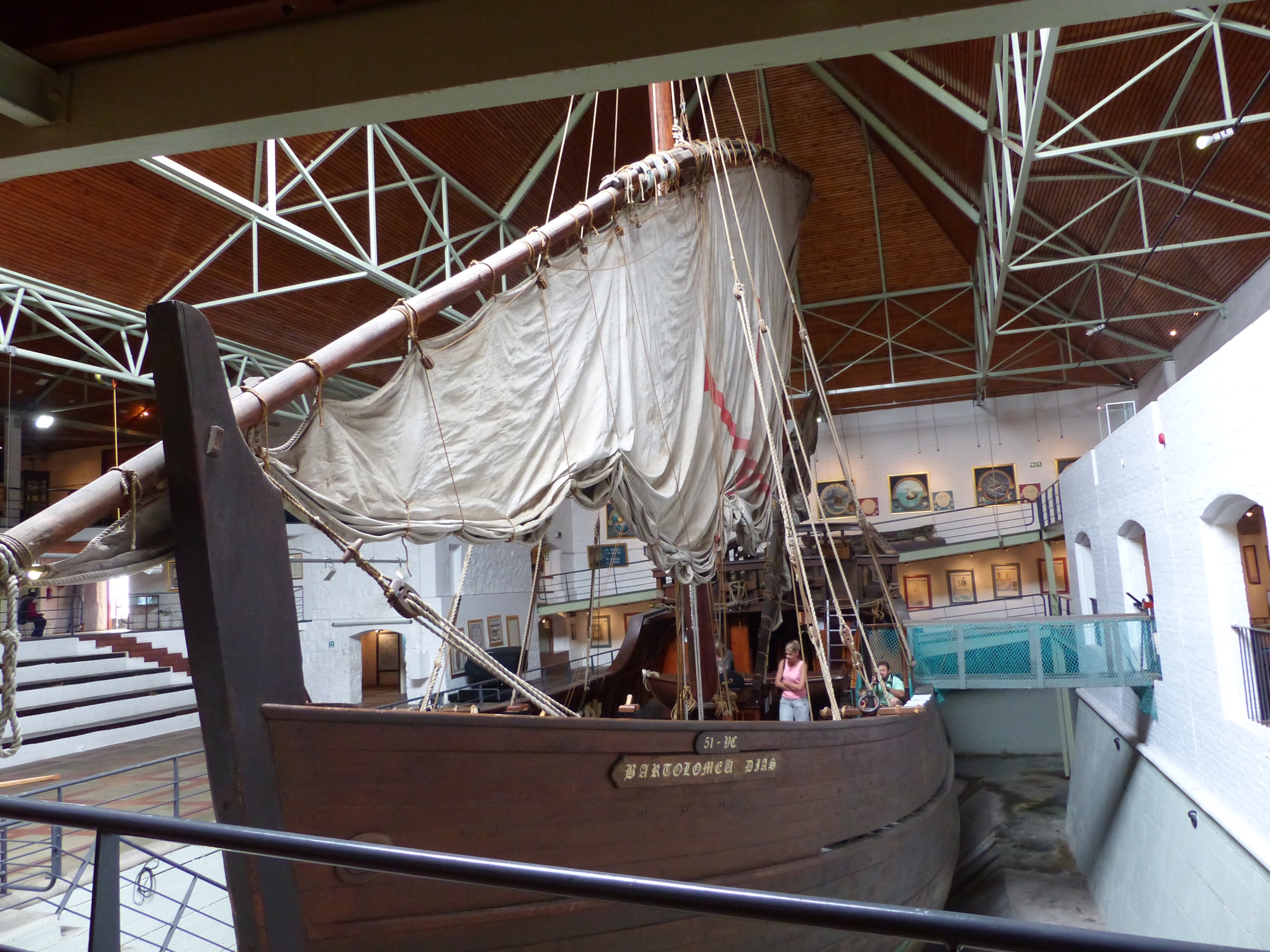
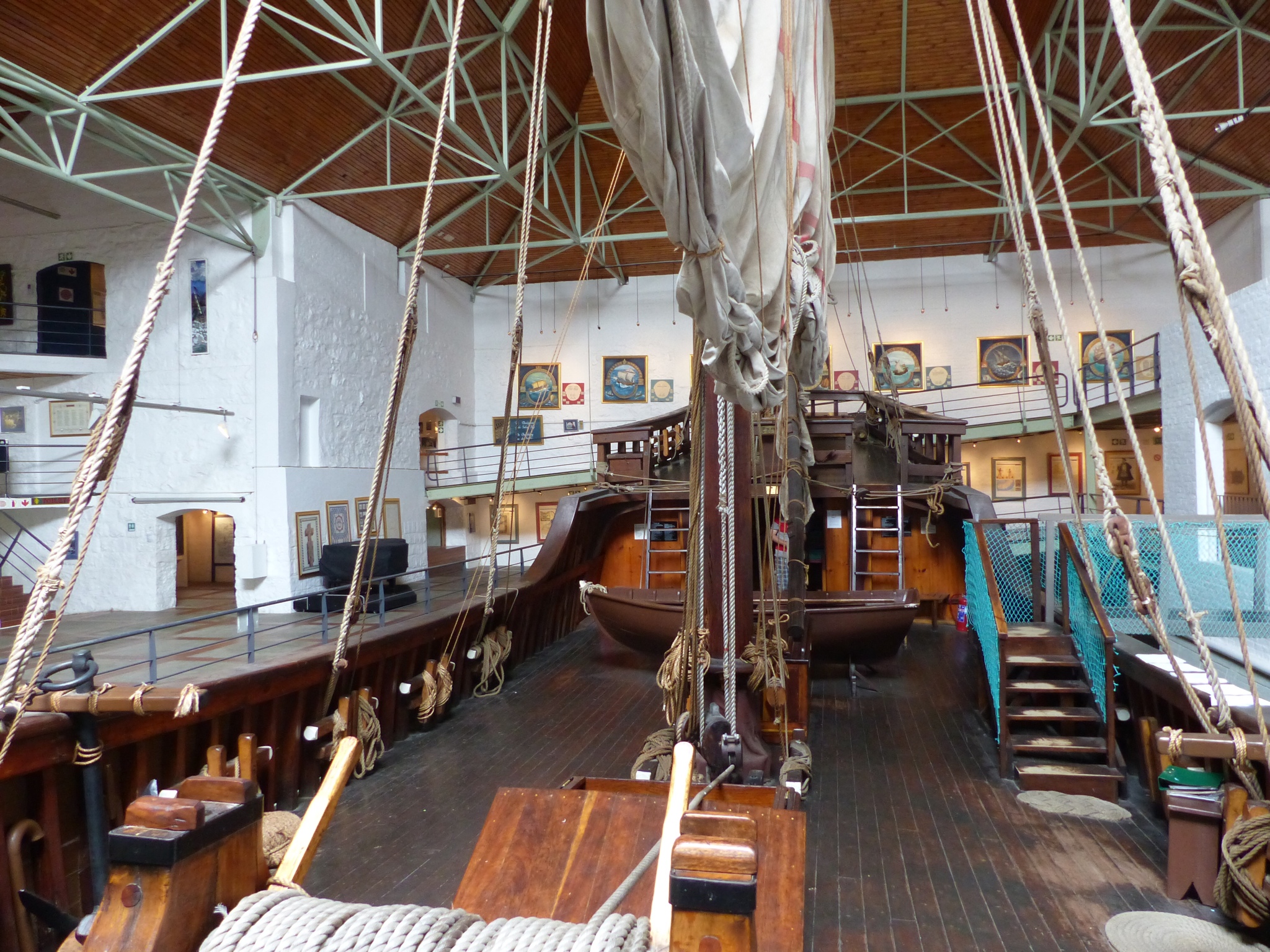
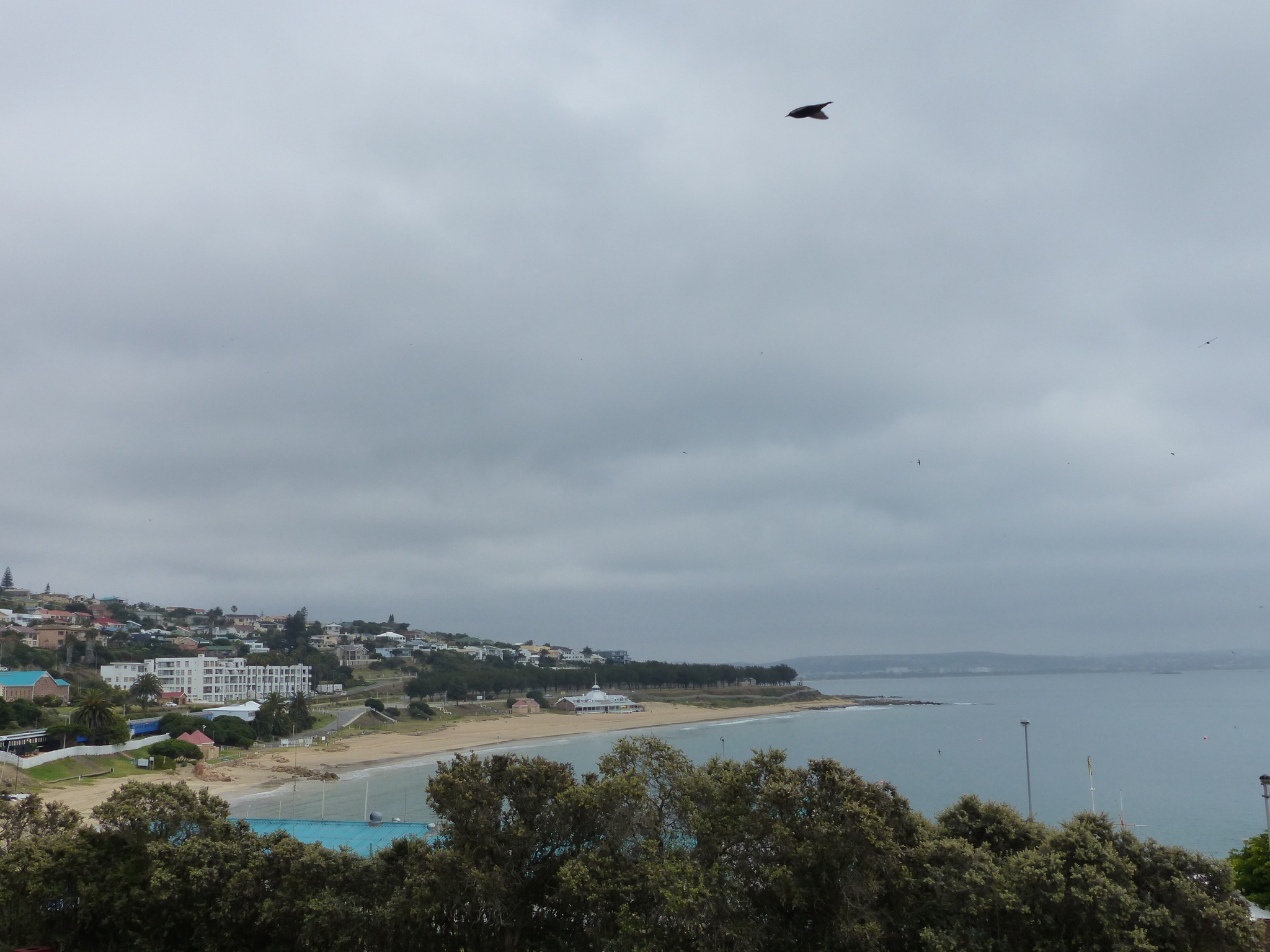
Michael got up early our morning in Mossel Bay to meet Darryl at 6 a.m. for surfing. The conditions weren't very good but he enjoyed getting wet anyway. I elected to revisit the inside of my eyelids. After chatting with our hosts for a bit we packed up and went on our way. We had some driving ahead of us and I wanted to visit the Dias Museum first. Bartholomew Dias arrived in Mossel Bay in a caravel in 1488, having sailed from Portugal. A replica of his ship, built in 1988 and sailed to Mossel from Portugal as well, is housed in a maritime museum there. The first exhibit we saw was one on the history of South Africa. It was good to get another chance to absorb the complicated mix of peoples and cultures that have inhabited and fought over this land. Then we went next door and found the replica of Dias' ship. There were lots of other maritime artifacts as well and you are allowed to actually go on the ship, so it was pretty good.

The replica of Dias' ship

When we finished at the museum we found some coffee and fruit to take on the road with us and made our way out of town.

On the way out of Mossel BVay

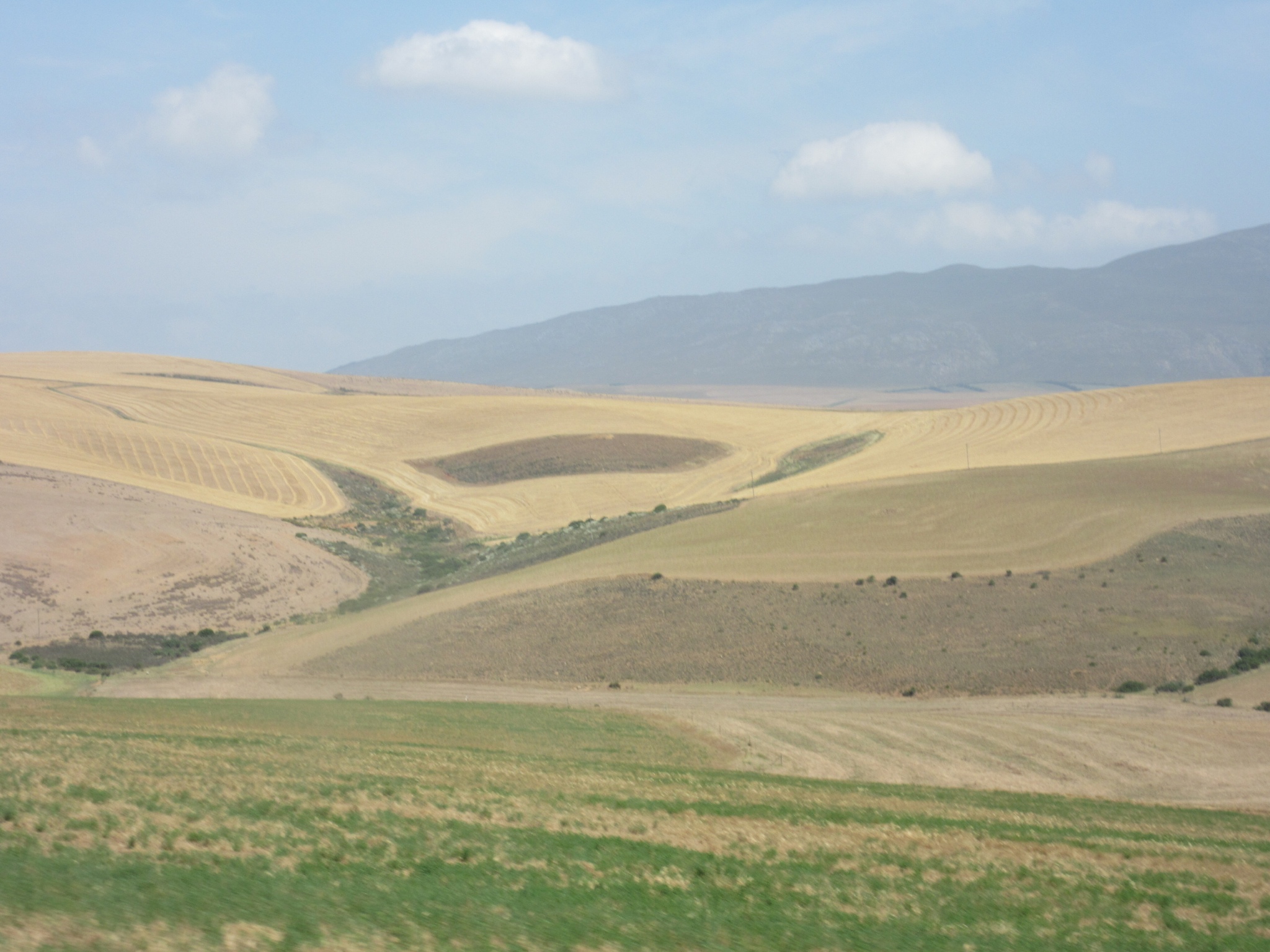
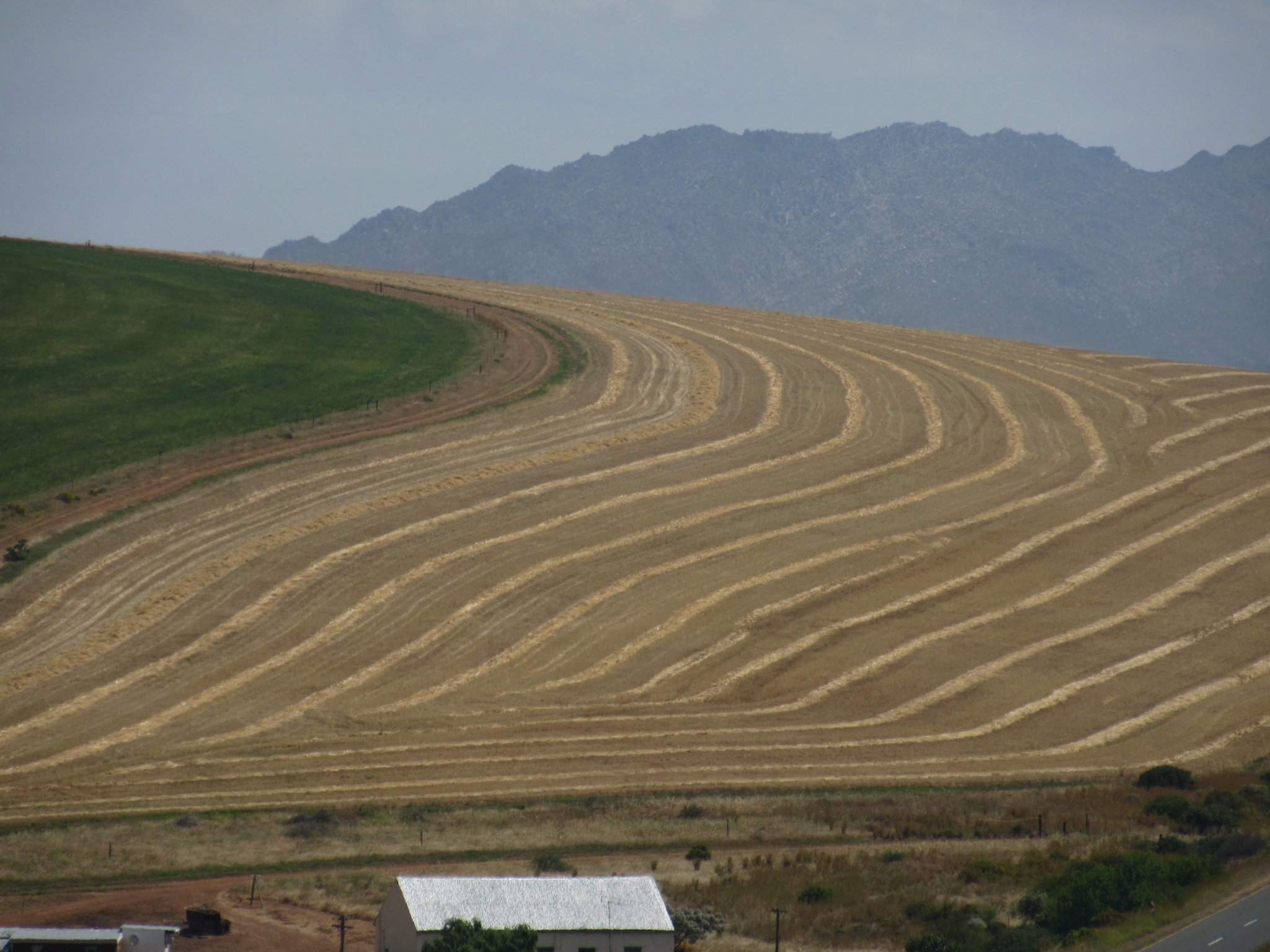
Our next destination was De Kelders, on the coast in the Overberg region. That area is known for its whale watching and shark viewing. The first half of our 4 hour journey was a bit dull except perhaps for the cows, sheep, and ostrich farms we passed. As we drew closer to Swellendam the scenery got more interesting. We could see mountains and the terrain began to roll a bit more. We stopped in Swellendam for a spot of lunch at the local pub. The town seemed quiet. Not long after Swellendam we turned off the main highway onto a smaller road and drove over rolling hills that were being farmed. Michael snapped a couple of photos of the cool patterns in the fields.

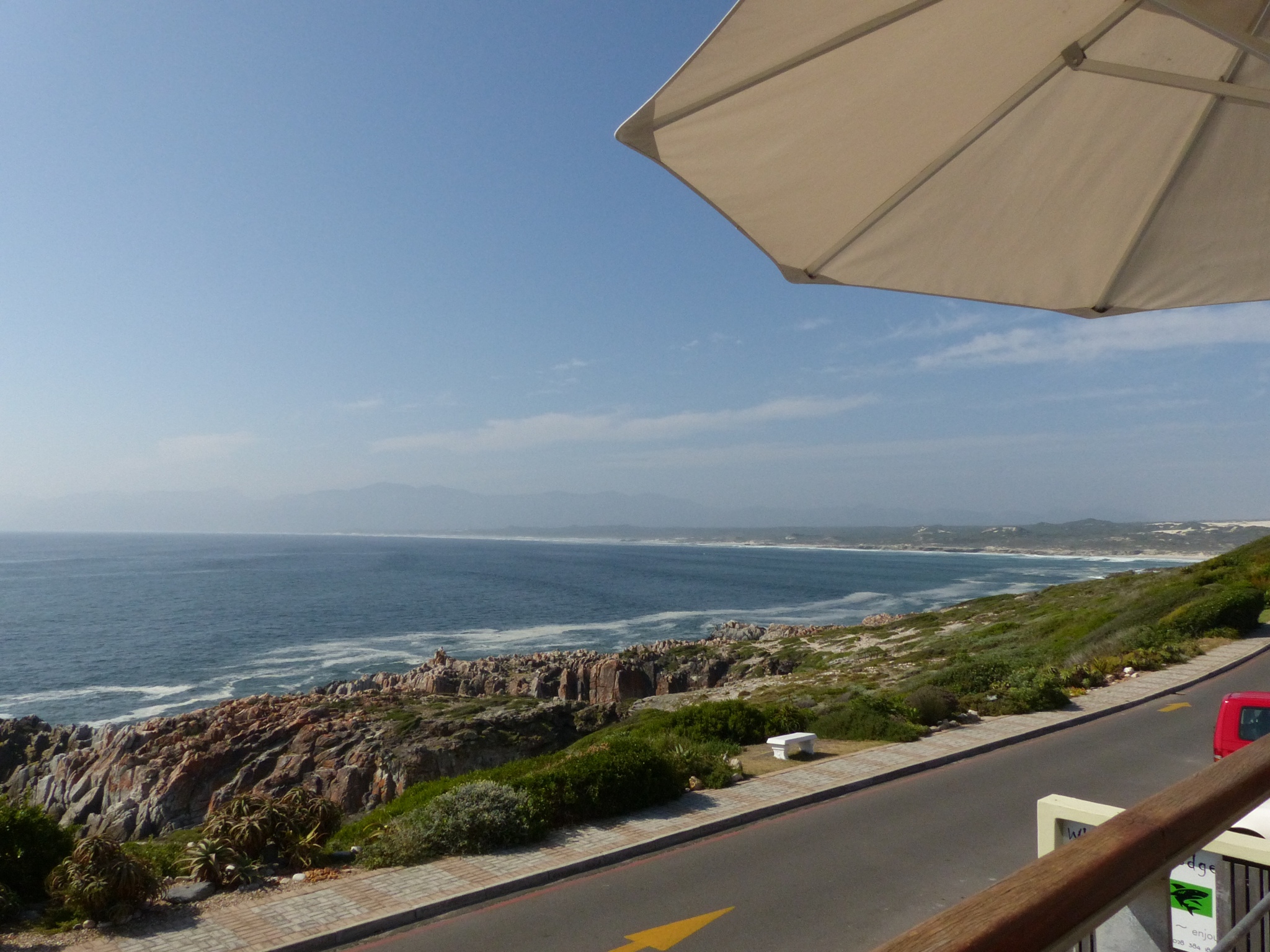
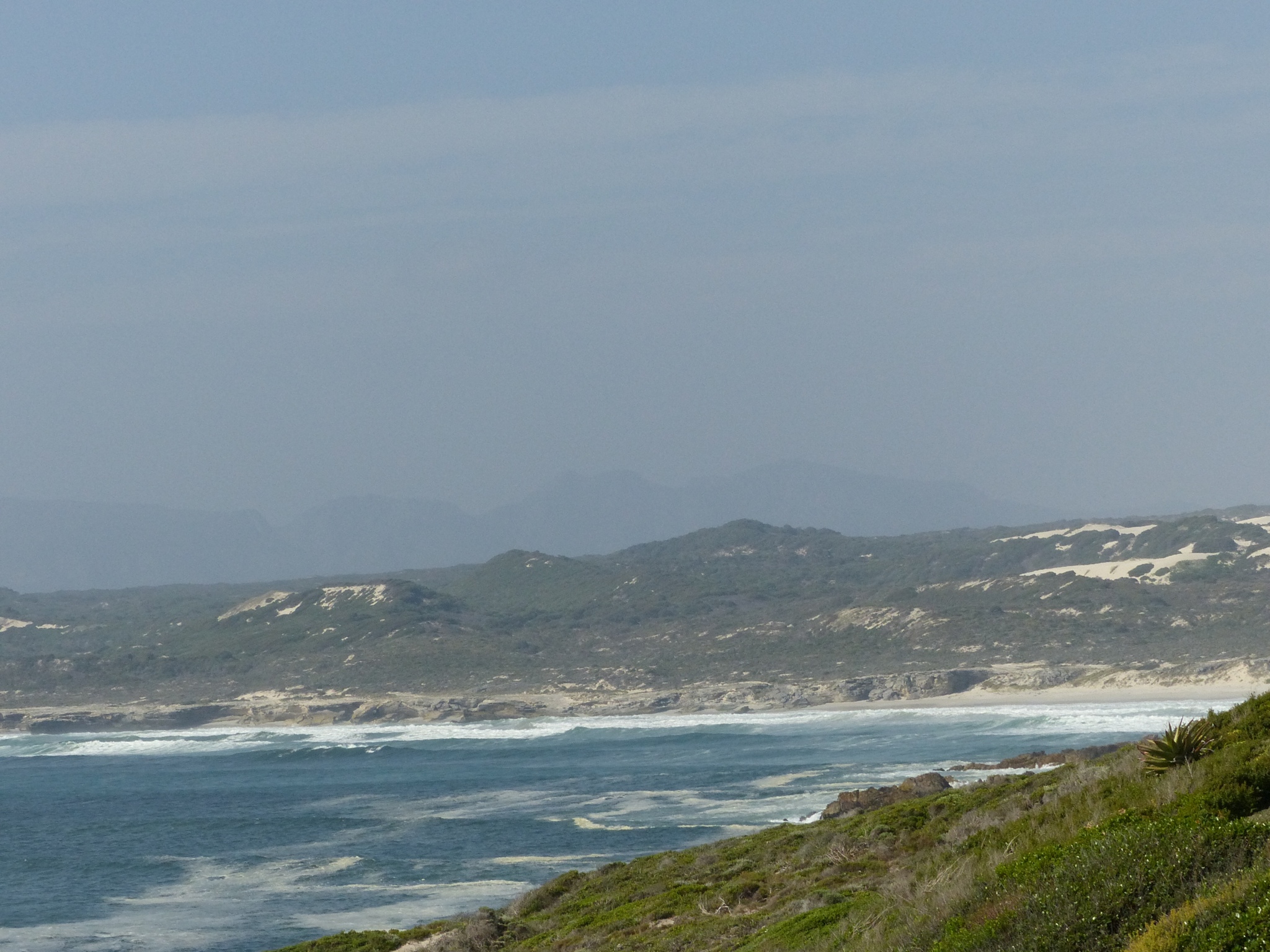
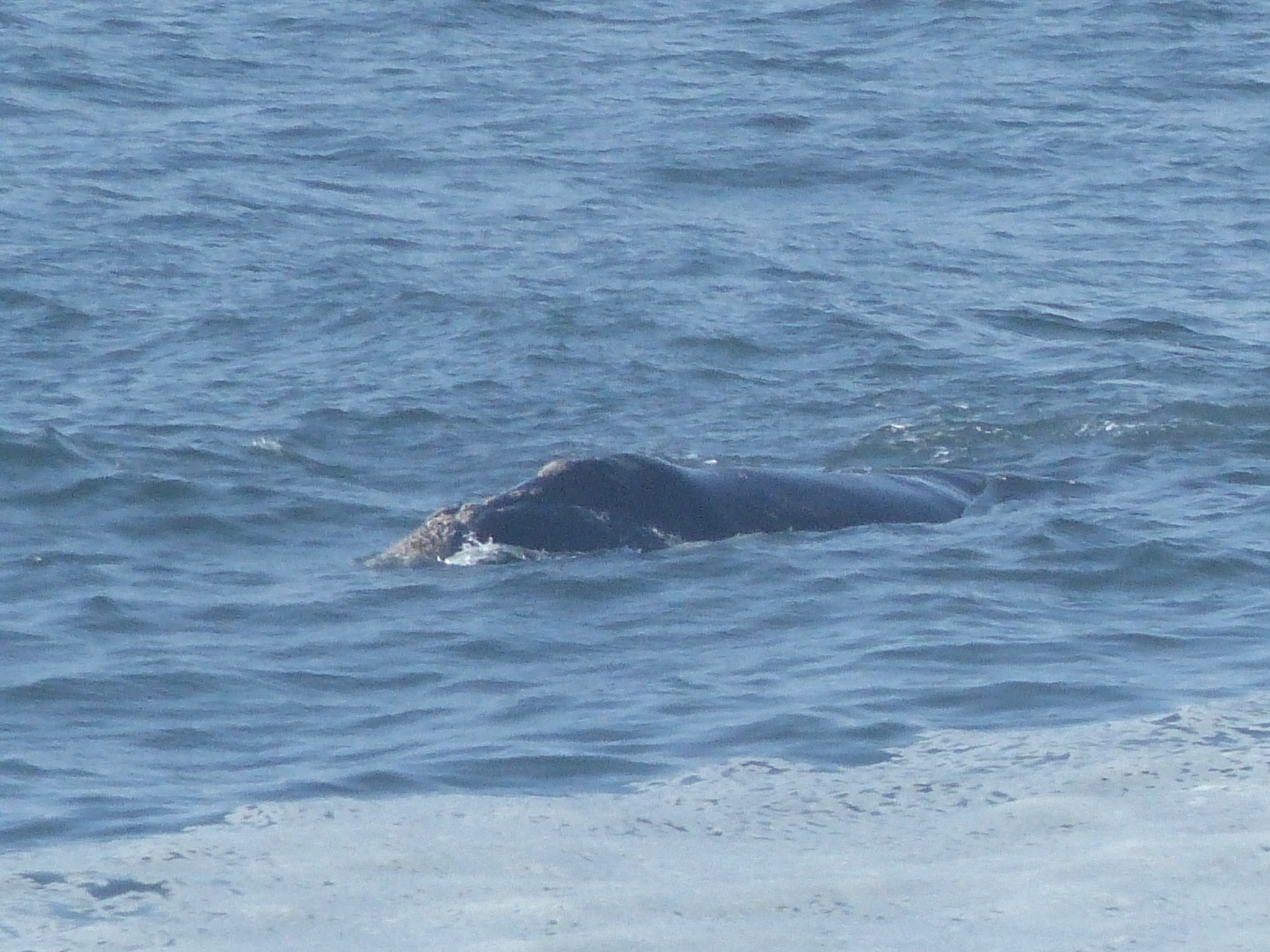
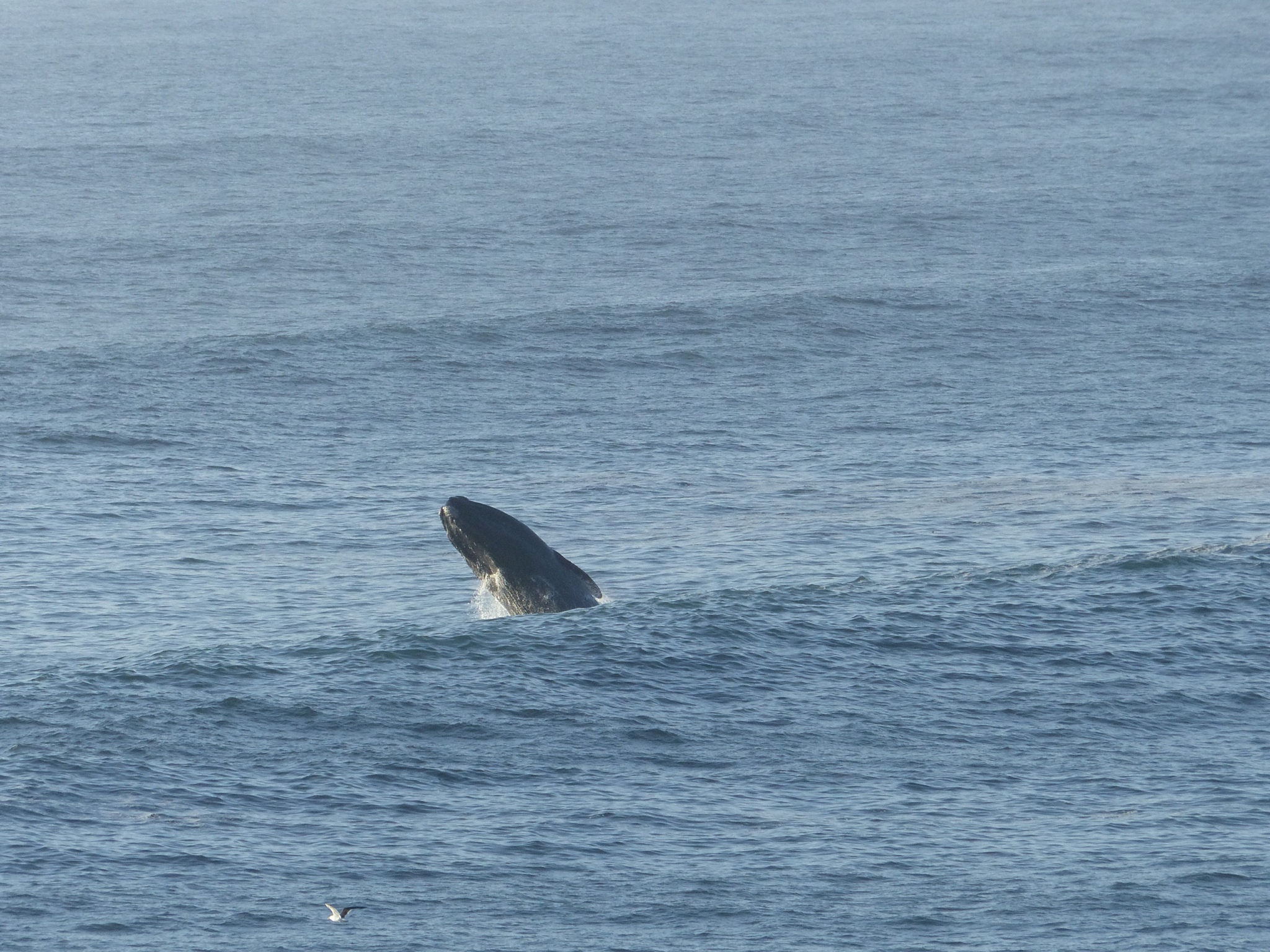
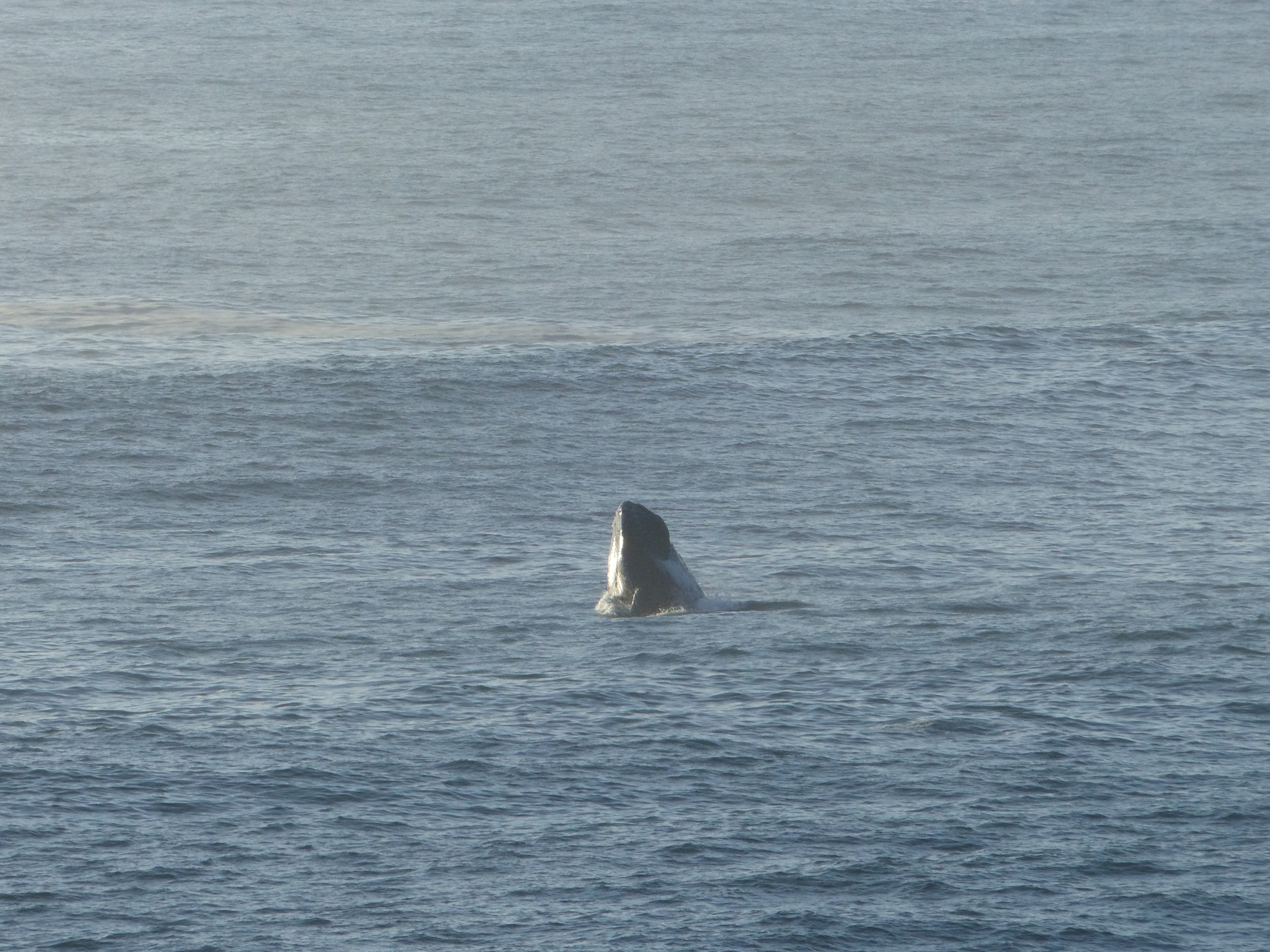
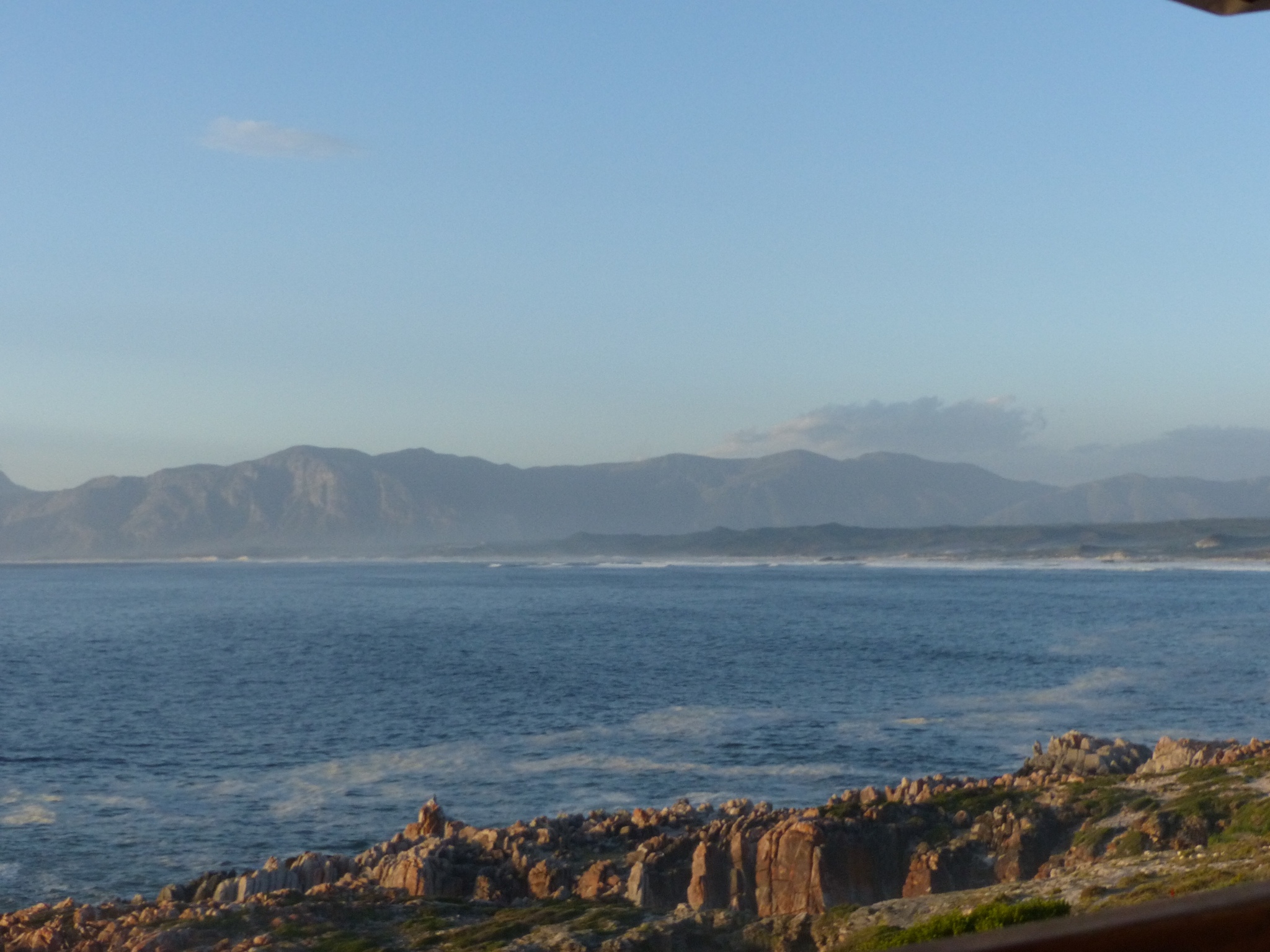
As we drove over some mountains on a small pass and began to drop down toward the coast. we started to see some wineries. Next thing we knew we had reached the Walker Bay Reserve with it's sweeping sand beach and dunes. On the cliffs adjacent is the small village of De Kelders. We turned in and found Whalesong, our lodge for the next 2 nights. Situated along the cliff directly facing the water and looking across the bay toward Hermanus with mountains in the background, it had a spectacular view. The sun was shining and almost immediately we spotted whales in the water just off the cliffs. As we were waiting to check in and standing on the deck, Michael called me over to see whales breaching offshore. What a sight! The Southern Right Whale visits Walker Bay in South Africa from June to November to breed and raise their calves. It is one of the best places in the world to see whales from the shore. In the summer the whales move back to Antarctica.

The view from the deck

The Southern Right Whale

I got a call that afternoon from Marine Dynamics that our Shark Cage Diving excursion for the following morning had been delayed until noon because of impending bad weather. This was not entirely unwelcome as it meant we didn't have to get up early, but we were getting a little tired of bad weather. In any case it did make us fully appreciate the gorgeous evening and sunset on the water that we were experiencing. We walked down the way to dinner at what I would call a “house restaurant”. Some enterprising folks had opened a small restaurant serving a limited menu in what appeared to have been a lounge or family room. The food was pretty good and the ambiance quite nice if a little tightly spaced. I'm sure they are booked up most nights as there isn't much within walking distance of the small hotels and guesthouses in De Kelders.


Plett to Mossel Bay

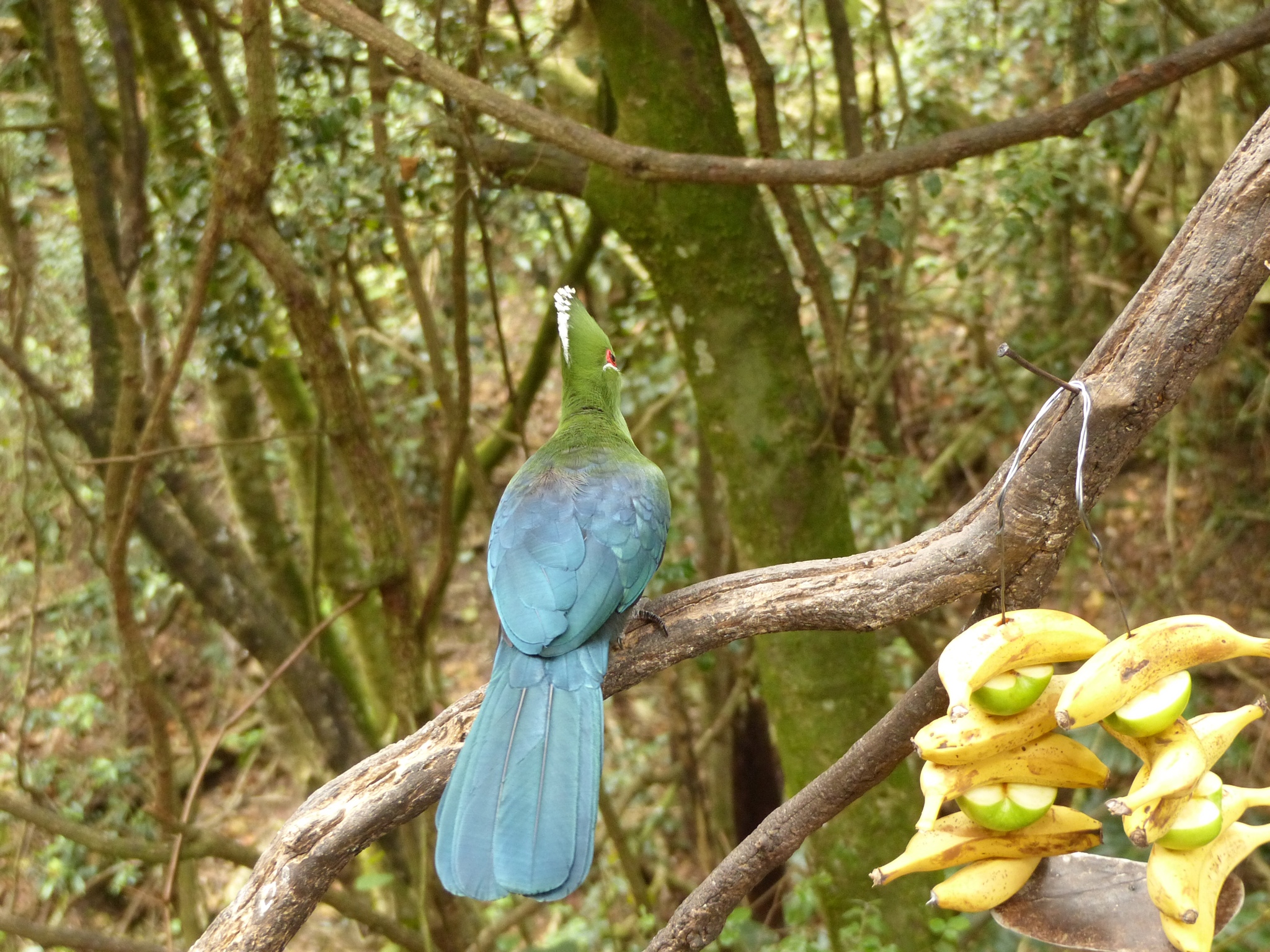
The next day was a travel day so after breakfast and fond farewells, we hit the road bound for Mossel Bay. Along the way we stopped at the Garden of Eden walk. This is a short walk on a wooden boardwalk through the indigenous forest which identifies the various trees and plants for you. I love a walk in the forest, especially when the trees are unfamiliar. It was lush and jungle-like with many birds. We were very pleased to see a Knysna Lourie in the wild–one of the beautiful local birds we had seen at Birds of Eden the day before.

In the woods

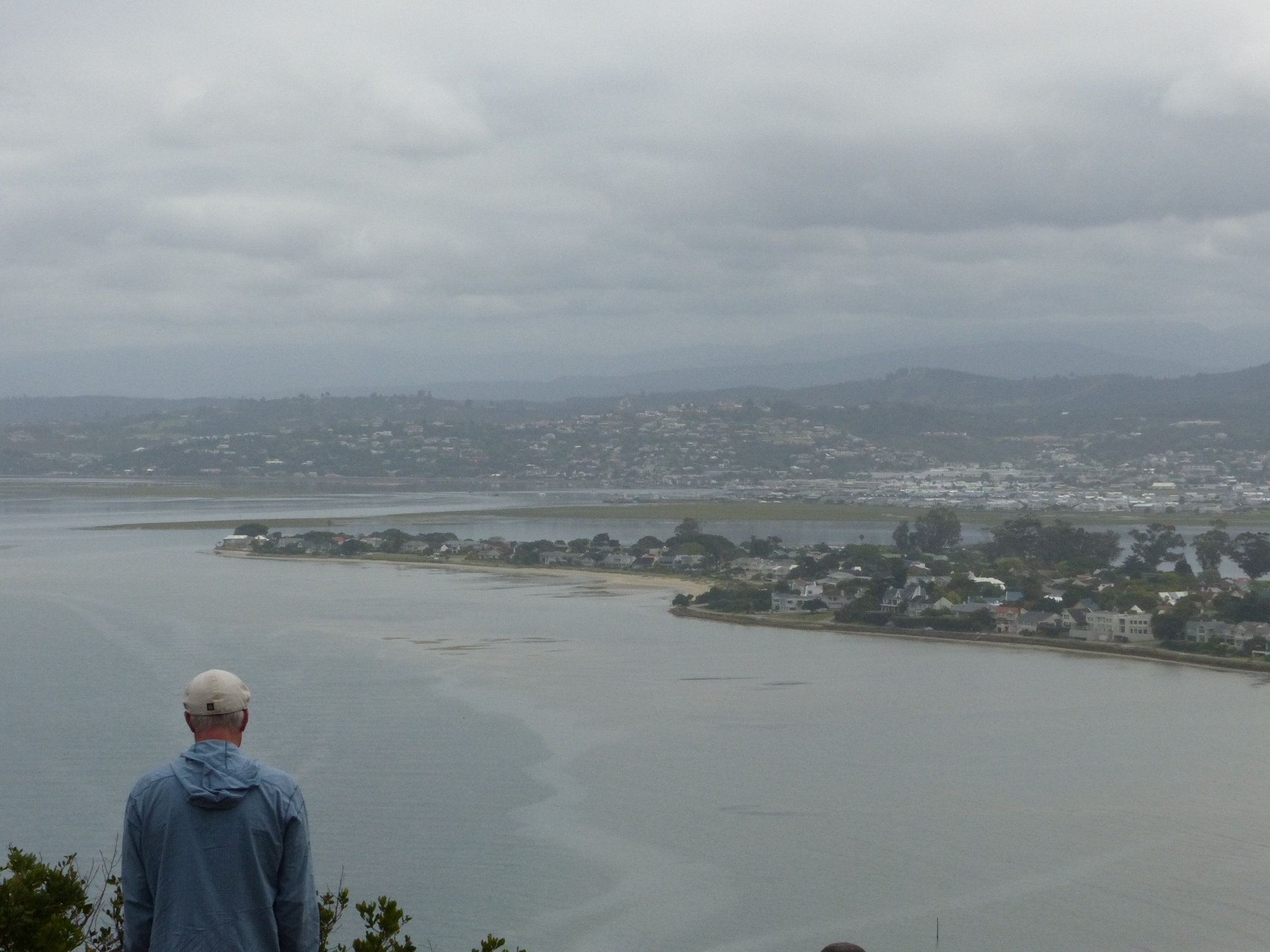
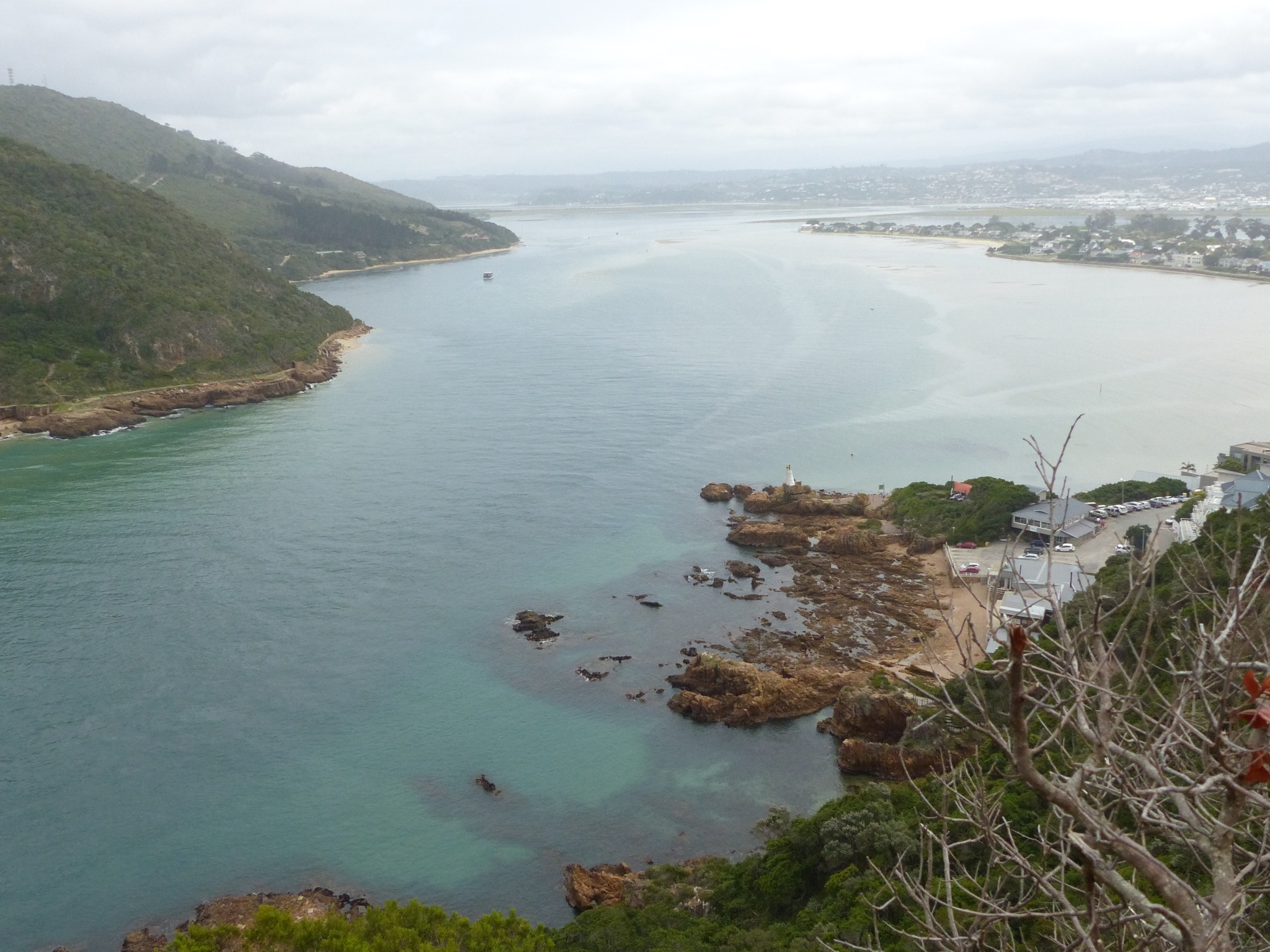
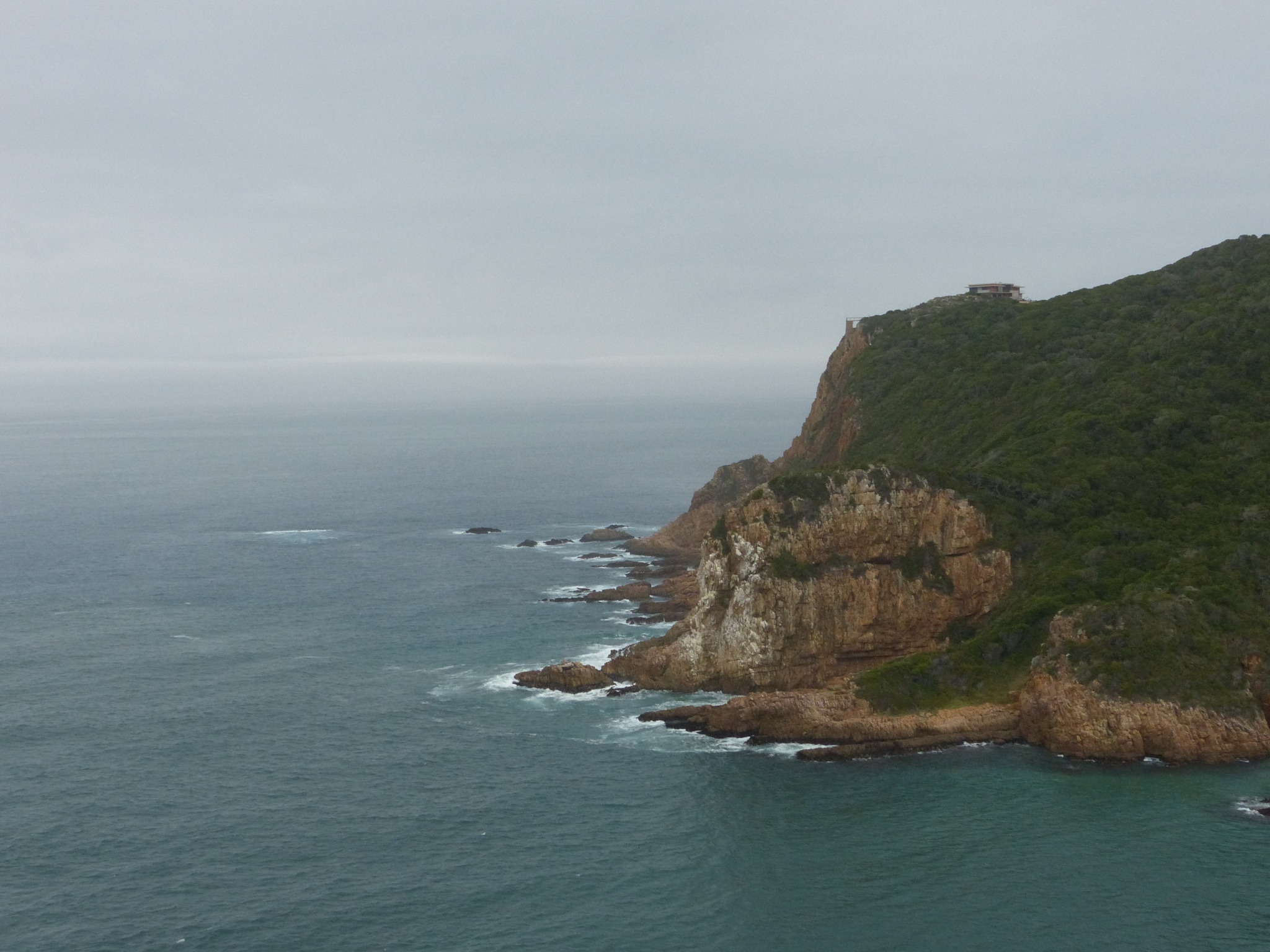
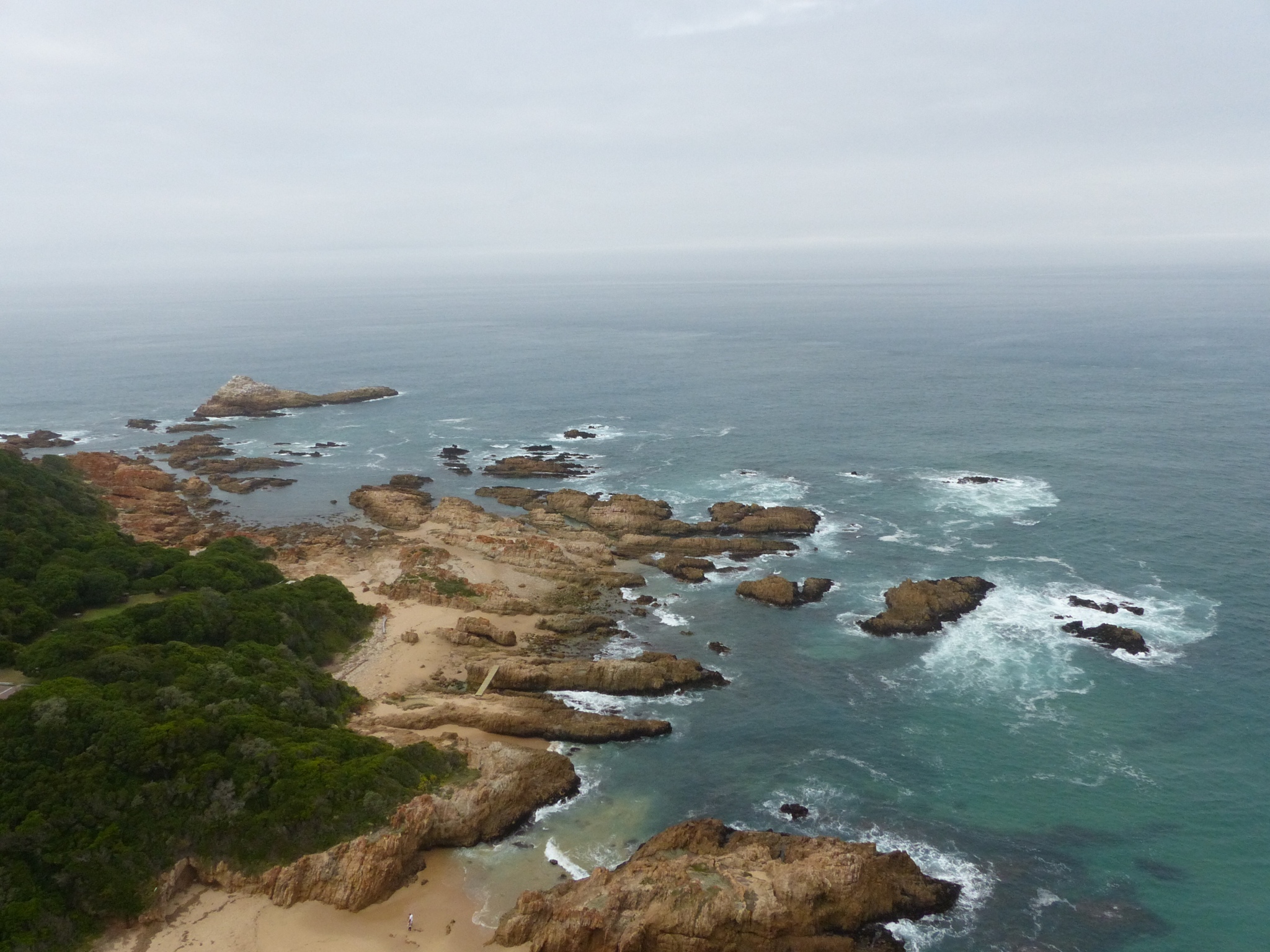
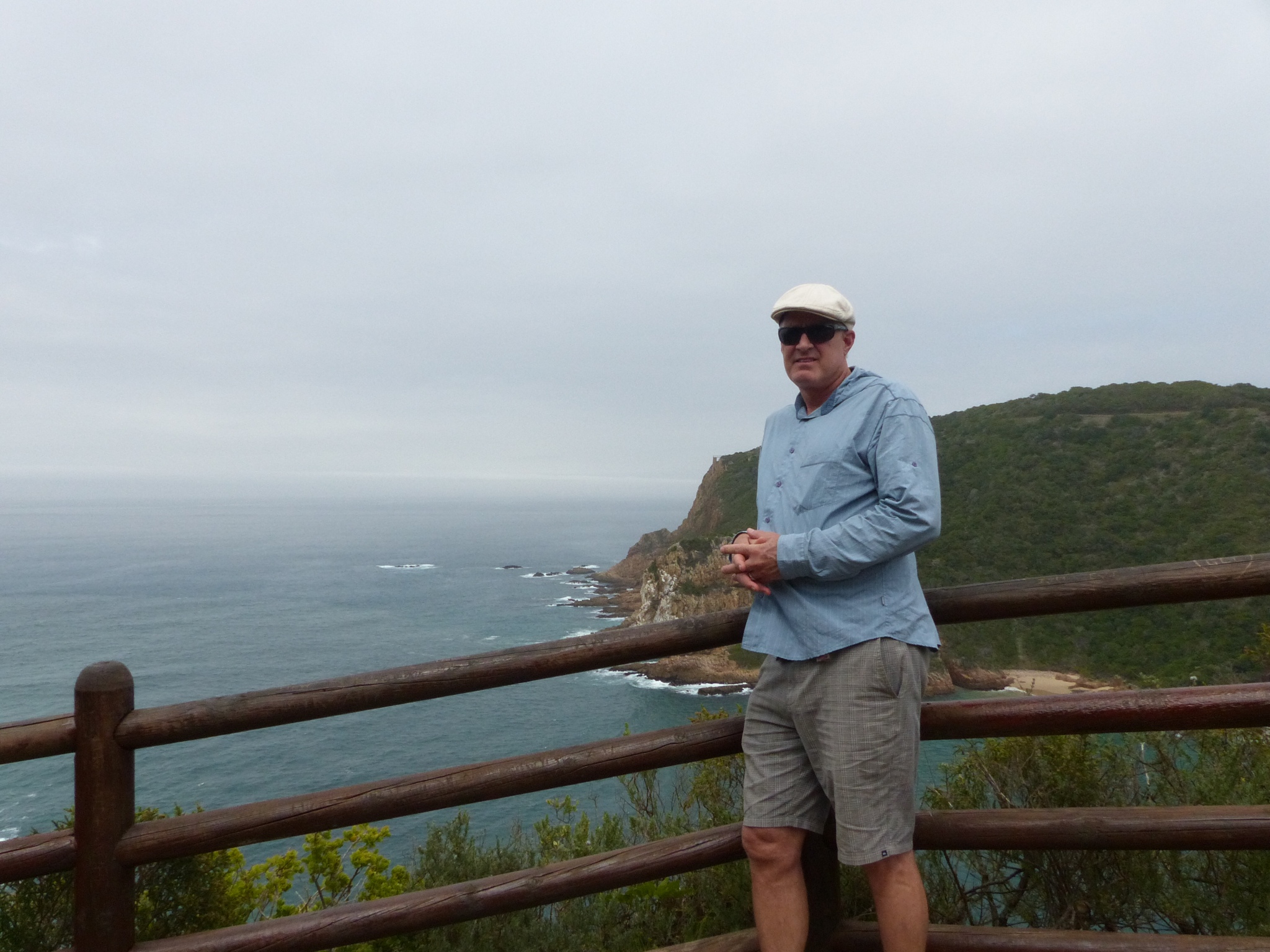
Back on the road, it wasn't long before we got to Knysna and went out to The Heads for a look at the view. Knysna is located on a lagoon that gives out to the sea through a narrow channel with “heads” on either side.

Looking across the lagoon to Knysna

One of the Heads

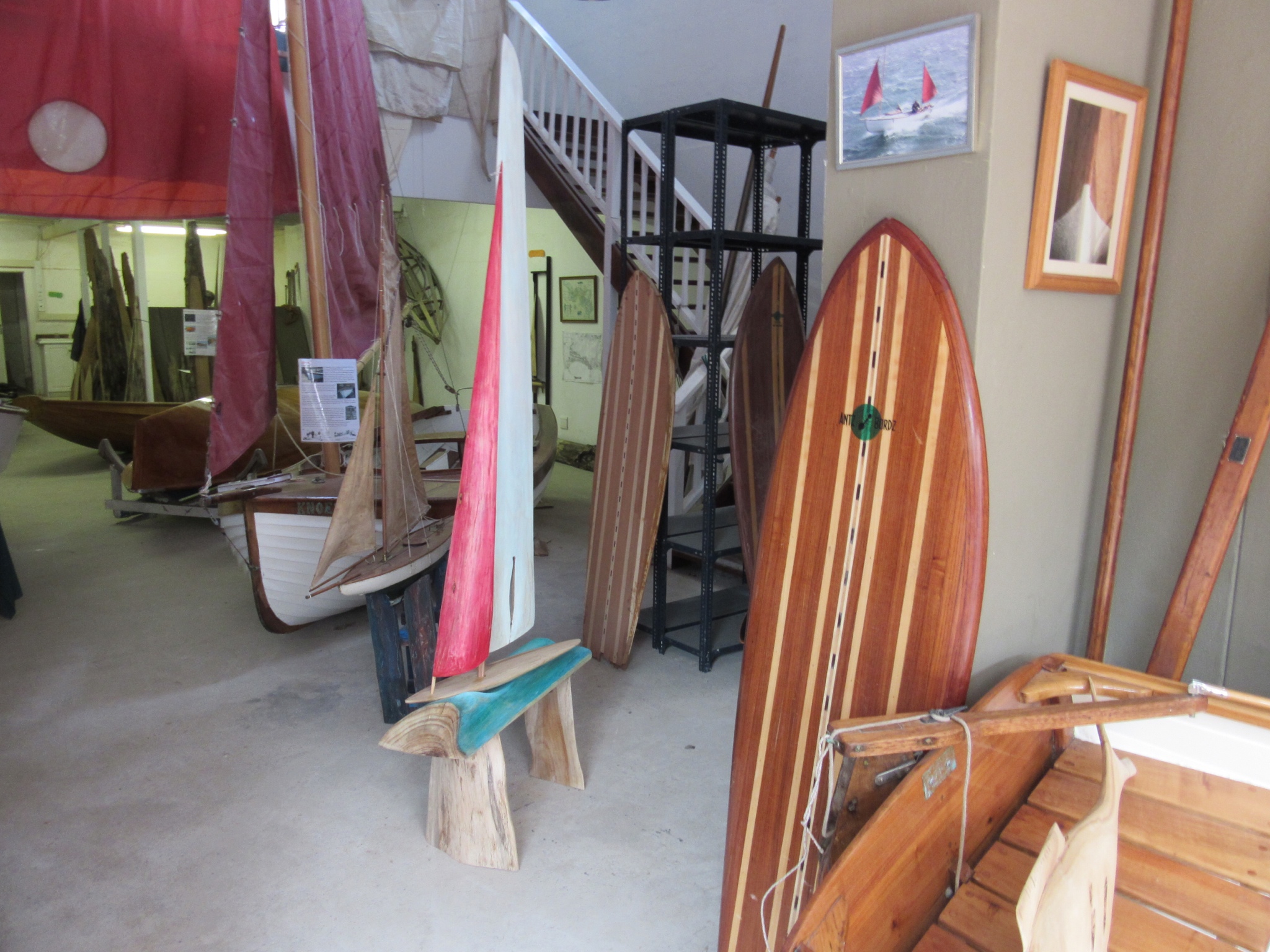
After admiring the view we went into the town of Knysna and found a place to park. Then we did some shopping. There was an open air spot with some vendors as well as some artsy shops. One cool shop made wooden boats and other craft. We found a café for lunch and had something simple while watching the people.

The Woden boat shop

Afterwards we continued on our way to Mossel Bay, another hour or so down the coast. In Mossel Bay we found our accommodation quite easily. It turned out to be a lovely loft over our hosts' house with nice views, mostly obscured by clouds by then. Our hosts were Darryl and Nadja Monson with sons Kye (3 or 4 maybe?) and Finn (1-2?), and small dog Zinkie. Darryl surfs, so he and Michael discussed the possibility of surfing together in the morning. Darryl very kindly offered to lend Michael a board so we trotted down the street to the local surf shop to see if we could find him a wetsuit to rent. We were successful and then went back to the house again and enjoyed sundowners while chatting with Darryl. Nadja had taken the boys to go swimming.

Our loft

Our dinner that evening was at a restaurant called Route 57 which Darryl had recommended. The name made us think of Route 66 so we had subconscious expectations of a casual, diner-type place. This was not the case. It turned out the restaurant had been opened by a somewhat famous South African golfer who had once shot a 57 at a local course! The ambiance was decidedly not diner-like. The food was reasonable however, and we giggled a bit at the giant mural of said golfer holding a trophy that appeared across at least one entire wall of the restaurant.


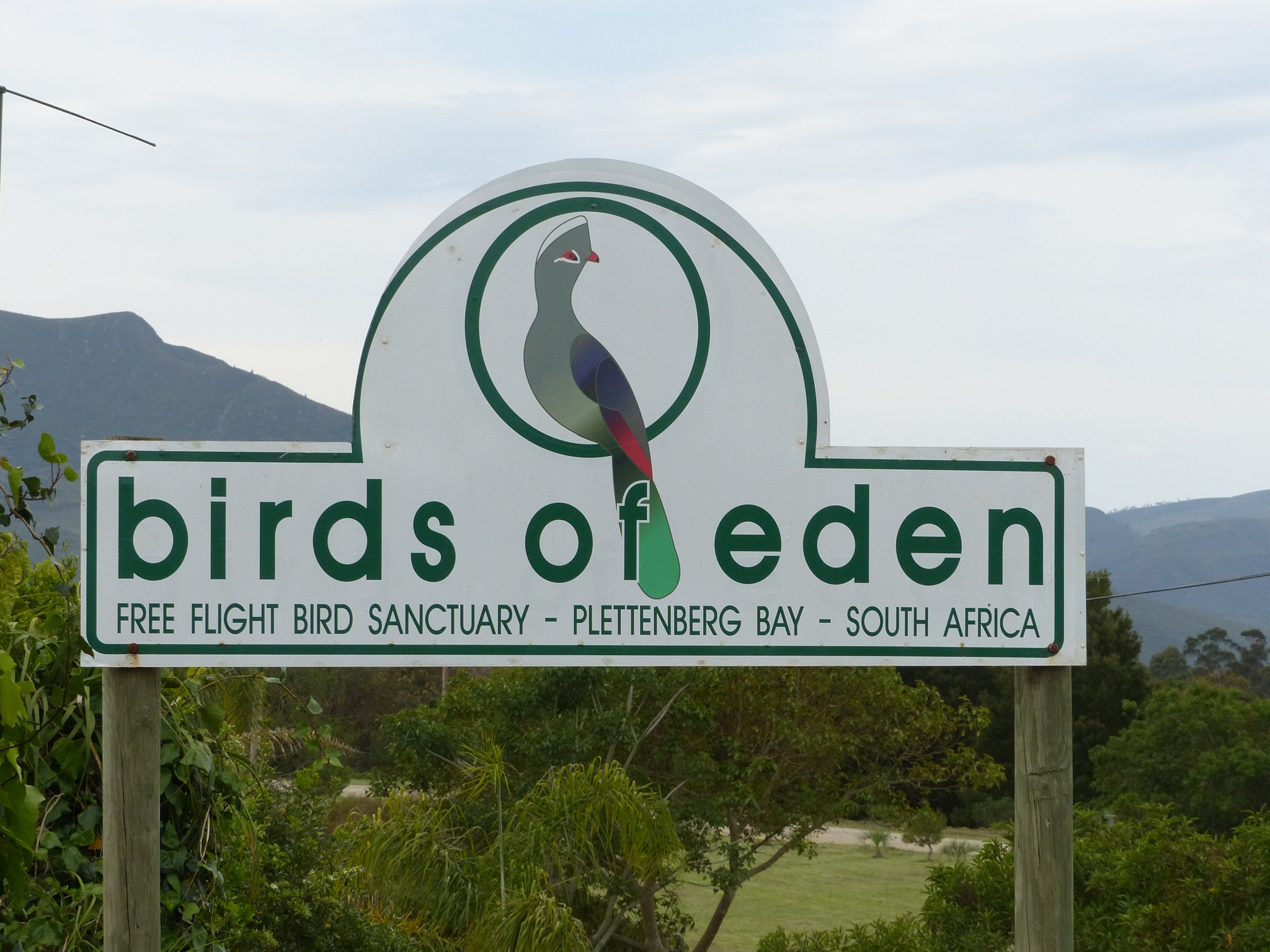
Birds of Eden

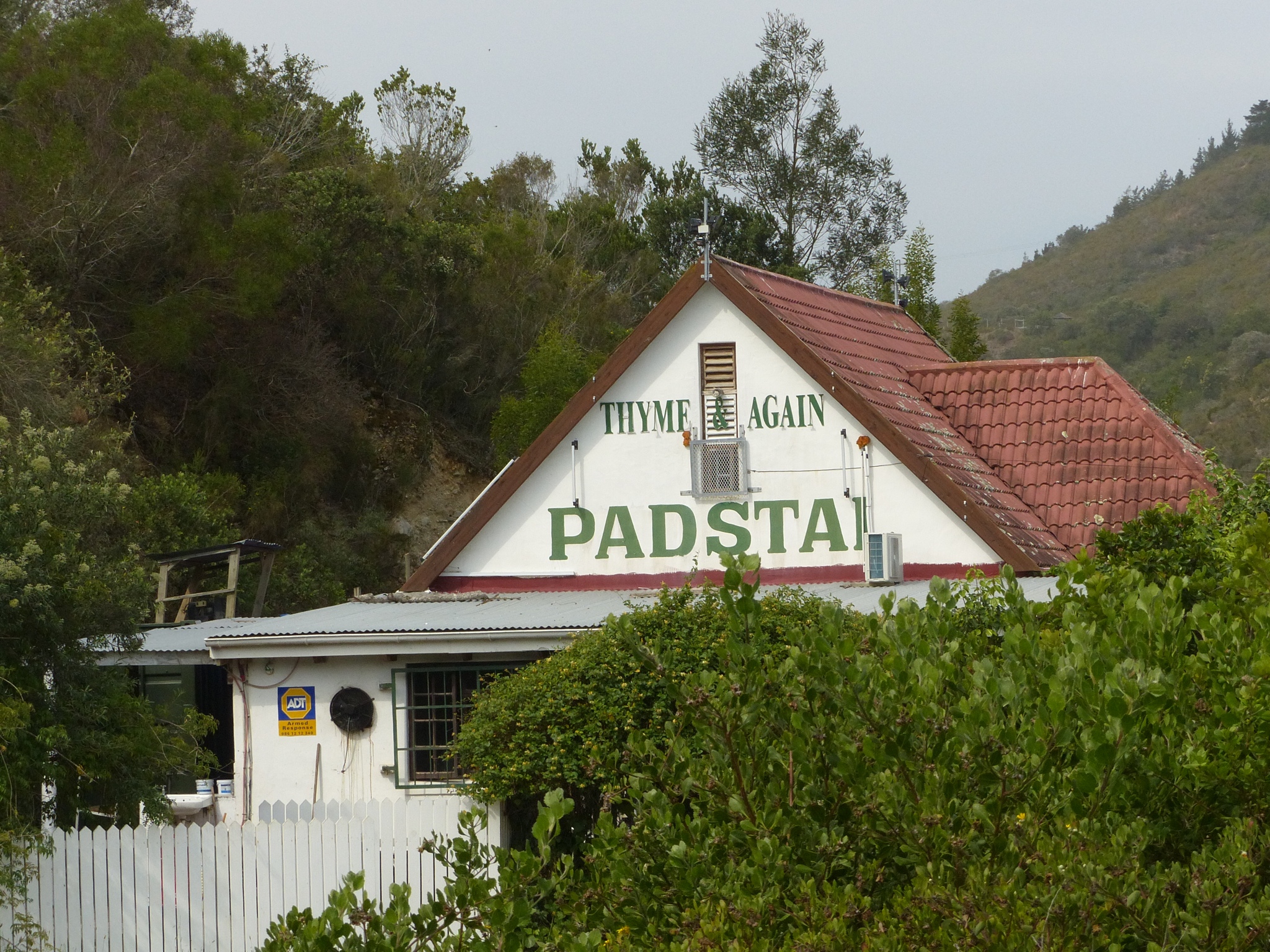
Next up for our day was a trip to Birds of Eden which had also been recommended by Adrienne and Bernie. Along the way we stopped at Thyme and Again, a farm stall and café, and enjoyed a late lunch. The shop had dried fruits and nuts, jams, sauces, produce and a butchery, as well as baked goods. The café was a nice homemade sort of affair. I ordered an ice coffee since I saw it on the menu and thought a pick-me-up would be good. To my surprise, what I got was more akin to a coffee milkshake or frappe with ice cream in it! Live and learn, but it was still delicious.
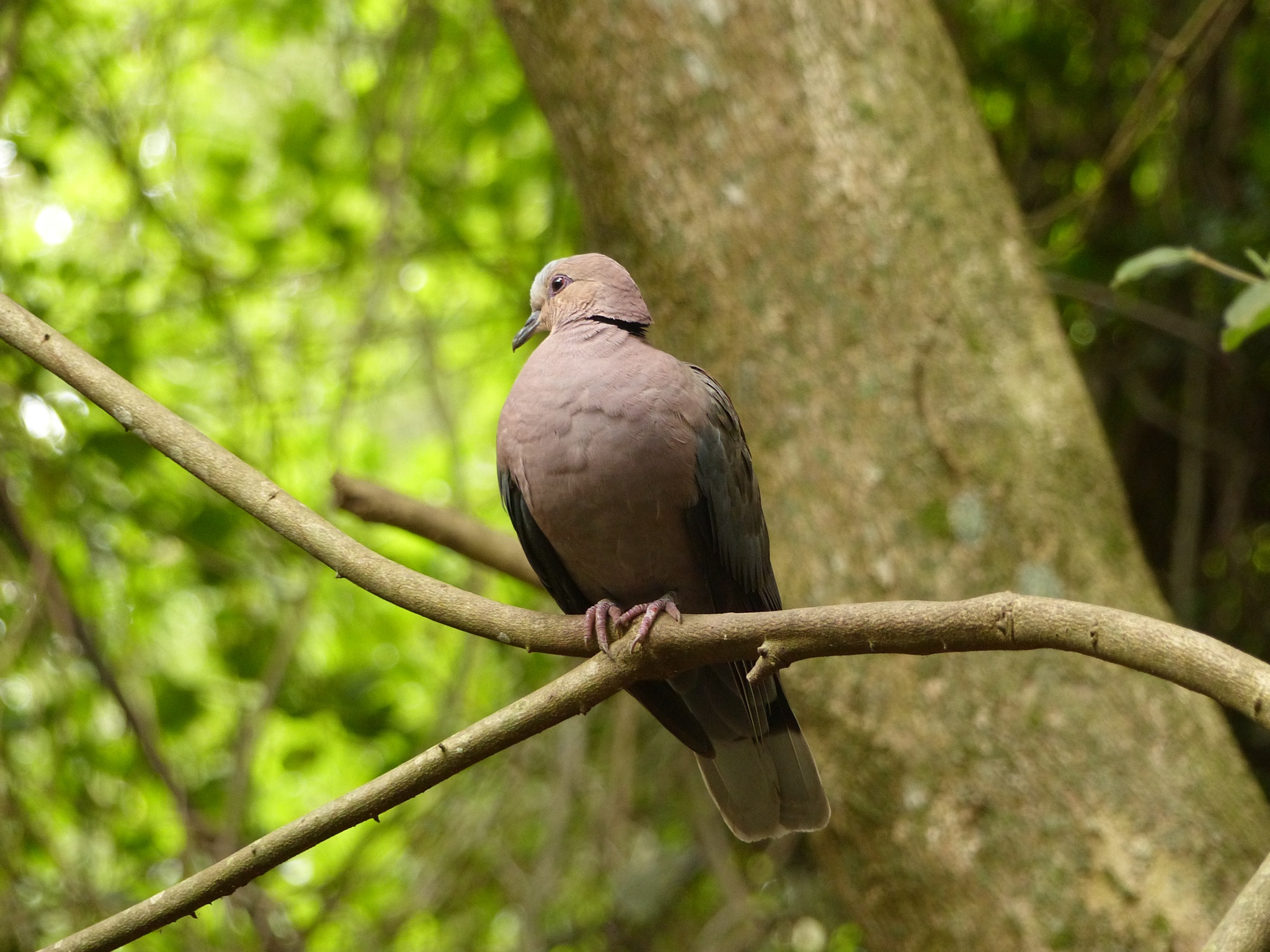
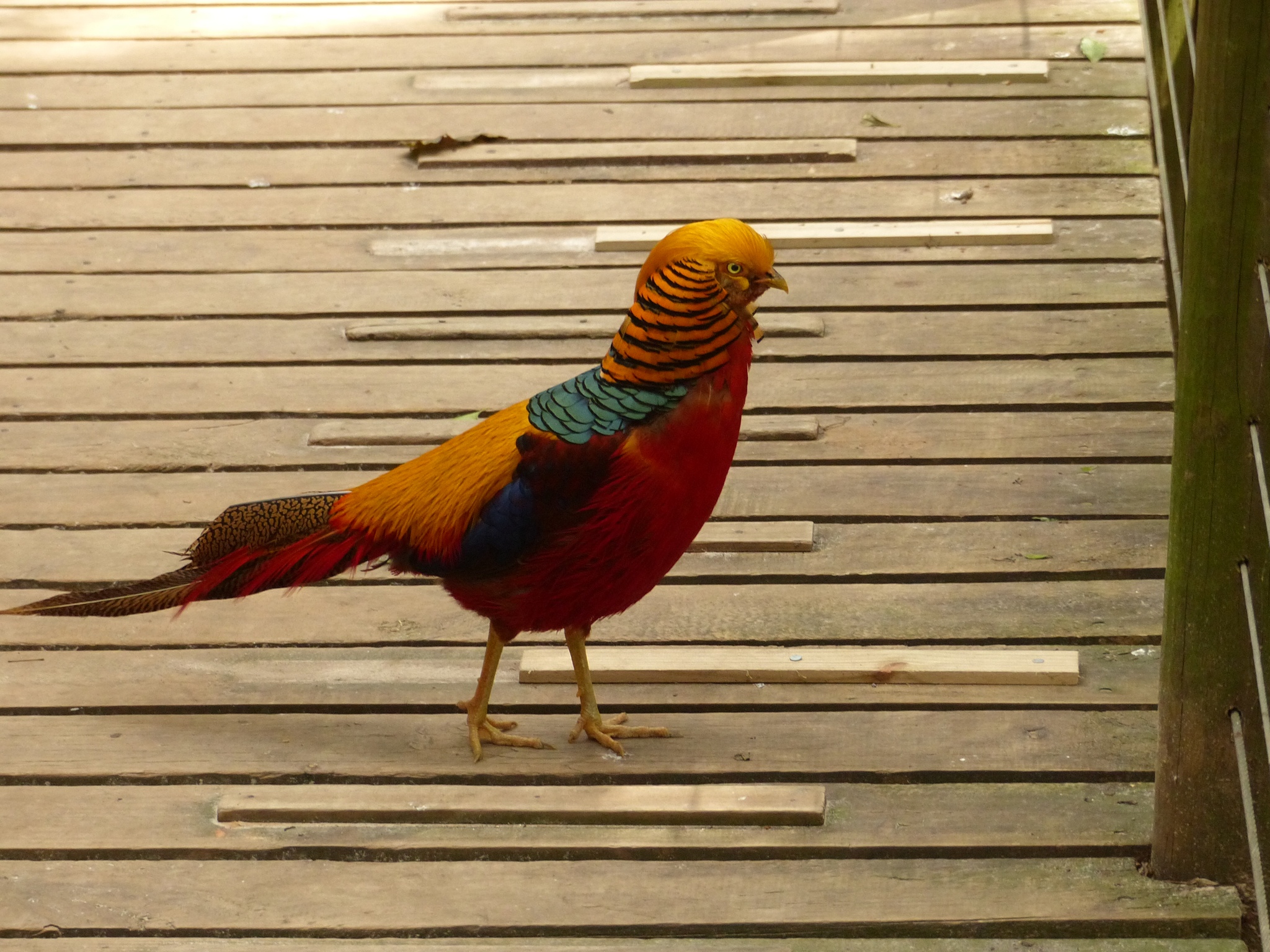
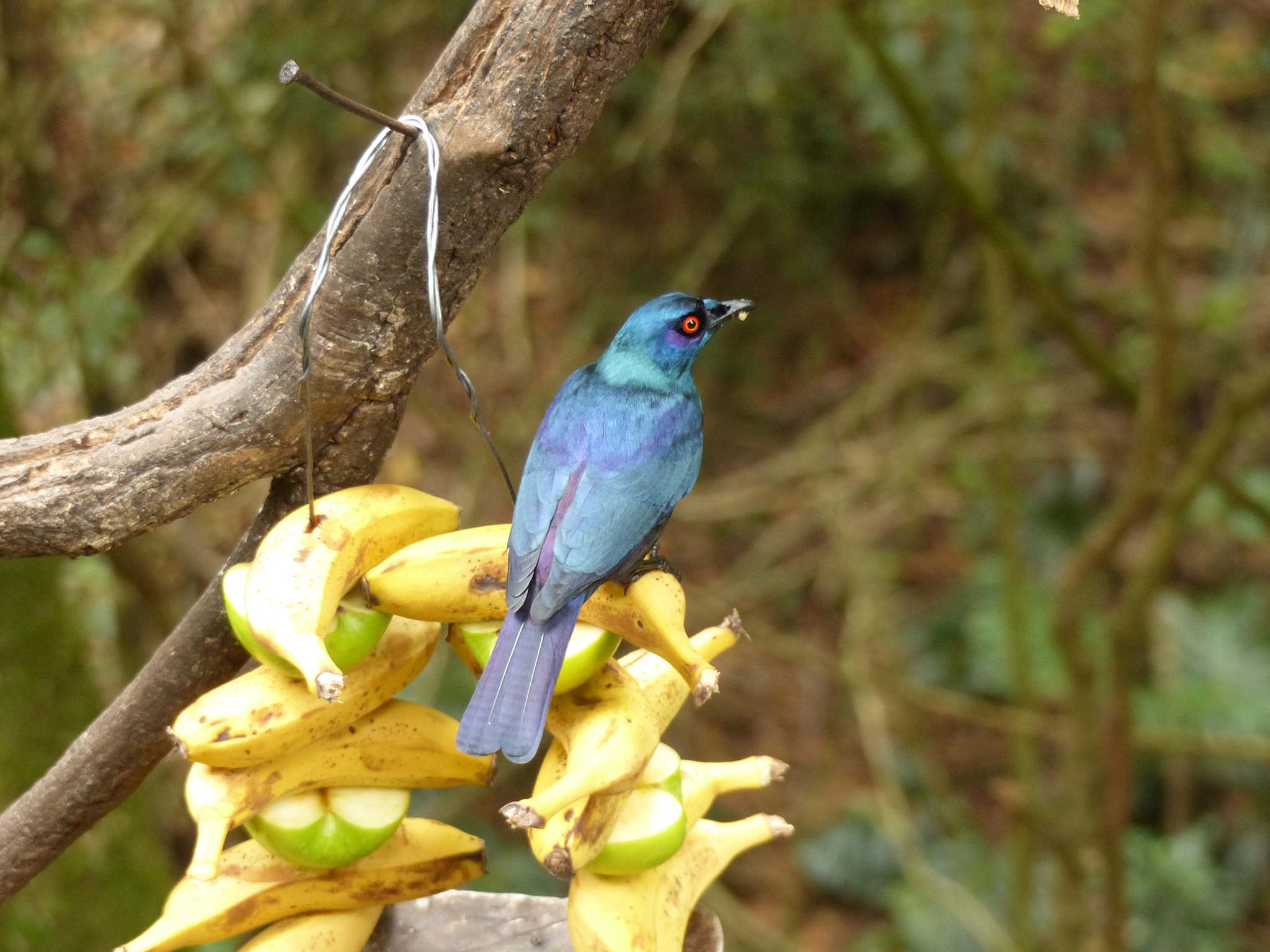
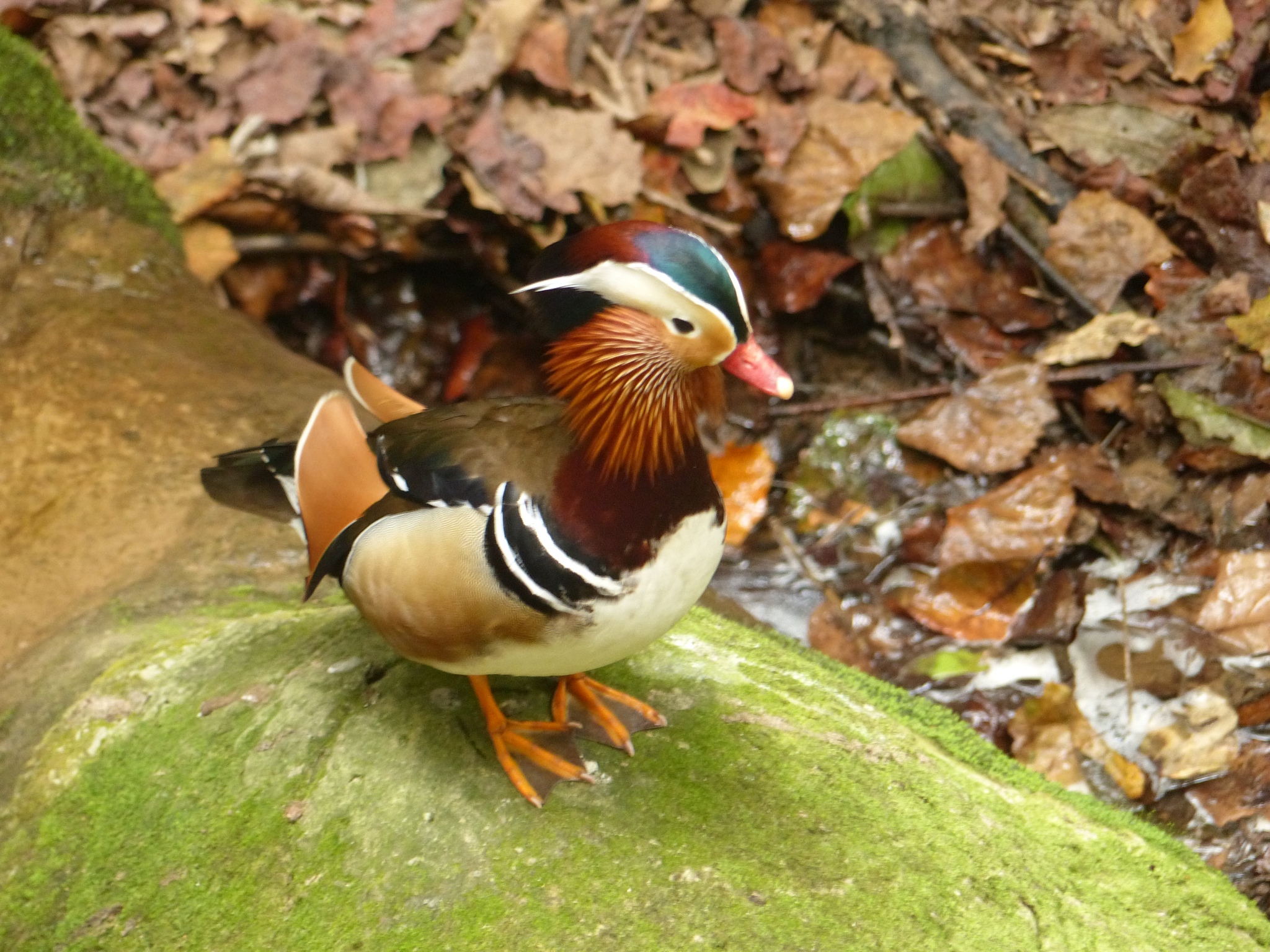
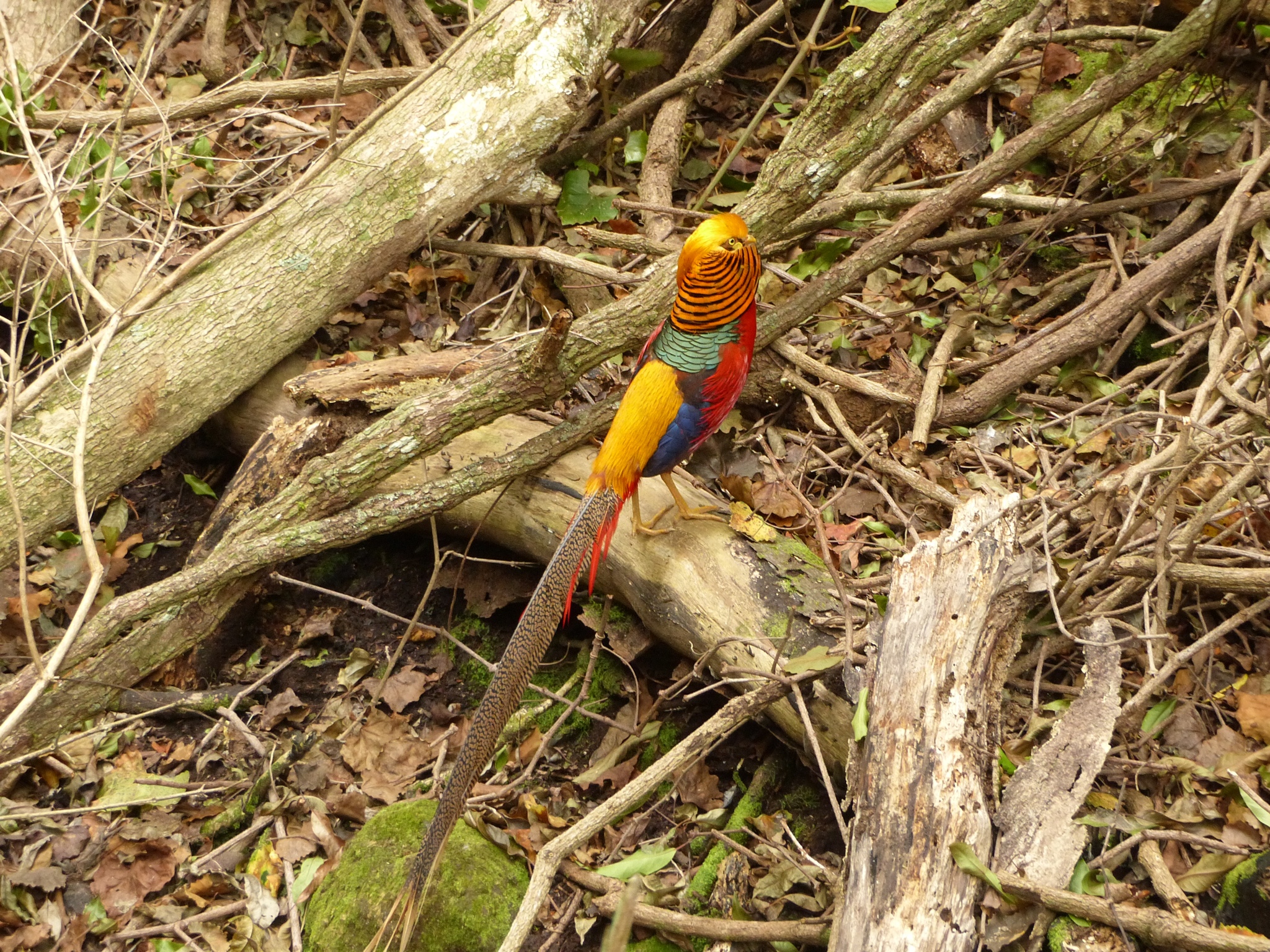
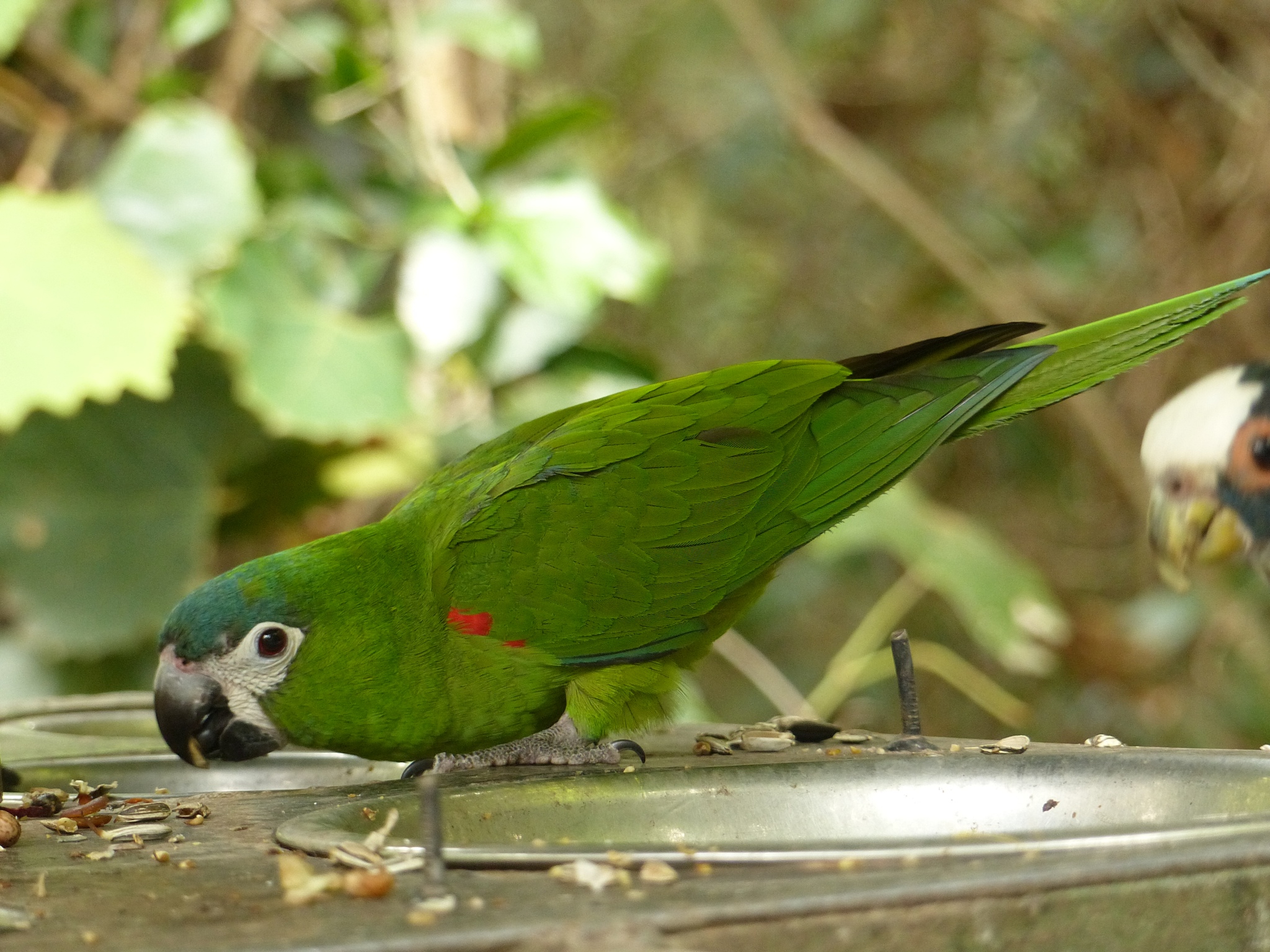
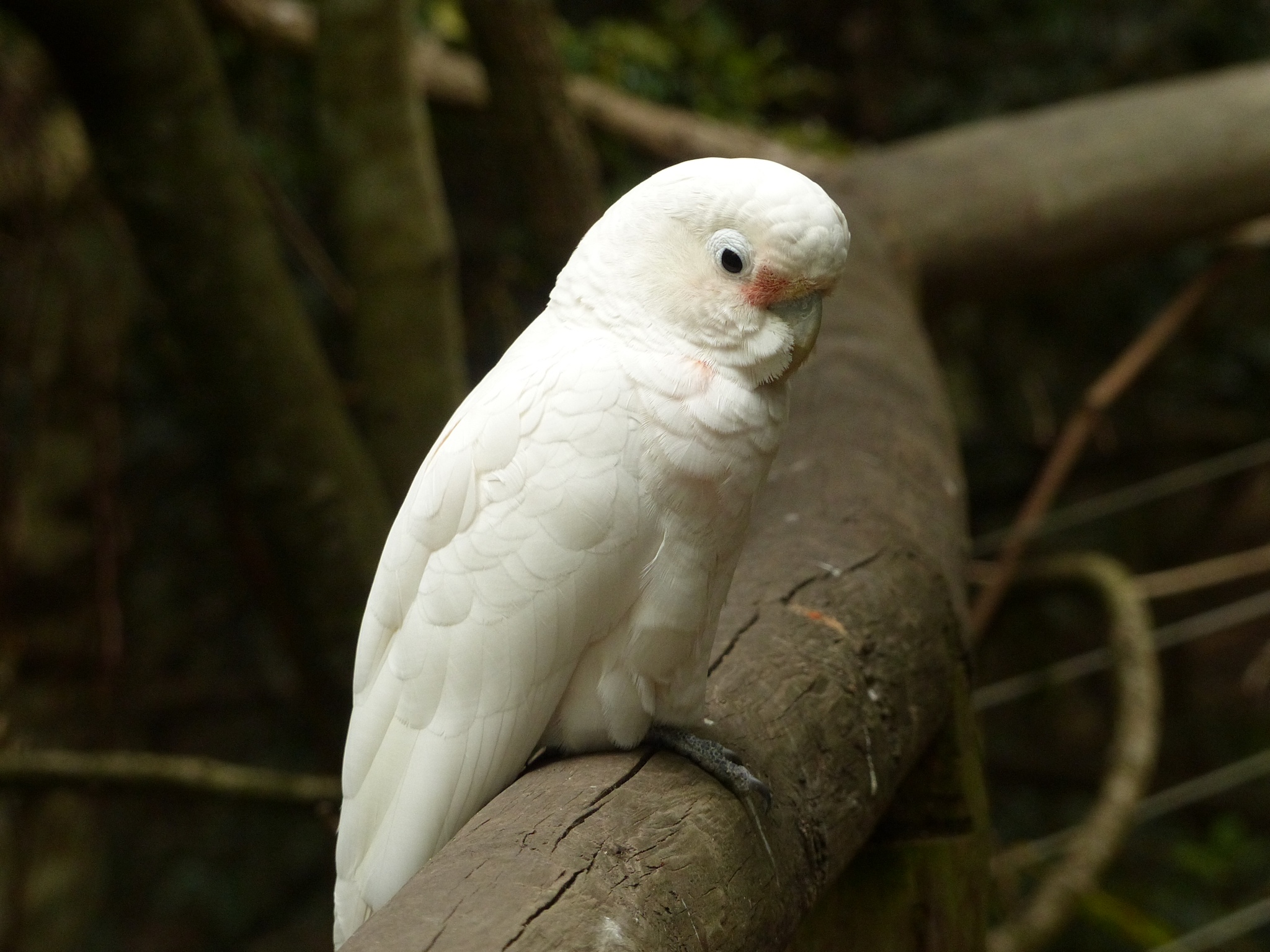
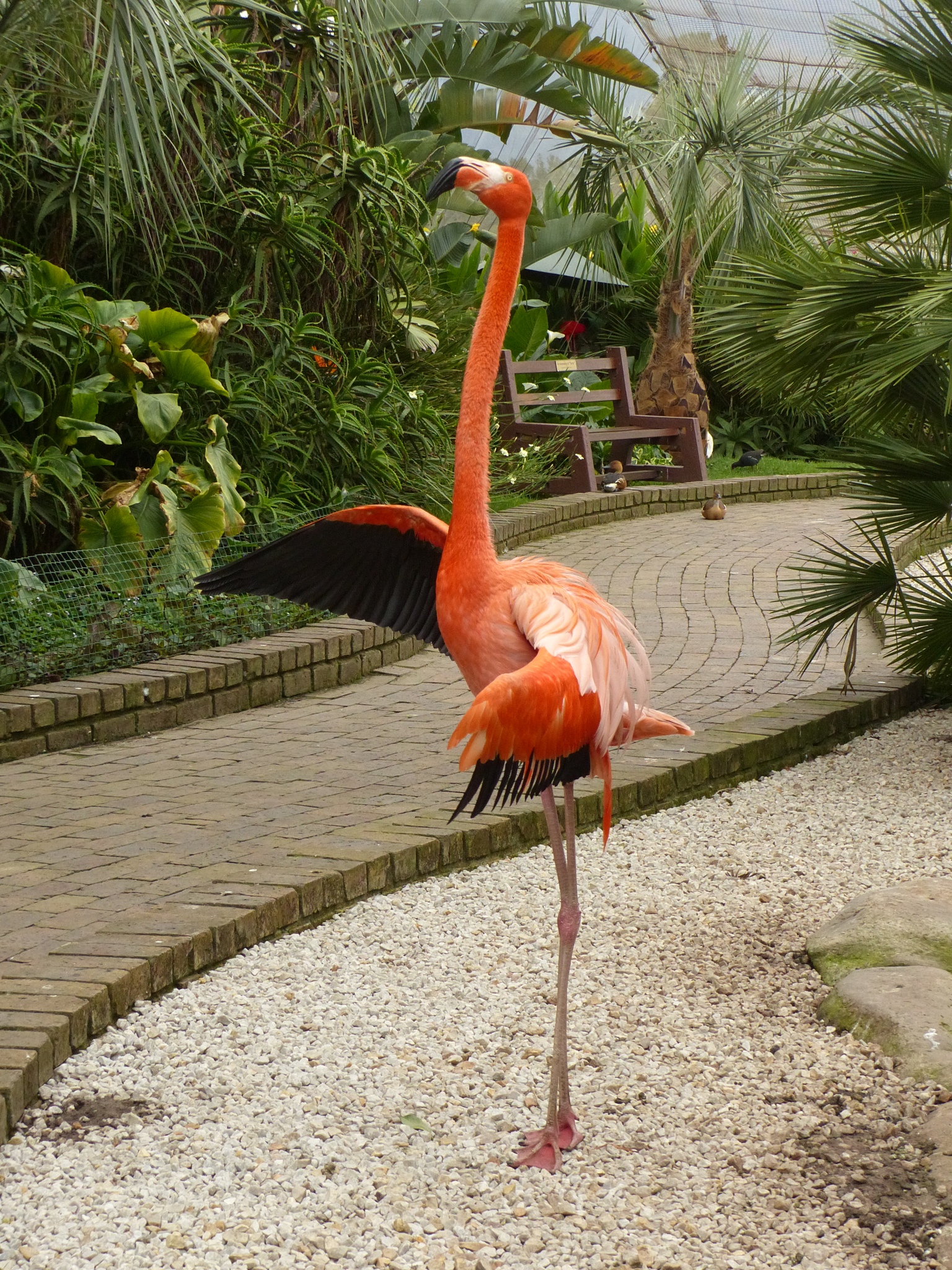
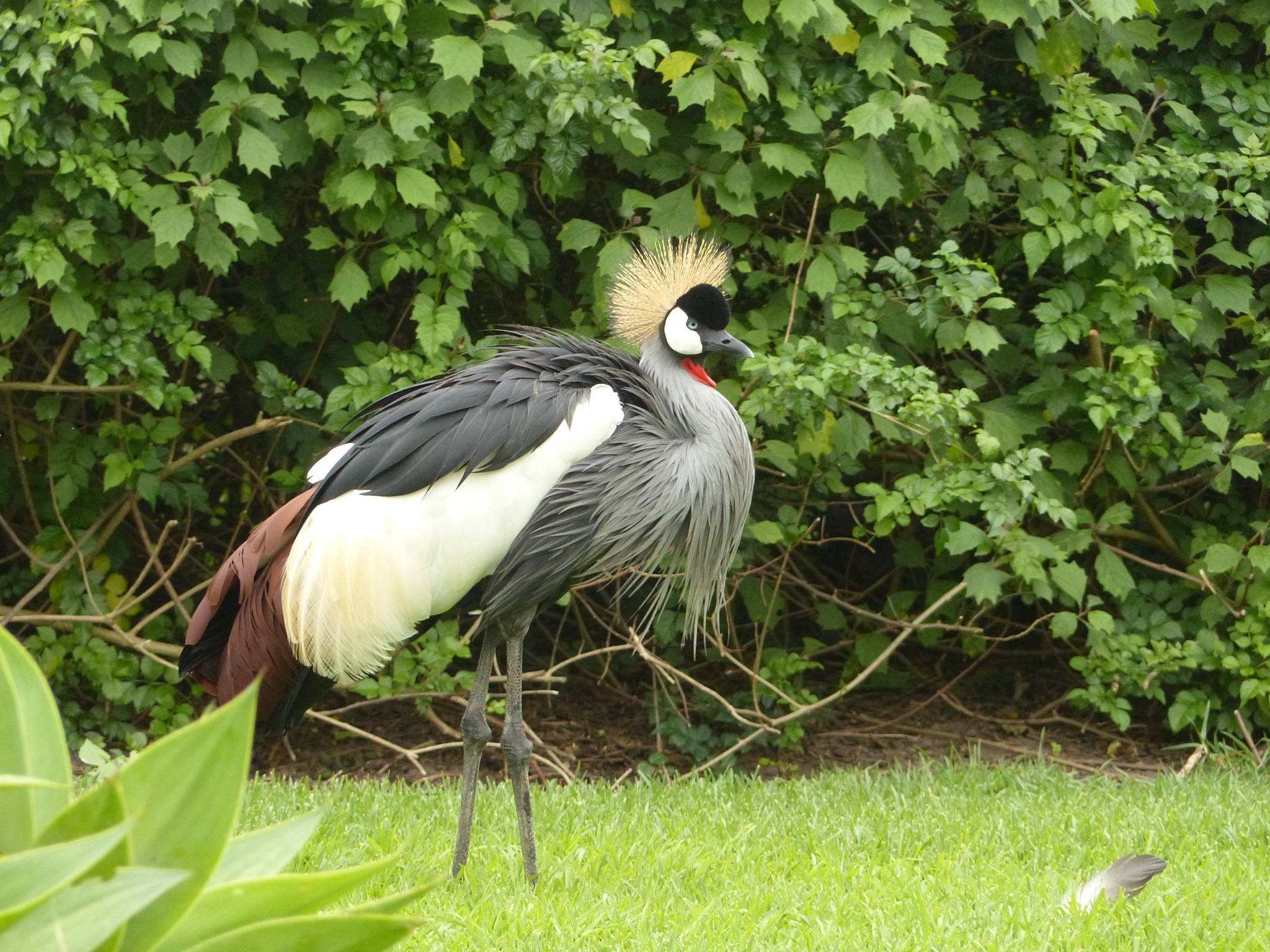
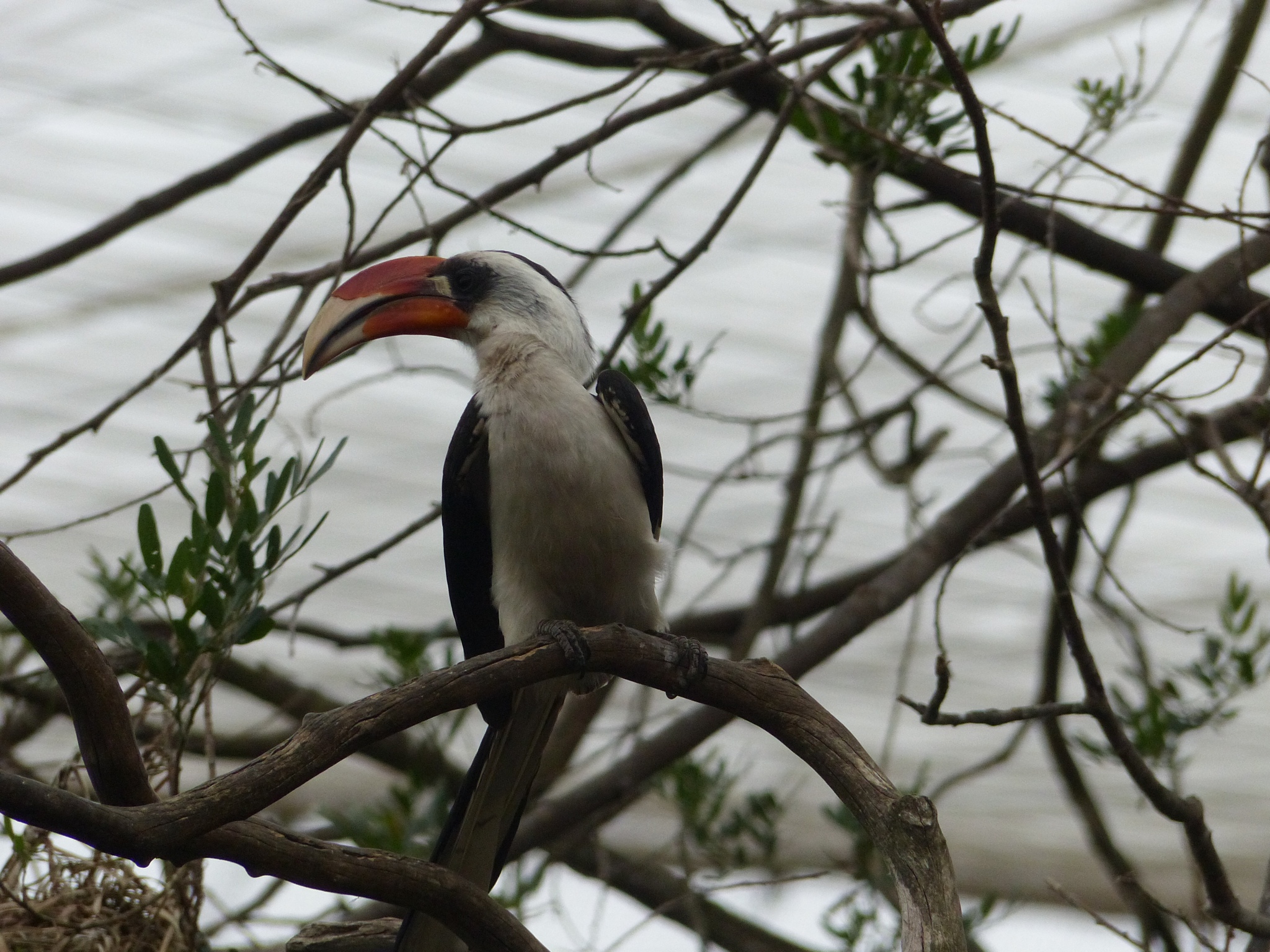
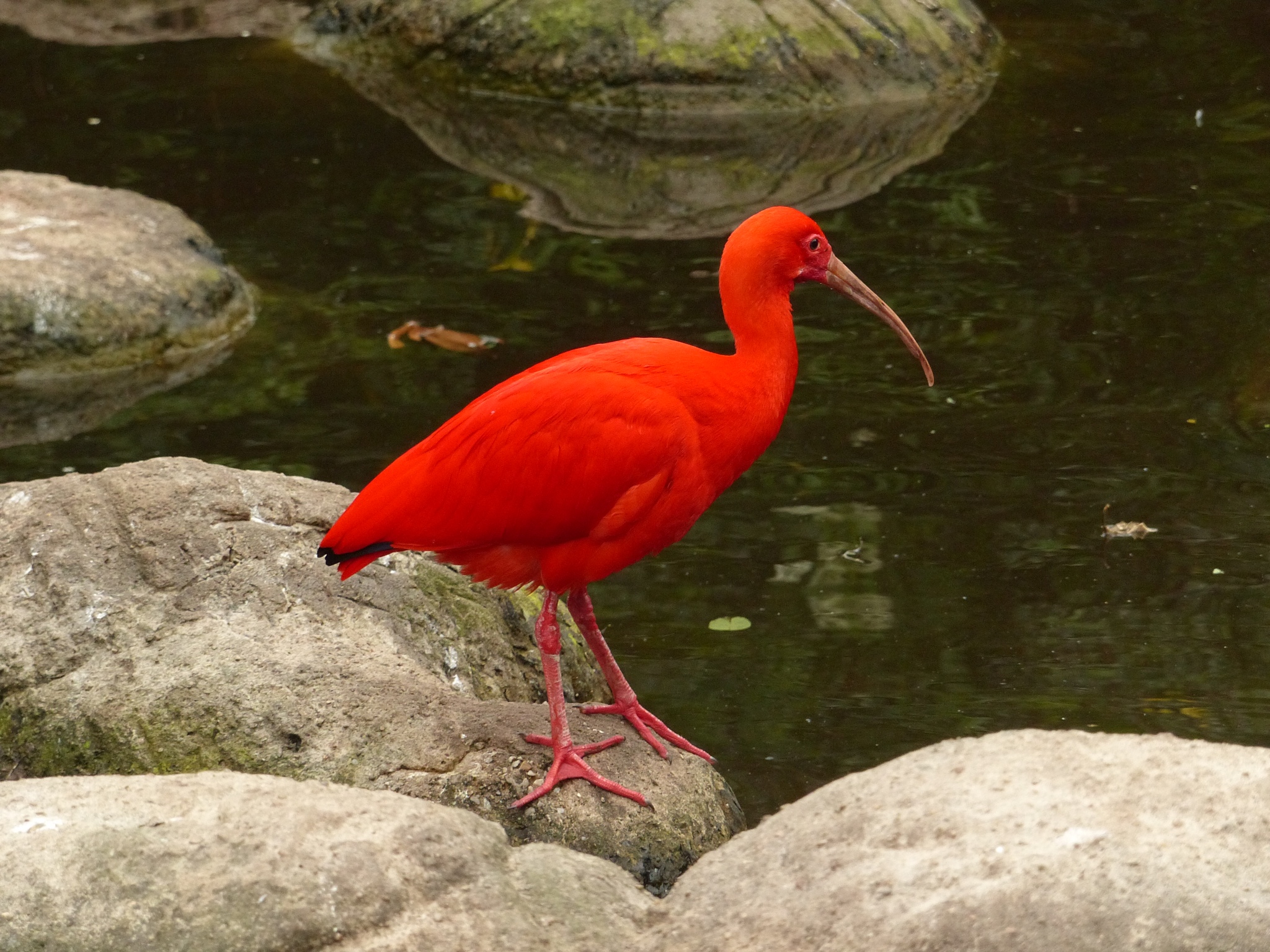
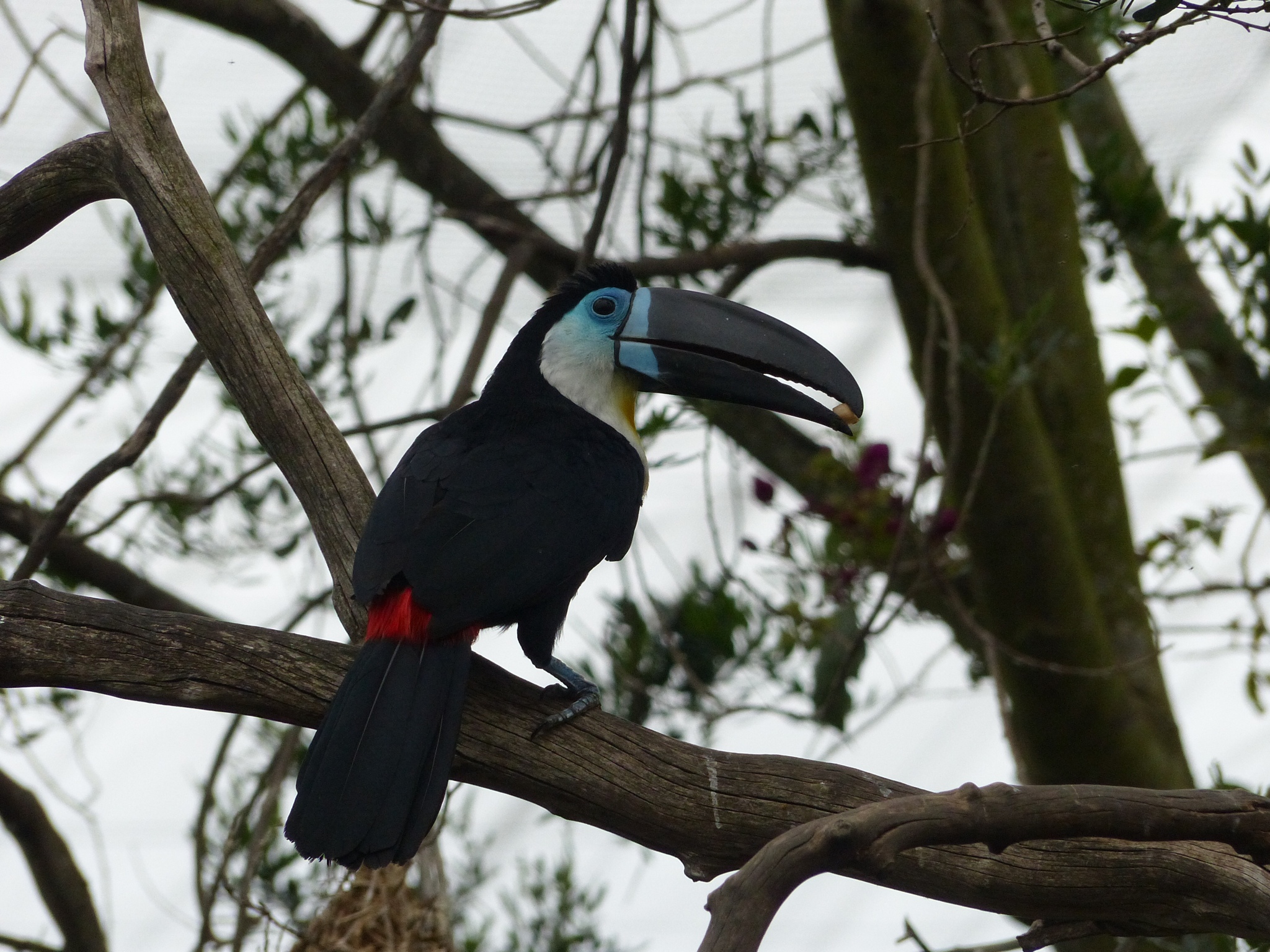
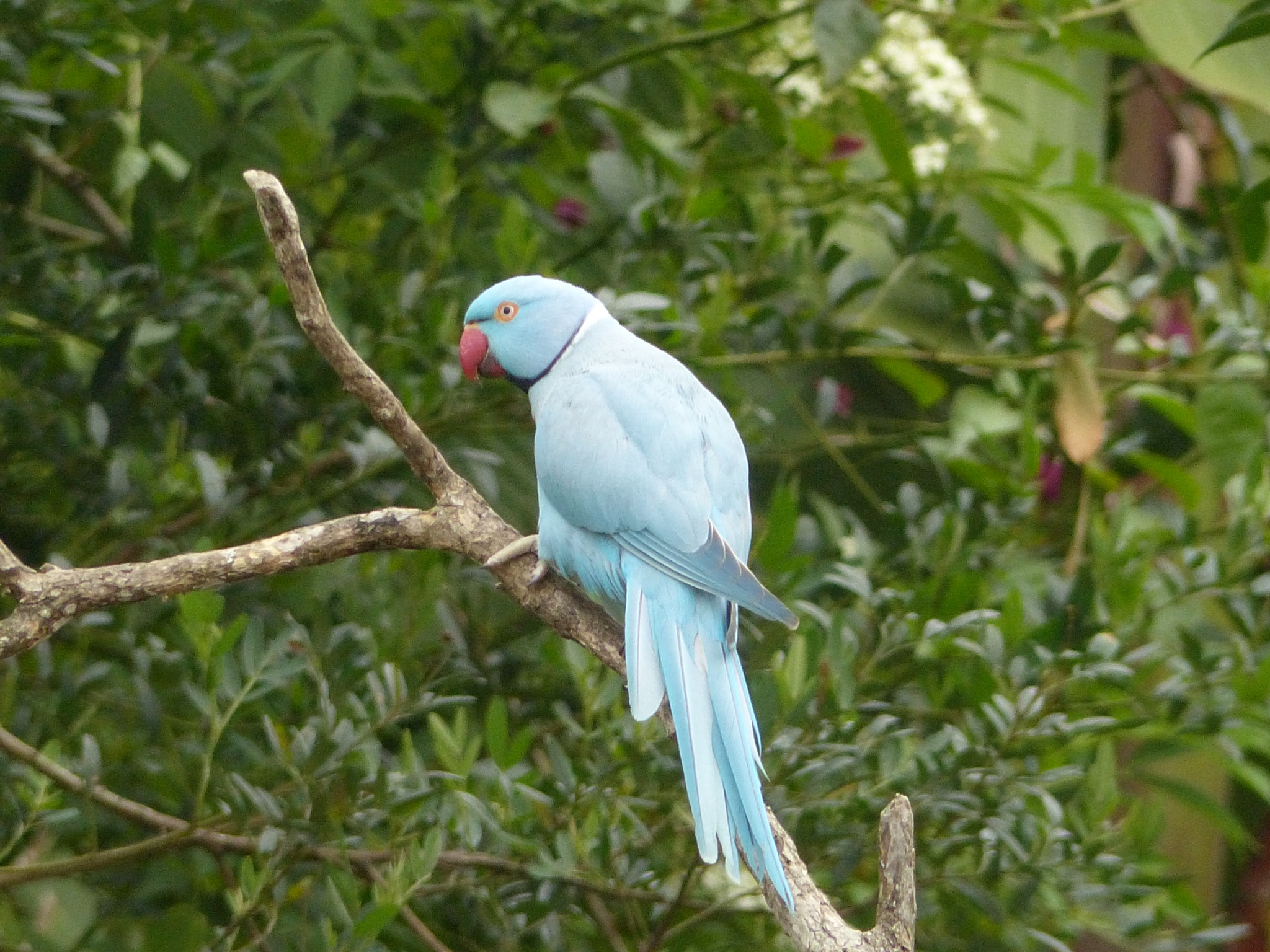
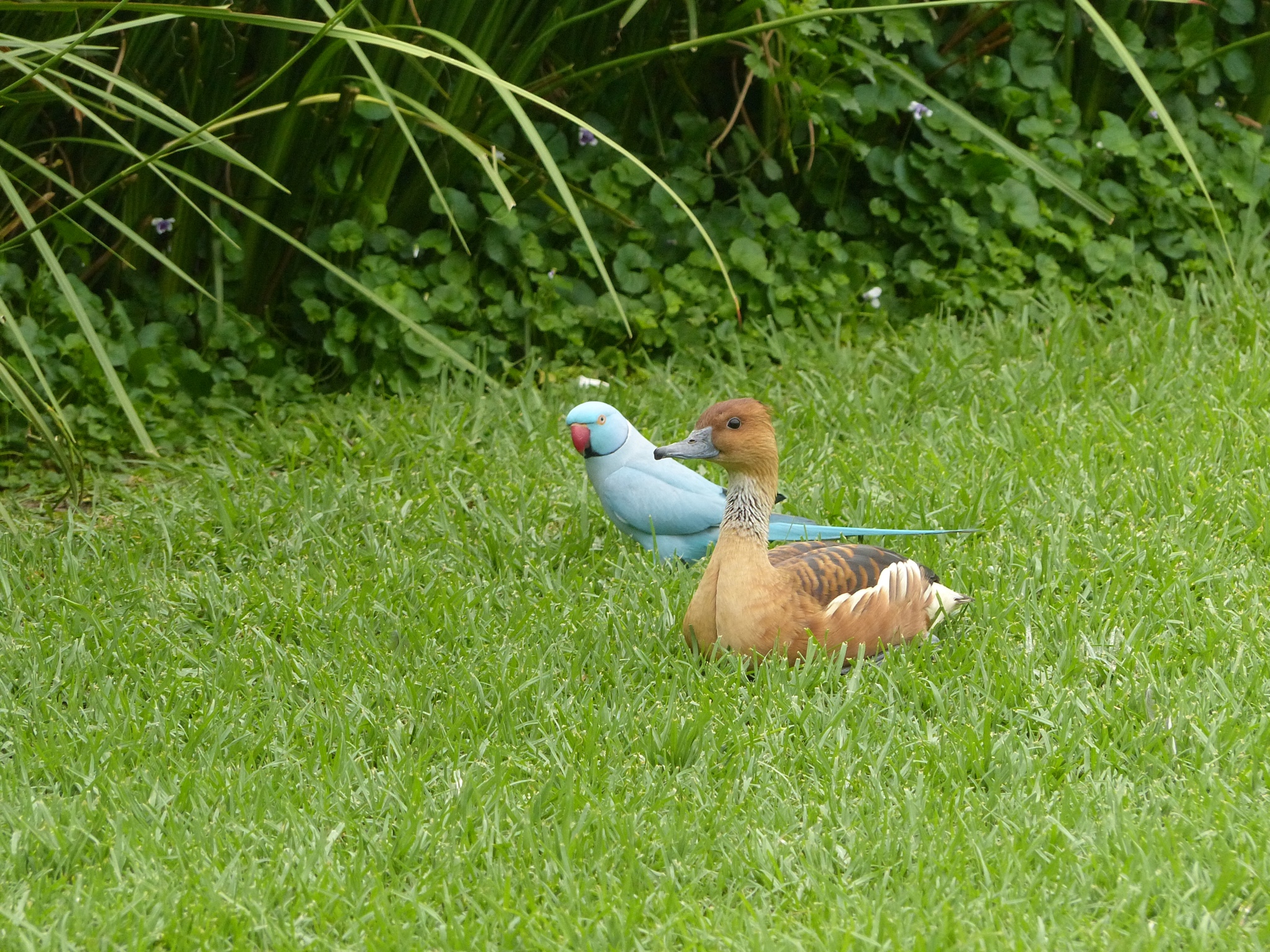
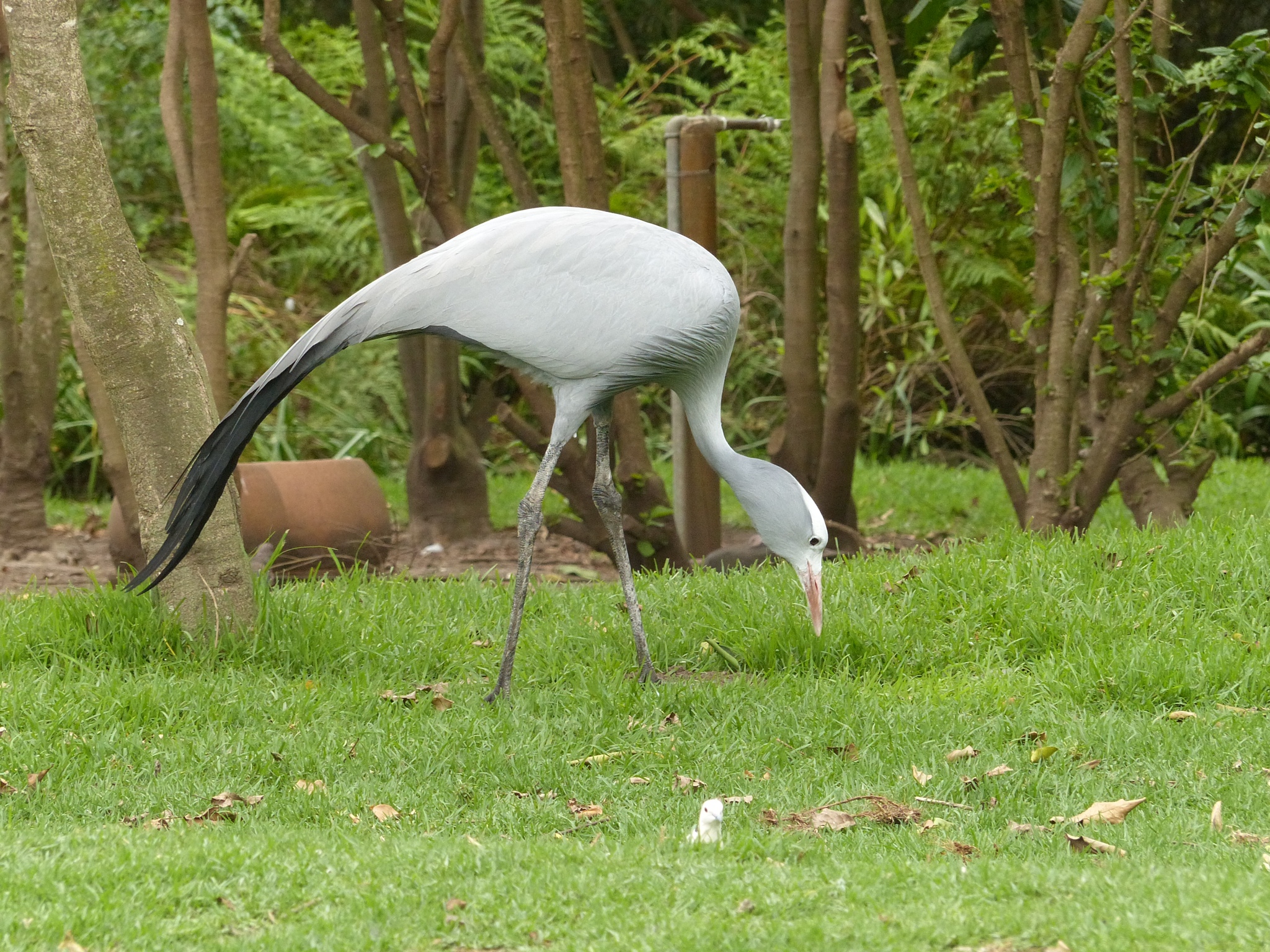
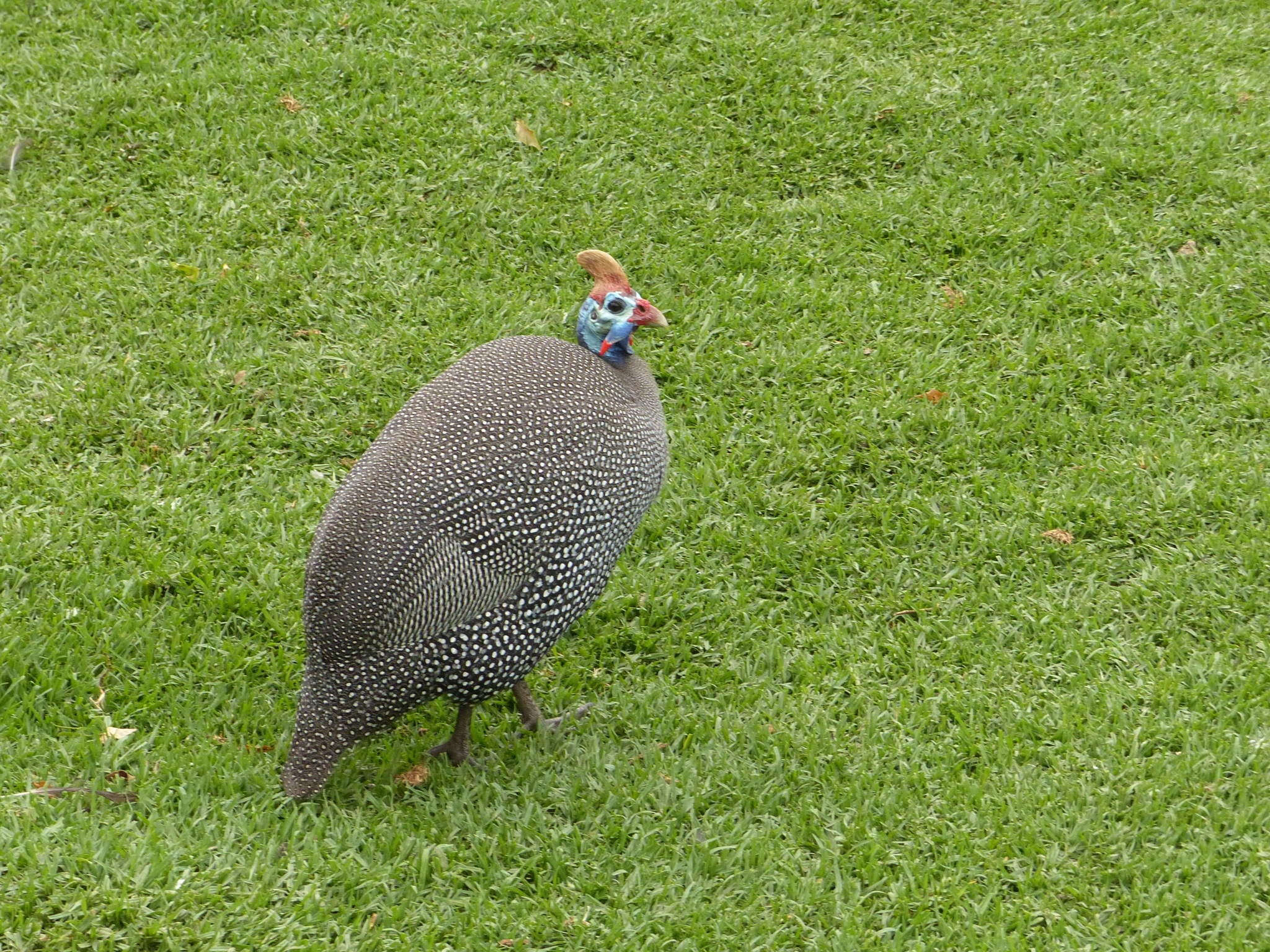
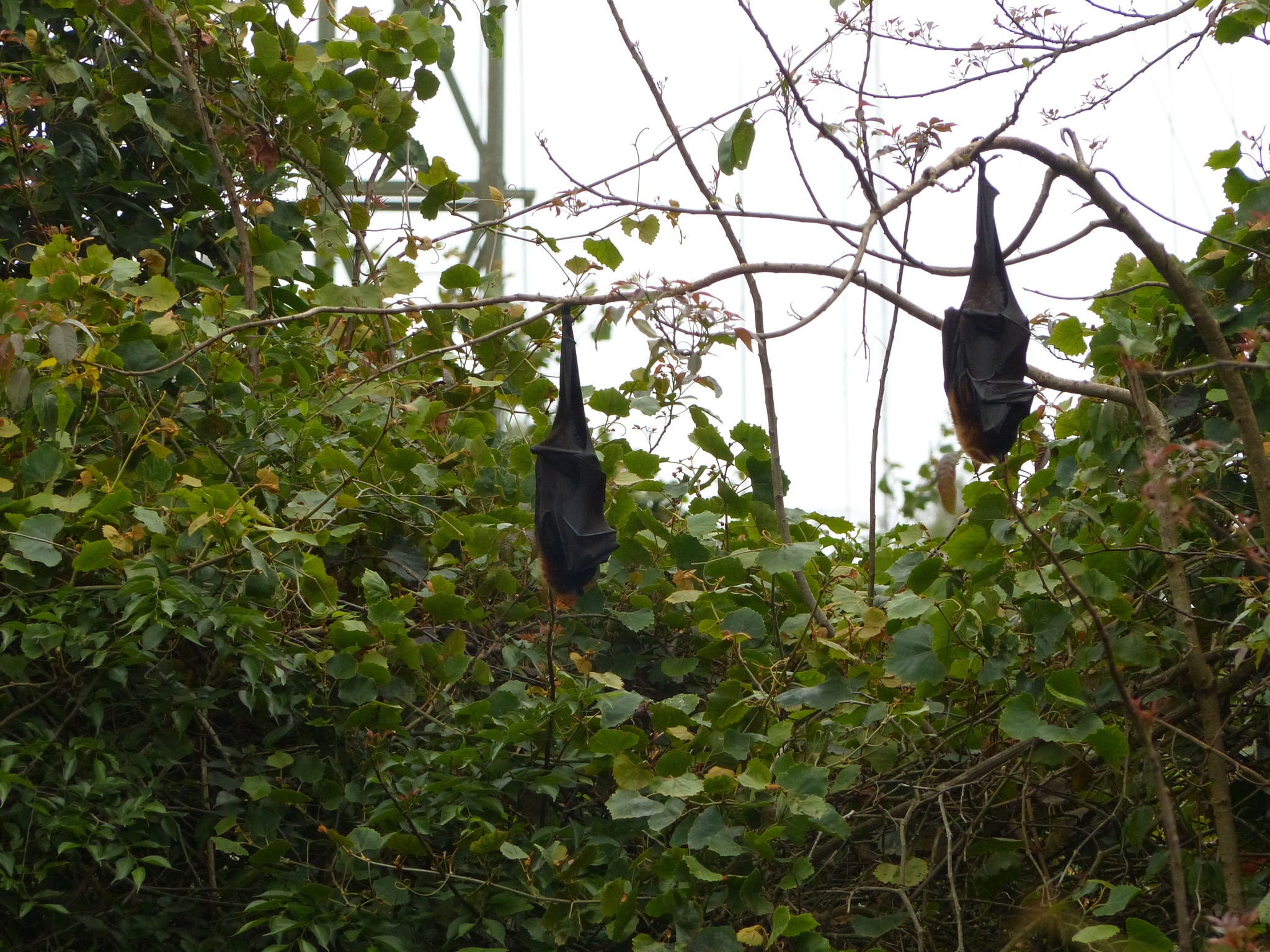
Birds of Eden turned out to be a fabulous choice as we really enjoyed seeing so many spectacular birds. It is the largest enclosed aviary in the world. It was indeed very large and enclosed with only netting. Everywhere we looked we spotted colorful birds of all kinds, most of whom are rescues. There was a meandering boardwalk, a stream, and ponds. We really enjoyed sitting on a bench by one of the ponds toward the end of the day where it seemed all the birds came to us. The sounds of the bird calls were loud and continuous so you really felt you were in the jungle! I think we were the last to leave at closing time. Here is a selection of the many photos I took.

Knysna Lourie

Flying foxes - fruit bats?

Red Ibis

A Weaver at his nest

On the way out

After our very full day, we decided to skip dinner when we got back to the B & B and just had a snack from our own food and an early evening.